

‘Even 12 bodies wouldn’t be enough’: North Koreans struggle under farm mobilization crackdown
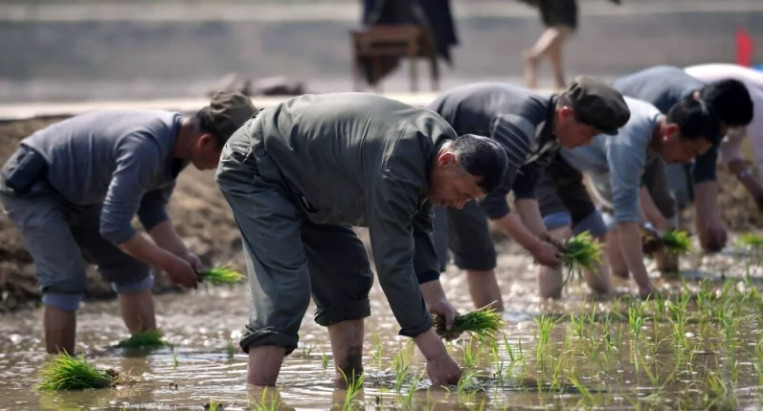
Workers plant rice seedlings. [Photo/NK Times]
With the start of the busy farming season, North Koreans are facing a sharp increase in street inspections. In addition to officers from the Ministry of Social Security, authorities have mobilized members of the Socialist Patriotic Youth League, the Socialist Women’s Union and other organizations in an all-out effort to crack down on unauthorized movement.
“In Jaeryong County, patrols have been checking people since May 14, from 9 a.m. to 4 p.m.,” a source in South Hwanghae Province said. “Residents caught up in the inspections are forced to perform at least two hours of labor before being allowed to return home.”
People are being targeted for violating restrictions on movement during the nationwide rural support mobilization period, the source said.
Those found on the streets without official business or lingering around market areas are stopped and questioned about their identity and reason for travel. They are then taken to nearby farms and compelled to work.
Street inspections have long been one of the regime’s standard methods of social control and are repeated annually during the farming season. To address labor shortages in rural areas, authorities mobilize students, women and office workers to support agricultural work while simultaneously tightening restrictions on the movement of residents who are not participating in the mobilization.
This year’s crackdown has reportedly fueled growing frustration. Residents who rely on trade, transport services, errands and other informal economic activities for their livelihoods have been particularly affected.
“These days, people say, ‘We have to participate in rural mobilization, but we also have to trade to survive. Even if we had 12 bodies, it still wouldn’t be enough,'” the source said. “Residents who live hand to mouth are being hit hard.”
“Many complain that the state only cares about farming and has no interest in how people actually survive,” he said. “People say it would make more sense if one person from each household participated in rural mobilization while the rest of the family were allowed to earn a living.”
“In the end, amid already difficult living conditions, the burden of various mobilizations and crackdowns is placed on ordinary citizens, who have no power to resist,” he said. “With the economy in such a difficult state, restricting livelihood activities will inevitably increase resentment.”

Sewon is the North Korean-born founder and CEO of NK Times, a Seoul-based Korean-language online news outlet focused on North Korean affairs. Drawing on his personal experience living in the country, he strives for transparency and accuracy in reporting, working to inform the public about the realities of North Korea.
Latest posts by Kim Se-won (see all)