

Who created “Oppasi”? How tyranny thrives on power and silence
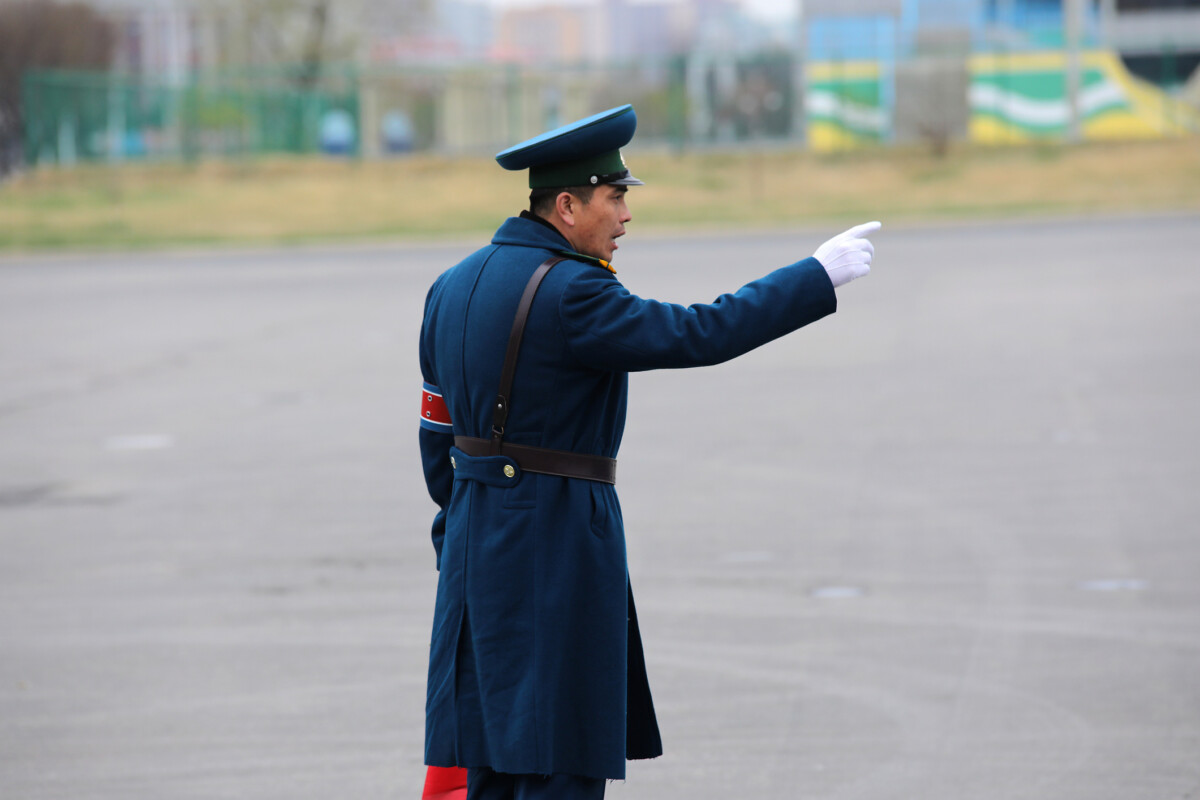
Traffic policeman in Pyongyang, 2018 (Credit: iStock/Omer Serkan Bakir)
What is it that makes a person endlessly tyrannical?
Is it the power that supports him?
Or is it our own weakness in submitting to his authority?
Today I want to tell the unforgettable story of one man.
Through it, I will explain the kind of character that a social system can produce.
I currently work as a hotelier. In the course of my work, I meet people from many different countries.
They include Japanese and Germans. I find them to be more polite than anyone else. Frankly, this confuses me. I learned from history books that they were once unspeakably cruel.
The human experiments carried out during wartime force us to reflect on human nature itself.
So the question arises: What makes them appear so utterly different today?
In considering this, let us look at North Korea. There, security agents and guards act as the henchmen of power, controlling and oppressing ordinary people.
You find no warmth or human kindness in them. Only cold-hearted cruelty, as they abuse people to curry favor with authority. Yet when these same people defect, they become as meek as lambs.
The only thing that has changed is the social system.
Let me tell you the story of one man shaped by a corrupt system. His name was “Oppasi.”
He lived in the apartment below mine. Oppasi enjoyed the privilege of being the child of an anti-Japanese revolutionary fighter. Anti-Japanese revolutionary fighter! What a noble title.
From childhood, we studied in revolutionary history classes how they bravely fought the Japanese. I was always awed by their courage.
But their children, proud of their lineage, often surprised me in other ways. For example, Oppasi would stand on street corners and commit petty theft.
Thanks to his ancestry, he landed a job as a policeman. Wearing his uniform, he stopped passersby and extorted money from them. If people did not have cash, they handed over noodles or bundles of anchovies.
People felt wronged but dared not protest because they feared his authority.
At first, I was outraged. Wasn’t a policeman supposed to be the people’s protector—moral, just and self-sacrificing? He was none of these things. I thought the state simply did not know his true nature and that, if it did, it would act.
But people called him “Oppasi.” This was the name of a Japanese policeman in films, one of the most vicious villains imaginable. That was how much resentment they felt toward him.
Yet instead of being dismissed or criticized, he continued to be promoted. His children all gained admission to the country’s most prestigious universities.
As an aside, his daughter was in my class. I swear she was utterly incompetent, yet she went on to medical school. After that, I stopped going to hospitals. For my own safety, I thought it best. In my eyes, she was no different from a butcher wielding a scalpel.
Within North Korea’s system, his family thrived. The state was not ignorant. His abuses were carried out under its protection.
“Do you even know whose land you’re living on?” he often said.
“Why doesn’t the tiger of Mount Paektu come and take this man away?” people muttered. But not aloud. That was too dangerous. They muttered it only in their hearts.
Oppasi’s madness and arrogance grew without limit. No longer a petty thief, he became a robber in broad daylight. One day, he claimed a neighbor’s land as his own.
A fierce dispute broke out, so intense that the whole neighborhood came to watch. Everyone knew the land belonged to the neighbor.
Nobody intervened. They justified their cowardice with a saying: “Do you avoid dung because you fear it? No, because it’s filthy.”
Since it was not their affair, people turned away. I know because my mother and I were among them.
In the end, the land became Oppasi’s.
Then came the incident I can never forget.
Our home was a beautiful two-story house. The sea stretched before it and the mountains rose behind it, like something from a fairy tale. Perhaps it felt even more precious because my father had built it.
In North Korea, building a private house required the patronage of a powerful man. So my father built it together with Oppasi. In return, Oppasi took the first floor.
After my father passed away, he coveted the second floor as well. He stormed upstairs with an axe, smashing the house in a violent rage. As my beloved home splintered under his blows, I burned with anger.
I longed for his absurd tyranny to be judged. But the authorities ruled otherwise.
“Endure it patiently,” they said.
I hoped the neighbors would speak out.
But everyone remained silent, just as my mother and I once had.
So I ask: Who created Oppasi?
The social system?
Or our silence?
Martin Niemöller, the German Lutheran pastor, expressed the danger of such silence in his famous confessional poem after World War II:
“When the Nazis came for the Communists,
I remained silent;
I was not a Communist.
When they locked up the Social Democrats,
I remained silent;
I was not a Social Democrat.
When they came for the Jews
I said nothing;
I was not a Jew.
When they came for me,
there was no one left
to speak for me.”

Born in Chongjin in 1990, Jang Mi was not a studious child, but under her mother’s influence, she graduated from high school and went on to university to take math and science. She worked as a wedding video editor for seven years until her defection in 2019.
Latest posts by Jang Mi (see all)
- When will the Koreas be reunited? - October 1, 2026
- Is the Kim family still Big Brother? - September 6, 2026
- Electricity, not slogans: What North Korean women really need - August 3, 2026