

Pyongyang’s lights are North Korea’s greatest lie
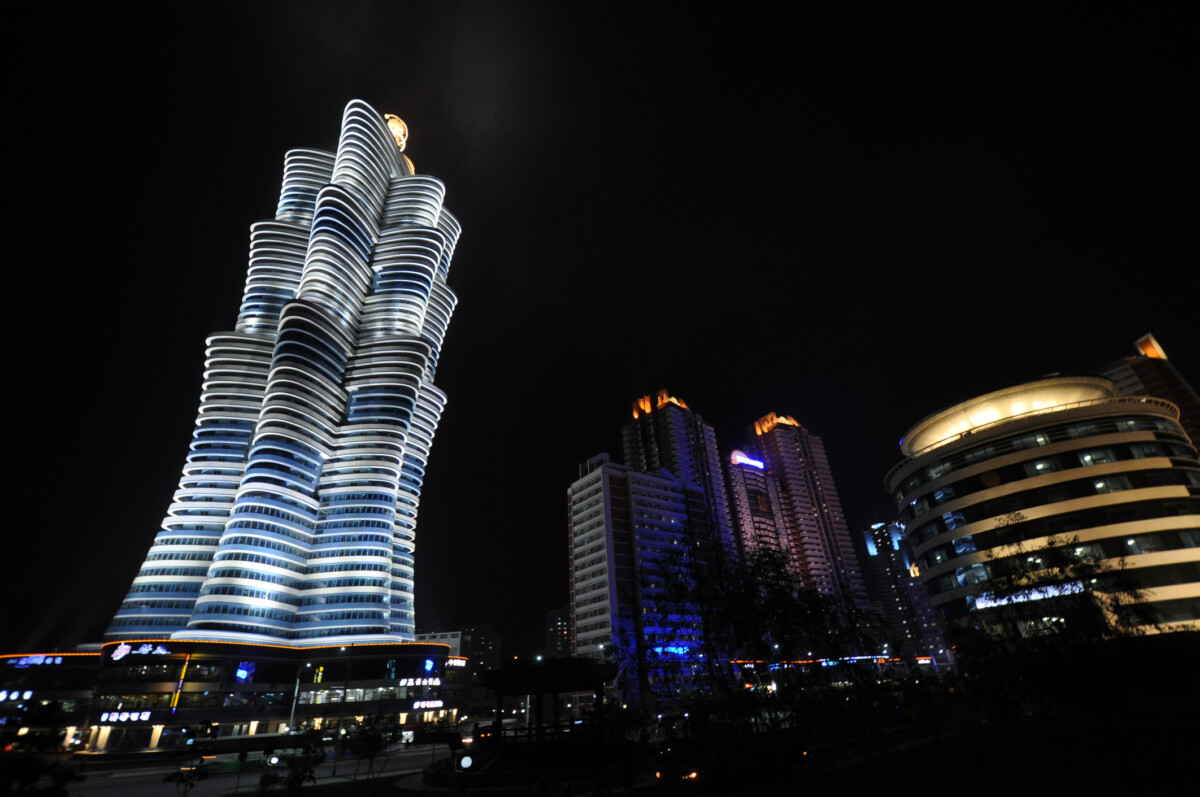
To outsiders, North Korea seems to be changing and for the better. More cars fill the streets. Young people carry smartphones. New apartment buildings glow at night. The Wonsan-Kalma Coastal Tourist Zone even welcomes visitors with signs in English.
It is easy to conclude that the once sealed-off country is doing okay and opening up.
I understand the temptation. When the photos you see show the same scenes for decades, small changes naturally encourage hope.
And it is true that there are new buildings. Mobile phones are indeed more common. Markets have expanded, and more goods circulate. Sometimes a small crack really does become the beginning of a larger opening.
But when I see those photographs, I remember a different North Korea.
In May 2023, I crossed the West Sea to South Korea with my family of nine. The country I left behind was not the one shown in tourist publicity photos. It was a place where we never knew when the electricity would return. We worried that the rice we had cooked would grow cold before the power came on again. A freezer without electricity was simply a large empty box. In summer we hurried to eat food before it spoiled. In winter, the outdoors became our refrigerator.
During COVID, that suffocating feeling grew even worse. With the borders and sea routes closed, trade collapsed, goods became scarce, and daily life tightened. “Disease prevention” meant more than fighting a virus. It meant tighter restrictions on movement, speech and business. Some people feared hunger more than COVID itself.
In North Korea, every crisis arrives twice: first as a disaster, then as government control.
That is why, whenever I see those impressive nighttime photographs of Pyongyang, I ask myself: Where did that light come from?
You see, even electricity is distributed according to status.
Pyongyang is the showroom. It is where foreigners visit, senior officials live, and Kim Jong-un appears before the cameras. Keeping the capital lit up is part of maintaining the illusion.
Everywhere else, though, power cuts are routine. People do not live by the clock; they live by the moments when electricity happens to arrive.
What I am saying is that a bright capital does not mean a bright country. More often, it means the regime decides who deserves the light, and who remains in the dark.
The same illusion surrounds mobile phones.
There are certainly more of them today. People use them to trade in the jangmadang markets and keep in touch with relatives. Young people take photographs, listen to music and play games. To an outsider, this looks like a society becoming more connected.
But the important thing about a North Korean smartphone is not what it is. It is what it cannot do.
For ordinary people, a mobile phone is not a window onto the world. It is more like a lamp that shines only inside a room permitted by the state. The global internet is inaccessible. Foreign news, South Korean dramas, and K-pop are treated as dangerous contraband rather than ordinary entertainment.
One of the greatest culture shocks after arriving in South Korea was the discovery that I could search for anything on my phone. If I was curious, I could simply look it up.
The freedom felt so unnatural that, at first, my fingers hesitated.
In South Korea, curiosity begins with a search bar. In North Korea, it can end in an interrogation room.
Censorship is woven into daily life. Officials can inspect homes without warning, checking phones and storage devices. Around markets they question people about what they have watched, who gave it to them, and whether they shared it with others. Deleting a file does not necessarily erase the danger. A phone may help someone earn a living, but it can also become evidence against them.
What this tells me is that technology does not automatically take the side of freedom. In a dictatorship, it can become a more sophisticated shackle.
Some readers may still ask whether these visible changes are at least steps in the right direction. If English signs appear, tourist zones expand and smartphones become common, couldn’t they eventually lead to deeper reform?Perhaps.
More goods, more information and more outside contact can gradually change even a tightly controlled society. I would welcome that.
But we must distinguish between changes that expand people’s freedom and changes that simply help the regime polish its image and earn foreign currency. A beach resort with English signs tells us little about the lives of the people who cannot leave their own country. A brightly lit apartment block tells us little about the families who still wait hours for electricity. A smartphone that cannot freely connect to the world is not a symbol of liberty but of carefully managed control.
I do not oppose small changes. On the contrary, I want North Koreans to have more light, more information and more choices.
What concerns me is how readily outsiders applaud the spotlight created by a dictatorship without a mind to the millions left in the shadows.
Those people still light oil lamps. They hide foreign videos. They own phones that cannot connect them to the world.
The North Korean regime understands how to put on a show. It cleans the roads, polishes the hotels, and trains the guides to smile, and to cry when they wave goodbye. Even a dictatorship can learn the language of tourism promotion.
What it has never learned is how to treat its own citizens as human beings.
When I fled, I tried not to look back. I feared my resolve would fail if I did.
Now I look back often, not at the glittering photographs of the false city, but at the homes those lights never reached.
To understand North Korea, do not look only at the lights of Pyongyang.
Look at the shadows they create.
North Korea’s greatest lie is not simply what it hides.
It is that it turns on the lights to conceal the darkness.

Kim Yumi, a North Korean defector, was born and raised in Haeju, South Hwanghae Province, a coastal military area. Growing up near a naval base, she was able to secretly watch South Korean news programs and TV shows, thereby uncovering the vibrant, democratic society of South Korea. Yumi and her husband made the brave decision to escape North Korea and seek a better future. Now in Seoul, she is actively involved in raising awareness about the realities of life in North Korea, especially on her YouTube channel, “@KimYumiTV.”
Latest posts by Kim Yumi (see all)
- The landmines were supposed to keep enemies out. Who were they really keeping in? - October 15, 2026
- For North Korean footballers, Japan is more than just an opponent - October 7, 2026
- Under the same full moon, two versions of the same holiday - September 25, 2026