

Kim Jong-un signals military overhaul as North Korea pushes modern warfare and ideological control
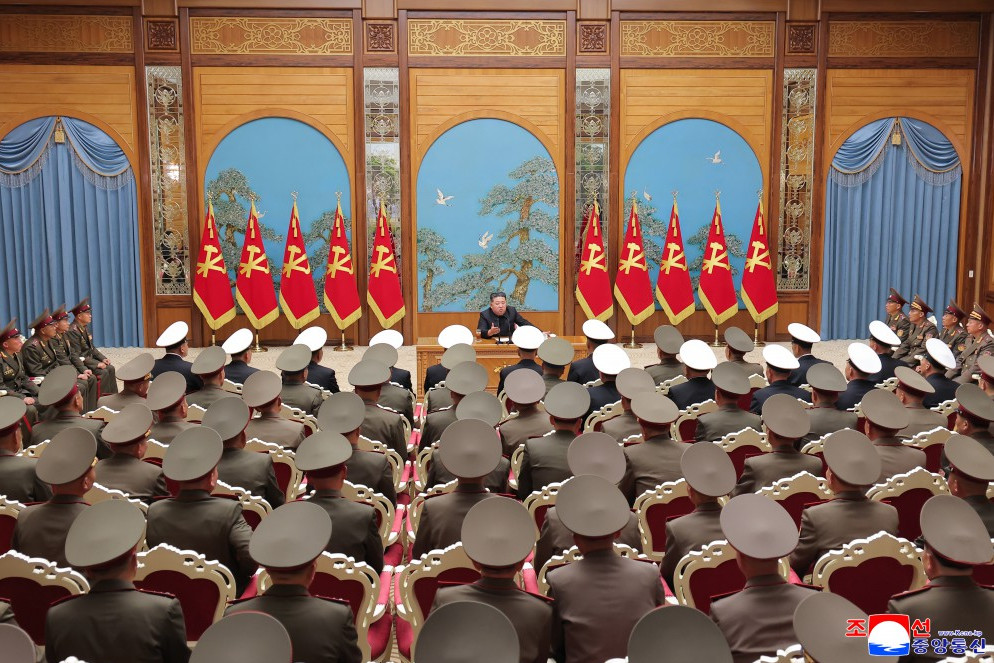
Kim Jong-un overseeing a meeting with military commanders on May 17 (Image: KCNA)
North Korean leader Kim Jong-un has signaled a new phase in the modernization of the Korean People’s Army, combining military reform with intensified ideological control as Pyongyang seeks to adapt its forces to the realities of modern warfare while preserving regime loyalty.
The message emerged from an unprecedented gathering of division and brigade commanders from across the military, reported by the Korean Central News Agency (KCNA) on May 18.
Rather than focusing solely on senior military leaders, Kim directly addressed commanders responsible for frontline combat units, ordering them to overhaul training, strengthen border defenses, restructure military organizations and reinforce ideological discipline.
The meeting is significant because it suggests North Korea is moving beyond simply developing new weapons systems and is now attempting to transform how its forces are organized, trained and employed on the battlefield.
South Korean and foreign media assessed that it was the first publicly reported meeting of division- and brigade-level commanders from across the military since Kim came to power.
According to KCNA, the meeting was attended by Ri Yong Gil, chief of the General Staff of the Korean People’s Army, and Pak Jong Chon, adviser to the Ministry of National Defense. Kim told commanders that “the historic mission of building our army into the strongest army in the world” rested with them, underscoring that military modernization must extend beyond weapons development to the operational level.
A central theme was the need to adapt to evolving forms of warfare. Kim emphasized that “training to complete combat readiness is the main duty of the army” and called for training reforms reflecting “the changing aspects of modern warfare.”
The remarks suggest Pyongyang is closely studying lessons from conflicts in Ukraine and the Middle East, where drones, precision strikes, electronic warfare, long-range artillery and networked battlefield operations have reshaped military planning.
Kim also referred to “organizational measures” to renew the military in terms of both organization and technology, indicating that North Korea may be preparing structural changes to combat units rather than merely introducing new equipment.
The emphasis on frontline forces was equally notable. Kim ordered the strengthening of units stationed along the inter-Korean border and called for transforming the frontier into an “impregnable fortress.” The comments come as South Korea’s Joint Chiefs of Staff have reported increased North Korean construction activity, including defensive barriers and fortifications near the Military Demarcation Line.
The gathering appears to have served three strategic purposes.
First, it was intended to improve the military’s ability to absorb new technologies and weapons systems. North Korea has recently accelerated development of guided multiple-launch rocket systems, short-range ballistic missiles, tactical cruise missiles, drones and new naval platforms. Kim’s message was effectively that new equipment must be matched by new tactics, training methods and operational concepts.
Second, the meeting reinforced North Korea’s shift toward treating South Korea as a permanent adversary rather than a partner for eventual reunification. Kim instructed commanders to strengthen both “class consciousness” and awareness of the “principal enemy,” reinforcing Pyongyang’s recent redefinition of inter-Korean relations as those between two hostile states.
Third, the gathering sought to tighten ideological discipline within the armed forces. Kim stressed that the country must defend itself “first with ideology and conviction” and argued that ideological commitment remains the ultimate source of military strength.
The emphasis reflects persistent concerns within the regime. Economic hardship, long military service periods, growing exposure to outside information and overseas deployment experiences linked to North Korea’s expanding military cooperation with Russia all have the potential to create strains within the ranks.
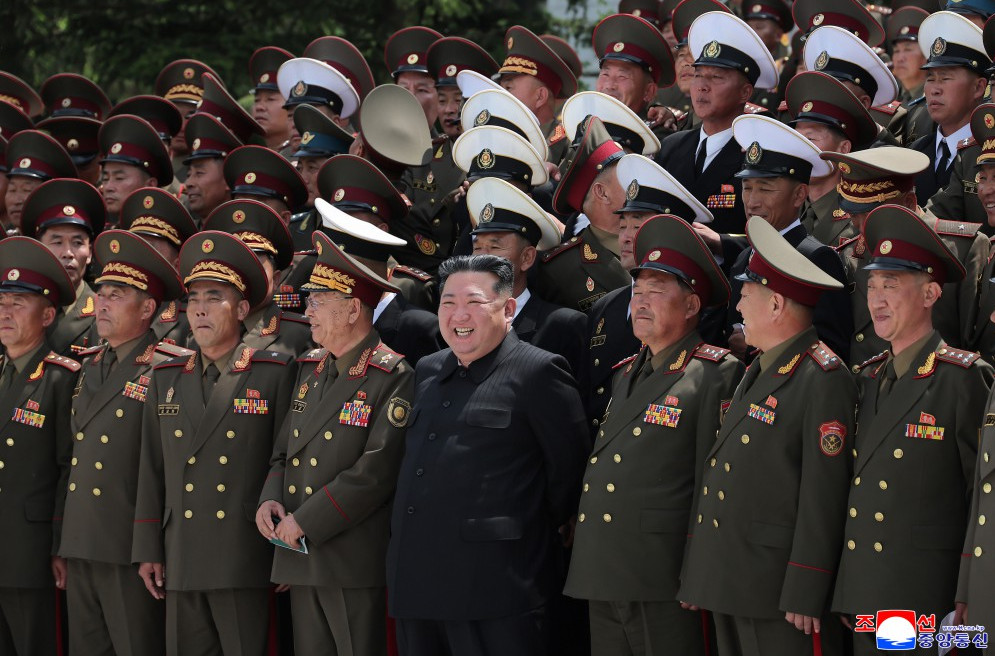
Yet the meeting should not necessarily be interpreted as evidence of instability within the military. By summoning commanders from across the country to Workers’ Party headquarters and posing for commemorative photographs, Kim was also demonstrating confidence in his personal control over the military modernization process.
Historically, North Korea has reorganized military leadership during major policy transitions. Under the previous leader Kim Jong-il, “military-first politics” elevated the armed forces as a pillar of regime survival. Kim Jong-un later restored party dominance over the military while replacing older commanders with loyalists. This latest gathering differs in that it combines military modernization, frontline fortification, organizational reform and ideological education into a single policy package directed at operational commanders.
North Korea’s growing military relationship with Russia provides important context. Expanded cooperation is widely believed to be providing Pyongyang with economic support, technological assistance and access to battlefield lessons from the war in Ukraine. If North Korean personnel are gaining exposure to modern combat operations through that relationship, the military would need to incorporate those lessons into training and force structure.
Kim’s call to redefine operational concepts “in all spaces” suggests North Korea is preparing for a battlefield environment shaped by drones, electronic warfare, precision-strike systems, long-range artillery and special operations forces.
From a regional security perspective, the meeting indicates that Pyongyang is seeking not only to expand its nuclear deterrent but also to improve the conventional capabilities of frontline units. Kim claimed that by the end of the current five-year plan, the military’s strategic capabilities would be transformed to a level “incomparable” with today.
For South Korea and the United States, this points to a more complex threat environment in which North Korea combines nuclear weapons with increasingly sophisticated conventional capabilities, including guided artillery, ballistic missiles, cruise missiles, drones and enhanced border defenses.
Ultimately, the May 18 meeting was more than a routine military gathering. It was a political-military event designed to advance two goals simultaneously: modernization and control. Kim’s message to field commanders was clear—embrace new weapons, new operational concepts and a new era of confrontation with South Korea, but maintain unwavering loyalty to the regime. The combination of technological modernization and intensified ideological discipline may prove to be the defining feature of the next phase of North Korea’s military development.

Taesung offers informed perspectives on North Korean society, grounded in years of experience within a key state-run institution. After defecting to South Korea in 2024, he now focuses on providing analysis of the country.
Latest posts by Kim Taesung (see all)
- North Korea drops ‘unification’ from party charter, boosts Kim Jong-un’s power - September 13, 2026
- Man jailed for spying on defectors and soldiers for North Korean agent - September 9, 2026
- Trump wants Kim back at the table. This time, Kim holds the cards. - August 28, 2026