

Kim Jong-un inspects new long-range artillery for deployment against Seoul
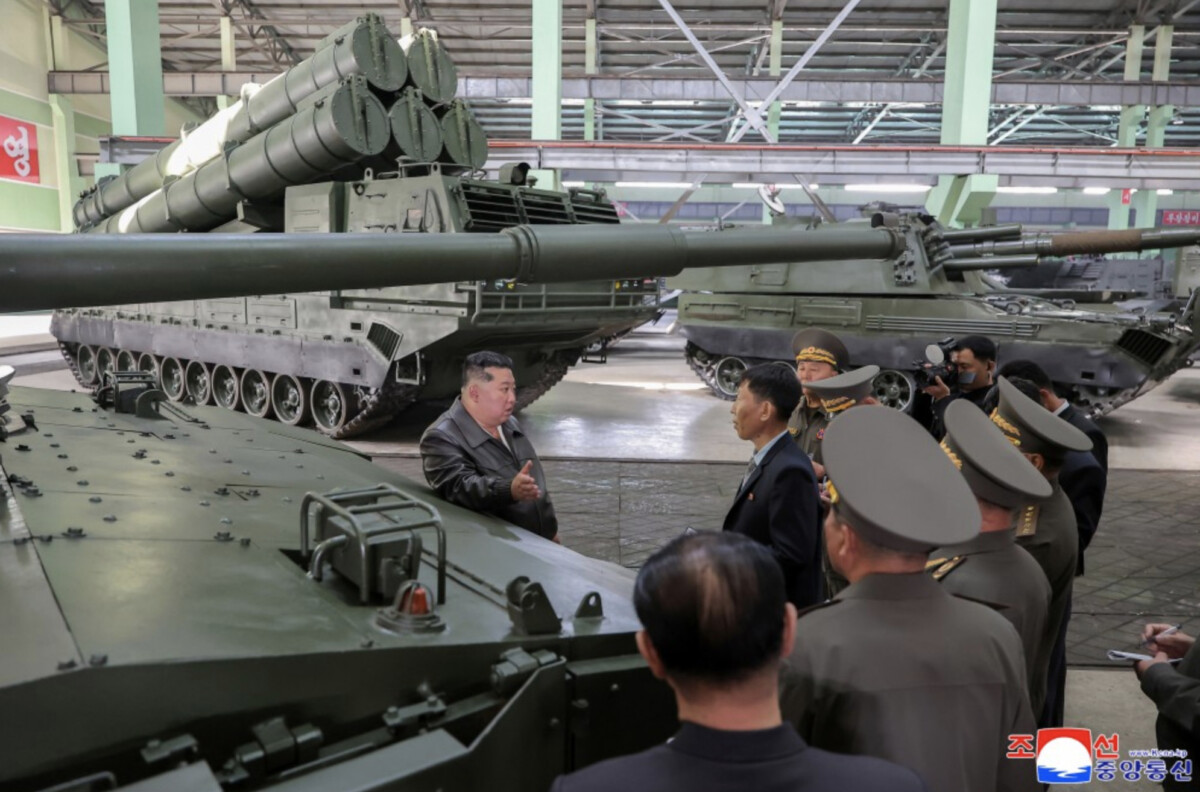
North Korea’s Korean Central News Agency released photos on May 8 showing Kim’s visit to a key artillery manufacturer. (Image: KCNA)
Sign up here.
Kim Jong-un visited a key munitions plant producing a new 155mm self-propelled howitzer on May 6 in what analysts see as a public display of the country’s plan to strengthen long-range artillery aimed at South Korea, according to Korean Central News Agency.
Kim provided field guidance and reviewed the “production status of major weapons and combat technical equipment,” the report said.
Kim was accompanied by senior officials in the weapons and defense sectors, including Jo Chun-ryong, secretary of the ruling Workers’ Party of Korea Central Committee; Kim Jong-sik, the Central Committee’s first deputy department director; Pak Jong-chon, adviser to the Ministry of National Defense; and Kim Kang-il, vice minister of National Defense and director of the General Equipment Bureau.
Notably, Kim Jong-un inspected the production status of “three battalions’ worth of new self-propelled howitzers” scheduled to be deployed this year to “long-range artillery units on the southern border.”
This refers to the frontline area facing South Korea.
Officials briefed Kim on the results of recent tests of the new 155mm self-propelled howitzer. These included driving, terrain-crossing, underwater-crossing, and improved artillery shell-firing tests.
The system is a “new-generation artillery weapon with very high mobility and firepower strike capability,” Kim was quoted as saying.
He also emphasized that it would bring about a qualitative improvement in artillery capability.
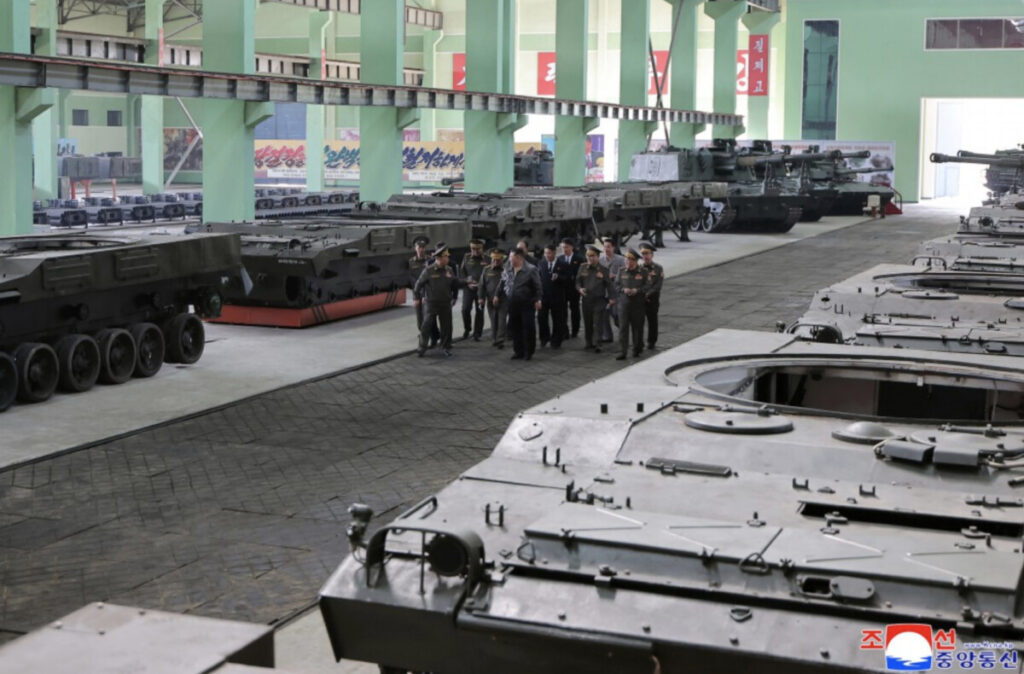
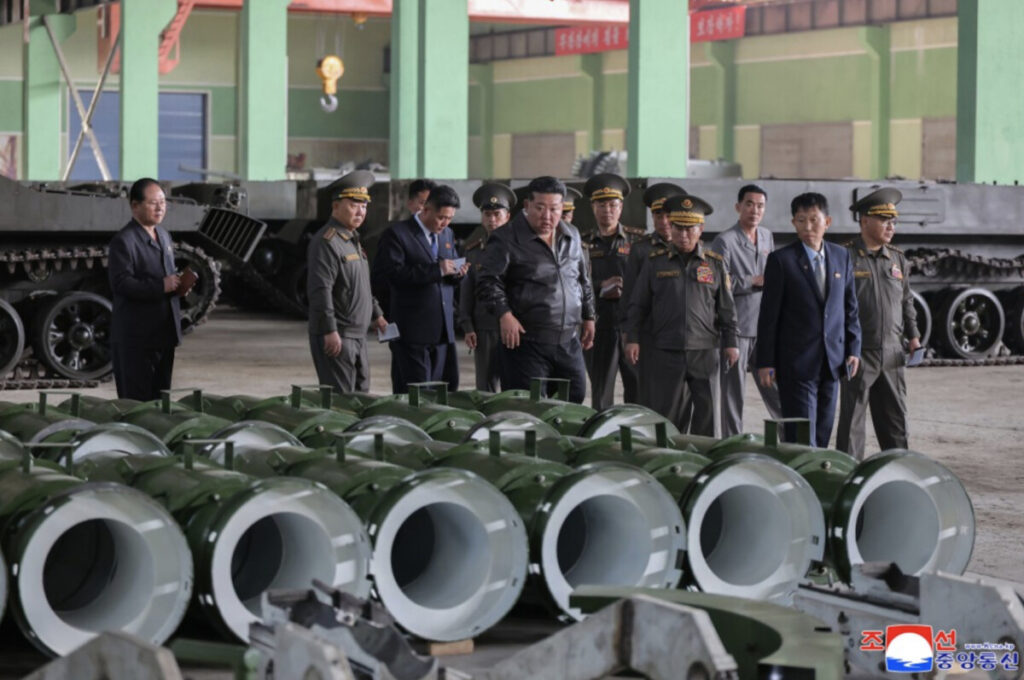
In particular, Kim referred to the expanded range, saying it would exceed 60 kilometers.
“Such a rapid expansion of the firepower strike range and a dramatic improvement in target-destruction capability will provide great change and advantages to our army’s ground operations,” he said.
The planned deployment of large-caliber artillery systems with such a range represents a significantly increased threat to the densely populated capital area of South Korea. Some 26 million people live in Seoul, Incheon, and surrounding Gyeonggi Province.
Seoul lies 40 kilometers from the Demilitarized Zone, and the greater capital region contains key political, economic, and military facilities.
Kim emphasized that the weapons system does not simply extend artillery range, but could also change the way artillery is operated on the battlefield.
“(This) is a new type of artillery weapons system equipped with outstanding mobility, high combat-environment information-processing capability, and an automatic firing system” that would “completely renew the composition of our artillery forces,” Kim said.
The visit is in the context of Pyongyang’s aim to pressure South Korea and shift the balance of power in its favor by strengthening not only weapons of mass destruction but also conventional forces, according to the US-based Center for Strategic and International Studies (CSIS).
In a report last year, CSIS describes the existing 170mm Koksan self-propelled gun as one of the country’s representative long-range non-rocket artillery systems. The new howitzer represents a more mobile and more automated upgrade.
North Korea’s experience supporting Russia is also worth noting. CSIS has documented the expansion of bilateral cooperation 2022, noting among other things the transfer of around 200 pieces of long-range artillery equipment to Russia.
South Korean officials and experts say that North Korea may be gaining battlefield data from the war in Ukraine by supplying Russia with artillery and missile systems.
This suggests that Pyongyang could be using the war in Russia to assess the performance and limitations of its own artillery systems and reflect those lessons in the development of new weapons.
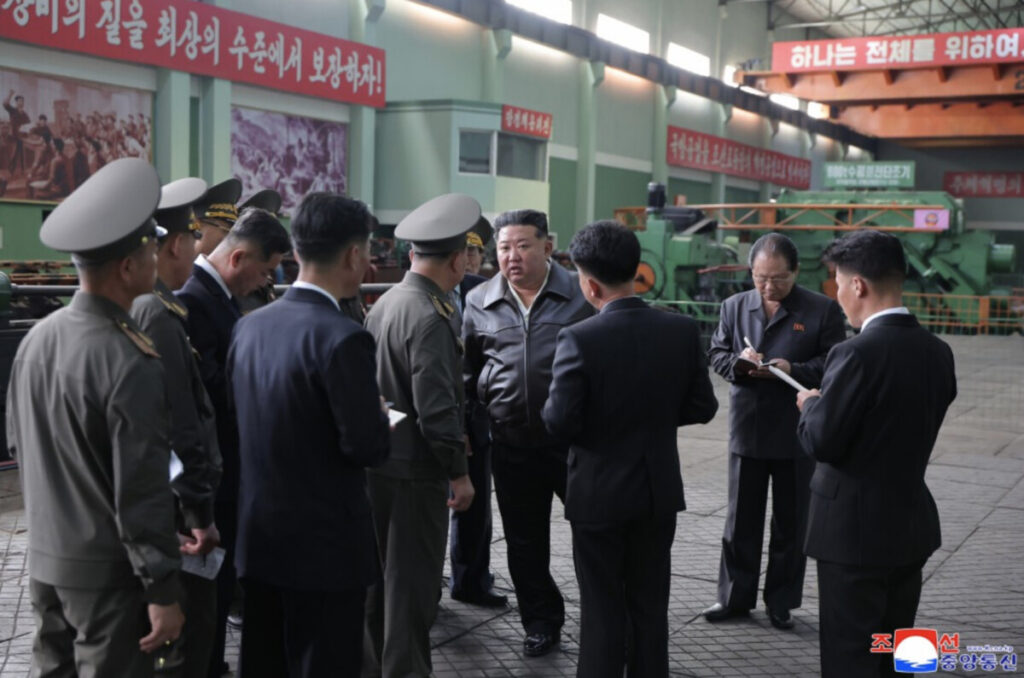
Touring the plant, Kim Jong-un expressed dissatisfaction, pointing out shortcomings in the “production system structure, processing zones, and equipment layout,” Korean Central News Agency said.
He instructed officials to introduce an “automated flow production system supported by a more efficient and innovative concept.” Analysts say this suggests he is not merely producing a prototype or a limited number of new weapons, but is seeking to secure mass-production and sustained-supply capabilities.
Kim also inspected a new main battle tank and various launcher vehicles, saying the technological upgrading of key munitions enterprises was a matter of urgency. They should attain the most advanced level in the shortest possible time and establish modern production and management systems, he said.

Taesung offers informed perspectives on North Korean society, grounded in years of experience within a key state-run institution. After defecting to South Korea in 2024, he now focuses on providing analysis of the country.
Latest posts by Kim Taesung (see all)
- Two North Korean prisoners, one diplomatic dispute: What was agreed between Seoul and Kyiv? - September 28, 2026
- North Korea is building new weapons and drones. Russia may be making them better - September 24, 2026
- North Korea drops ‘unification’ from party charter, boosts Kim Jong-un’s power - September 13, 2026