

North Korea extends strategic nuclearization to its navy
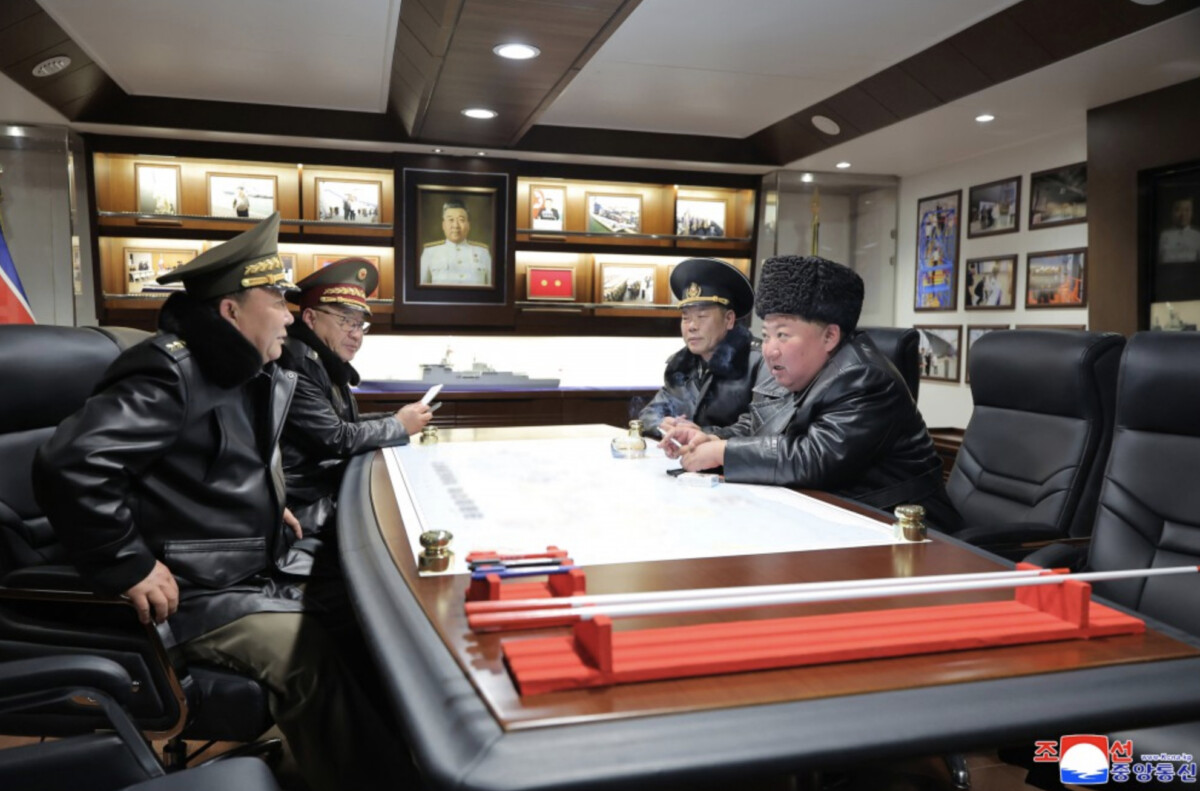
The Korean Central News Agency (KCNA) reported that Kim Jong‑un inspected the destroyer Choe Hyon on March 3 and 4 ahead of its commissioning. (Image: KCNA)
North Korean leader Kim Jong-un visited the Nampo Shipyard and the new destroyer Choe Hyon on March 3 and 4, according to KCNA.
Kim inspected the ship’s combat‑political training status, sailing performance, weapons‑system operating capability, and the final pre‑commissioning stage of operational capability evaluation, the state news agency reported.
Kim boarded the vessel to check the sailors’ navigation training and weapons‑system readiness posture, after which he observed a test launch of a sea‑to‑ground strategic cruise missile.
He expressed satisfaction with the test results, calling it “a key element in evaluating the ship’s operational capability.”
The sailors were “very well‑trained in conducting strategic attacks” using the new destroyer, he said, emphasizing that the navy’s force‑building efforts are progressing as planned.
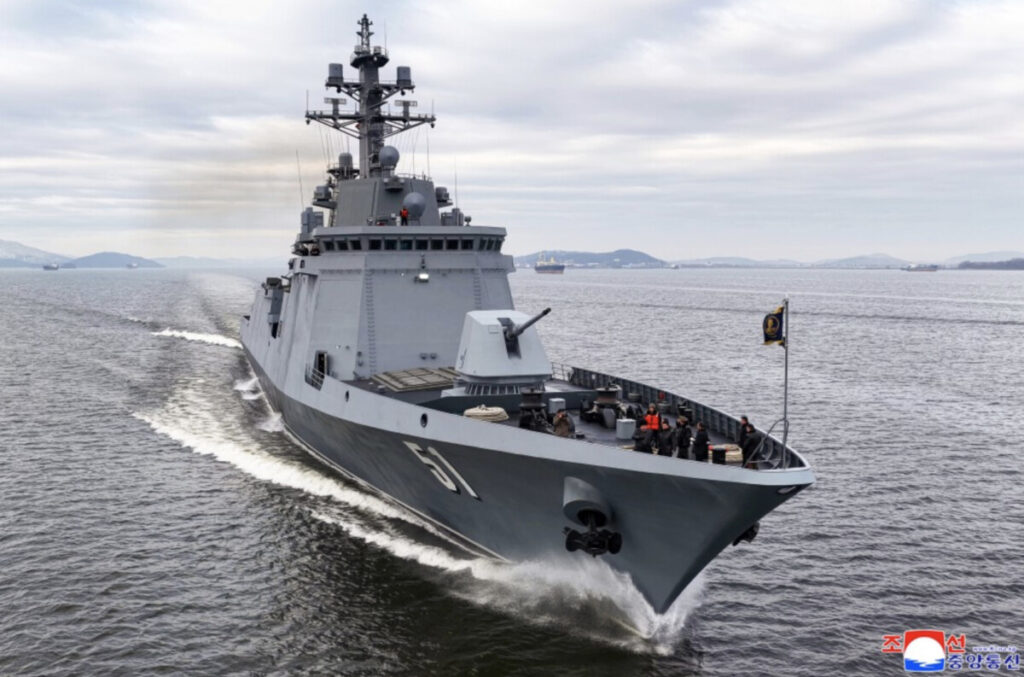
The report indicates that Kim was not merely inspecting weapons, but rather was demonstrating that he is personally leading the process of elevating the navy as a new pillar of strategic nuclear forces.
“The nuclear armament of the navy is being carried out satisfactorily,” Kim said.
Use of the term “strategic attack” was significant. The North Koreans use it to refer to the ability to strike an adversary’s leadership, cities, or critical infrastructure with nuclear weapons or other strategic‑level WMDs, capabilities that threaten the very survival of a state, far beyond simple tactical engagements.
The test of a sea‑launched strategic cruise missile introduces a new dimension of threat to South Korea’s security. Cruise missiles fly at low altitudes, making them difficult to detect, and their mobile launch platforms allow the North Korean navy to fire them from anywhere in the East or West Sea with little warning.
Pyongyang has already hinted at the possibility of equipping cruise missiles with nuclear warheads, meaning the entire peninsula could fall within a blind spot for sea‑based nuclear attacks.
South Korea’s existing KAMD missile‑defense system is optimized for intercepting ballistic missiles, leaving it relatively vulnerable to sea-launched cruise missiles.
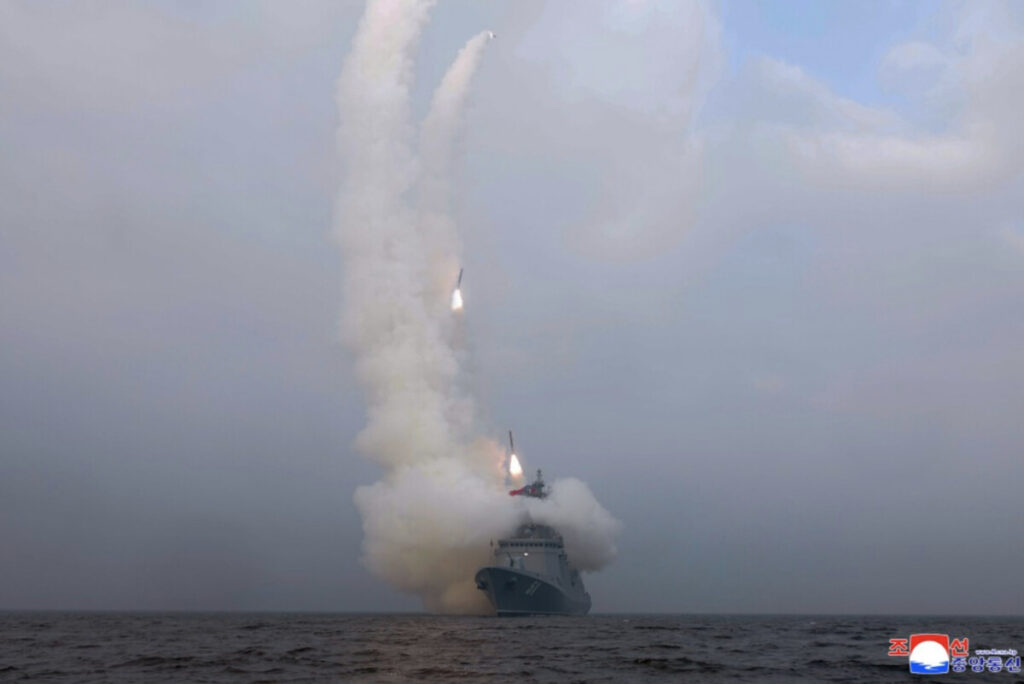
With Kim’s current five-year plan calling for two destroyers to be built every year, it is likely, given the limited domestic shipbuilding capacity, that the Russians may provide some form of assistance.
Analysts say that since the outbreak of the war in Ukraine, Russia has in fact been providing technologies, such as ship design, electronic warfare and navigation systems, in exchange for North Korean ammunition and missiles.
The sudden acceleration building destroyers, plus improvements in the precision and range of the strategic cruise missiles, strongly suggest that Russian technical assistance may already be engaged.
North Korea’s military acceleration is also closely tied to the broader international situation.
With the U.S. and Israel targeting Iran’s nuclear and missile capabilities, Pyongyang sees a potential threat that could be applied to itself. Kim’s declaration about safeguarding sovereignty “not with words or writings but with actual capability and action” indicates that he is pursuing an even more preemptive and aggressive buildup.
A recent report by the Heritage Foundation, the 2026 Index of U.S. Military Strength, underscores international concern that the North is already able to target the U.S. mainland.
The report says Pyongyang can strike the U.S. mainland with intercontinental ballistic missiles and has already achieved nuclear‑warhead miniaturization.
It also raises the possibility that, in a conflict, Kim could use nuclear weapons against South Korean ports and airfields to block U.S. reinforcements, or even attempt to decouple the U.S.–ROK alliance by threatening nuclear strikes on the U.S. mainland.
These assessments show that North Korea’s nuclear and missile capabilities have evolved from a regional threat into a direct challenge to U.S. national security.
Ultimately, Kim’s latest actions indicate that his navy is evolving from a mere defensive force into a second strategic nuclear pillar capable of operating nuclear and strategic missiles.
This development inevitably means major changes to the security environment of South Korea and Northeast Asia. North Korea is seeking to secure strategic nuclear‑attack capabilities not only on land and in the air but also at sea, creating a new asymmetric threat that South Korea’s existing defense systems struggle to counter.
With such an investment in a multilayered nuclear force that includes the navy, North Korea is making clear that it has no intention of accepting any dialogue premised on giving up nuclear weapons. Kim’s emphasis on building “the strongest navy” and on “actual capability for action” reaffirms that North Korea regards its nuclear arsenal not as a bargaining chip but as the non-negotiable foundation of regime survival.

Taesung offers informed perspectives on North Korean society, grounded in years of experience within a key state-run institution. After defecting to South Korea in 2024, he now focuses on providing analysis of the country.
Latest posts by Kim Taesung (see all)
- Trump wants Kim back at the table. This time, Kim holds the cards. - August 28, 2026
- In North Korea, a newspaper editorial is never just an editorial - August 12, 2026
- North Korea posts third straight year of 3% growth, fueled by Russia arms trade - August 3, 2026