

How to explain the appearance of EVs on Pyongyang streets?
Here’s what happens every time an electric vehicle is reportedly spotted in North Korea: everybody stops and asks the same questions. How can EVs be charged in a country where the lights go out several times a day? Who drives such cars? And where could the vehicles have come from?
To understand this story, a basic question must first be addressed: Is North Korea capable of building EVs? The answer is no. The country struggles to properly manufacture even conventional automobiles. There is little possibility for EV production.
According to recent South Korean government statistics, the data point to the structural limits of the North’s industrial capacity. In 2023, North Korea produced only 350,000 tons of crude steel—just 0.5% of South Korea’s 66.68 million tons—highlighting its inability to manufacture even basic materials needed for automobile production.
The situation is even more severe in the power sector. North Korea’s gross electricity generation in 2023 reached only about 4 percent of South Korea’s, while its power generation capacity stood at roughly 6 percent. Under these conditions, investment in battery technology and the development of basic EV infrastructure, such as charging stations, appear impossible.
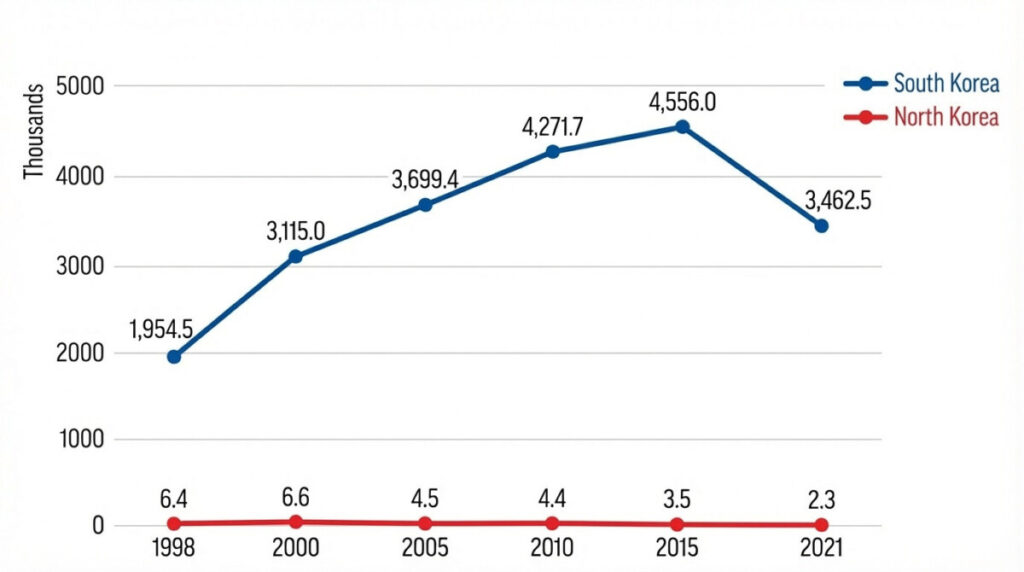
So how many vehicles does North Korea actually produce? According to the Ministry of Unification, the Sungri Motor Complex, widely regarded as the country’s largest car factory, has an annual production capacity of about 30,000 units. When thel other factories that are believed to exist in the country are included, total capacity could theoretically reach between 40,000 and 50,000 vehicles a year.
The reality, however, is starkly different. The Ministry of Data and Statistics estimates that North Korea produced only around 2,300 vehicles in 2021—the most recent year for which data are available—suggesting factory utilization rates of just 4 to 5 percent. Even then, production is known to be mostly industrial trucks and military vehicles, rather than passenger cars for civilian use.
Long-term data further underscore the decline. Since 1998, vehicle production has shown a sustained downward trend, highlighting the country’s inability to manufacture modern automobiles, making EV production even more unlikely.
If North Korea cannot manufacture EVs, where did those models seen on the streets of Pyongyang come from and how did they get there? The most likely answer is smuggling.
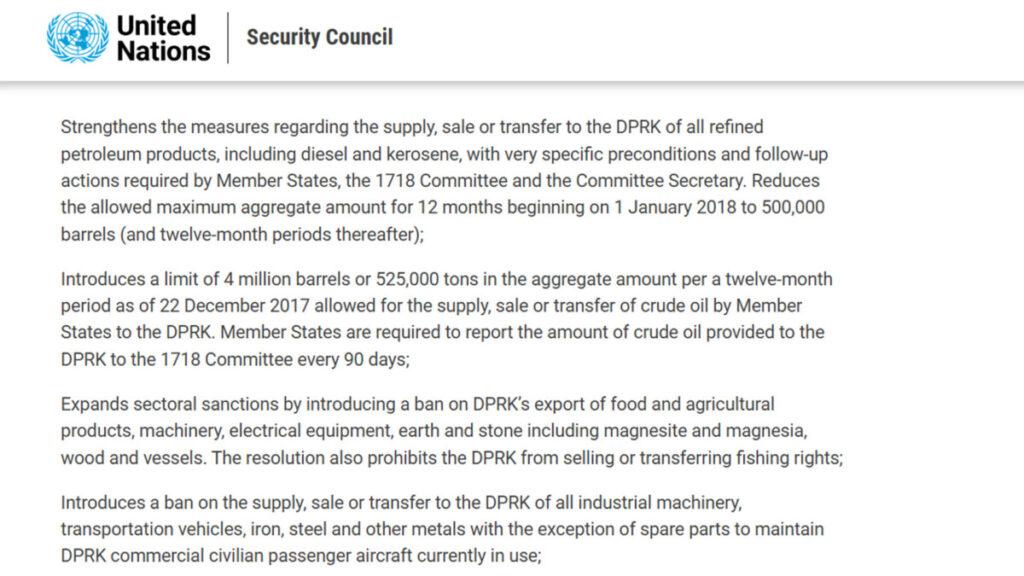
In December 2017, the UN Security Council adopted Resolution 2397, imposing a comprehensive ban on exports to North Korea of industrial machinery, vehicles, steel, and other metals. Despite these strict sanctions, and signs that factories are barely producing vehicles, cars continue to appear on North Korean streets. This raises questions about illicit supply routes.
China’s General Administration of Customs said bilateral trade with North Korea rose 25% to $2.73 billion in 2025, with exports in December alone increasing 21.2% from a year earlier to $257.4 million. As the details of that trade remain unclear, growing evidence suggests vehicles are being smuggled in, quietly and covertly.
According to Chinese sources, the port in Dandong, which is China’s largest city on the Korean border, is often very busy around 10 p.m. at night. Some say they heard that parts or semi-assembled vehicle units are being shipped for completion inside North Korea. Components of EVs are said to be part of these shipments. Multiple sources estimate that more than 4,000 Chinese EVs were imported into North Korea in 2024. There is also speculation that assembly plants in Rason, near the Chinese and Russian borders, are working on cooperation with Chinese companies.
If true, this trade is in violation of international sanctions.
North Korea also unveiled what it described as its own EV in June 2024, but it has drawn widespread skepticism. Chinese sources who have actually seen the vehicle said it appears to be a reassembled Chinese-made EV. Several experts noted strong similarities to the sedan named Han produced by BYD, suggesting the North Koreans have changed the logo and are calling the vehicles their own.
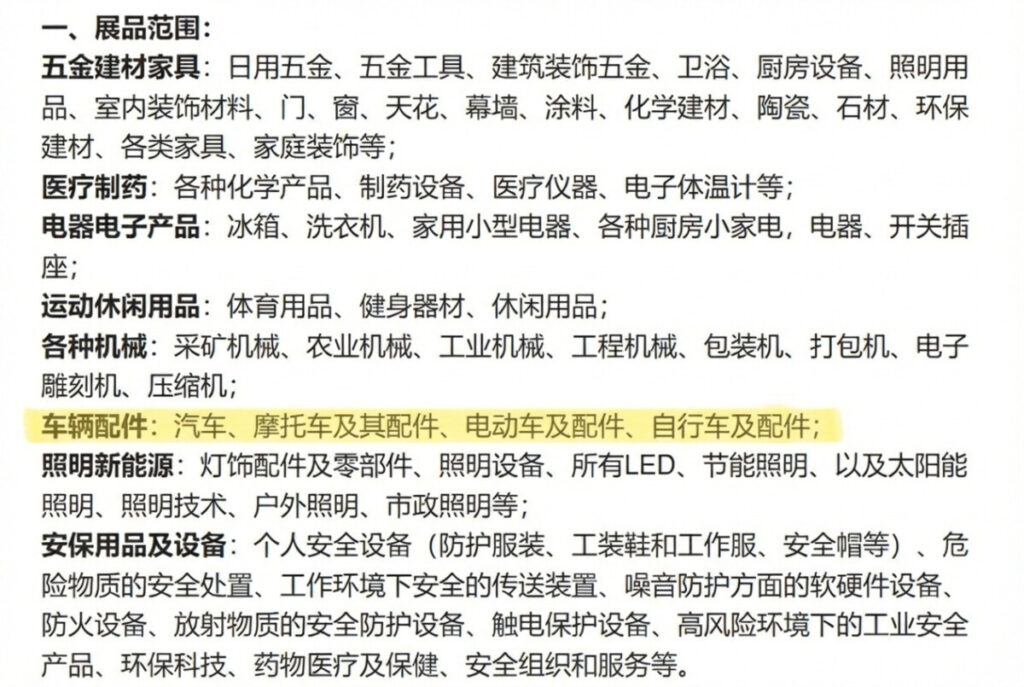
Smuggling may not be the only channel. Twice a year, in spring and fall, the Pyongyang International Trade Fair offers a rare formal channel for the isolated country to engage foreign businesses. What’s interesting is that the exhibition categories openly include “EVs and parts.” That points to their willingness to keep EV trade channels open despite sanctions.
Meanwhile, North Korea’s vehicle ownership regulations have undergone significant change. Li Chunri, a professor at Yanbian University who studied at Kim Il Sung University, wrote in a Chinese academic journal last September that North Korea made private vehicle ownership legal in October the year before. It is reportedly known that several thousand cars were sold after private car sales began in February 2025, following the law taking effect, and a fair number of those were electric models.
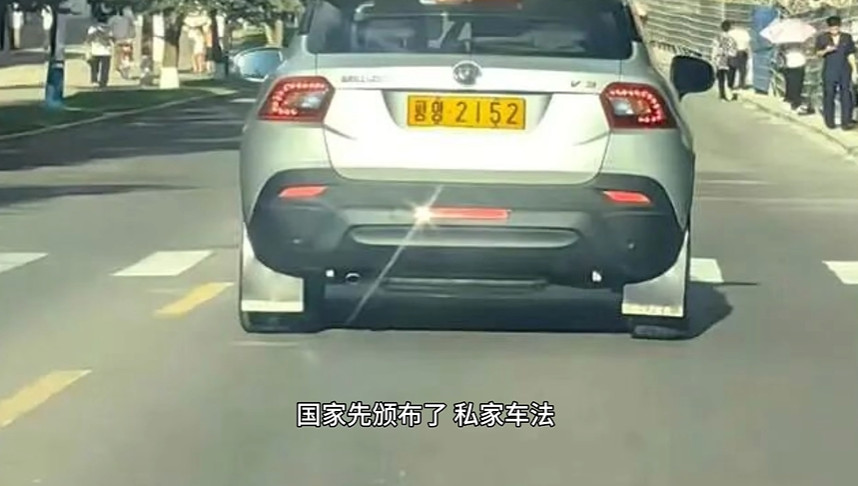
So, vehicles appear to be either manufactured domestically, even if in very small numbers, or illegally imported into North Korea, and private car ownership is now permitted. As a result, the number of cars—particularly EVs—seems to be growing. But can EVs realistically operate in a country that lacks a reliable power supply and sufficient budget to build the necessary infrastructure?
Kim Pil-soo, a professor of automotive engineering at Daelim University, warned that operating used EVs without proper infrastructure poses serious safety risks.
“Electric vehicles are different from conventional cars. Just owning one doesn’t mean it can be used,” Kim said. “Without basic support systems such as charging facilities, a stable power supply and proper battery management, they pose serious safety risks, including battery damage and fires.”
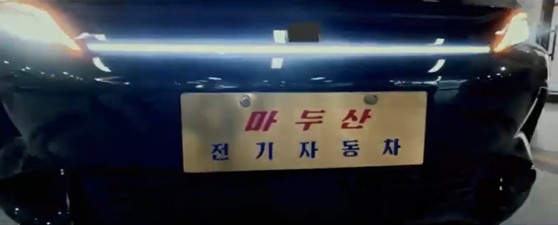
So why are EVs spreading in the country despite all these obstacles? The answer lies in human desire.
The hunger for something better. The craving to try something new. The need to own something different from everyone else. These are things that political systems can’t erase or sanctions can’t eliminate.
This won’t immediately trigger fundamental transformation in North Korean society. But as history shows, small expressions of desire can eventually become the starting point for bigger changes. Once people start imagining different lives, once they begin experiencing them, it’s hard to turn that process around. However strong the sanctions, however tight the controls, you can’t stop people’s desires.
North Korea’s EVs now move forward, carrying that unstoppable desire with them.

Yoonseo Im is a Seoul-based trilingual journalist and researcher. Growing up in three different countries has shaped her international perspective on the Korean Peninsula. She is a Ph.D. candidate in International Studies and holds prior degrees in Political Science and International Relations. She is also active in multiple research organizations focused on regional issues, including North Korean affairs. Her work explores the intersection of economics, industry, politics, and security in Korea and the broader region, combining academic expertise with reporting experience gained through field journalism. Contact: [email protected]
Latest posts by Yoonseo Im (see all)
- North Korea isn’t building the next ChatGPT. It’s building something else. - June 14, 2026
- May Day and the unheard cry beneath the propaganda - May 13, 2026
- North Korea’s new cybercriminals - April 15, 2026