

Life in the country without taxes
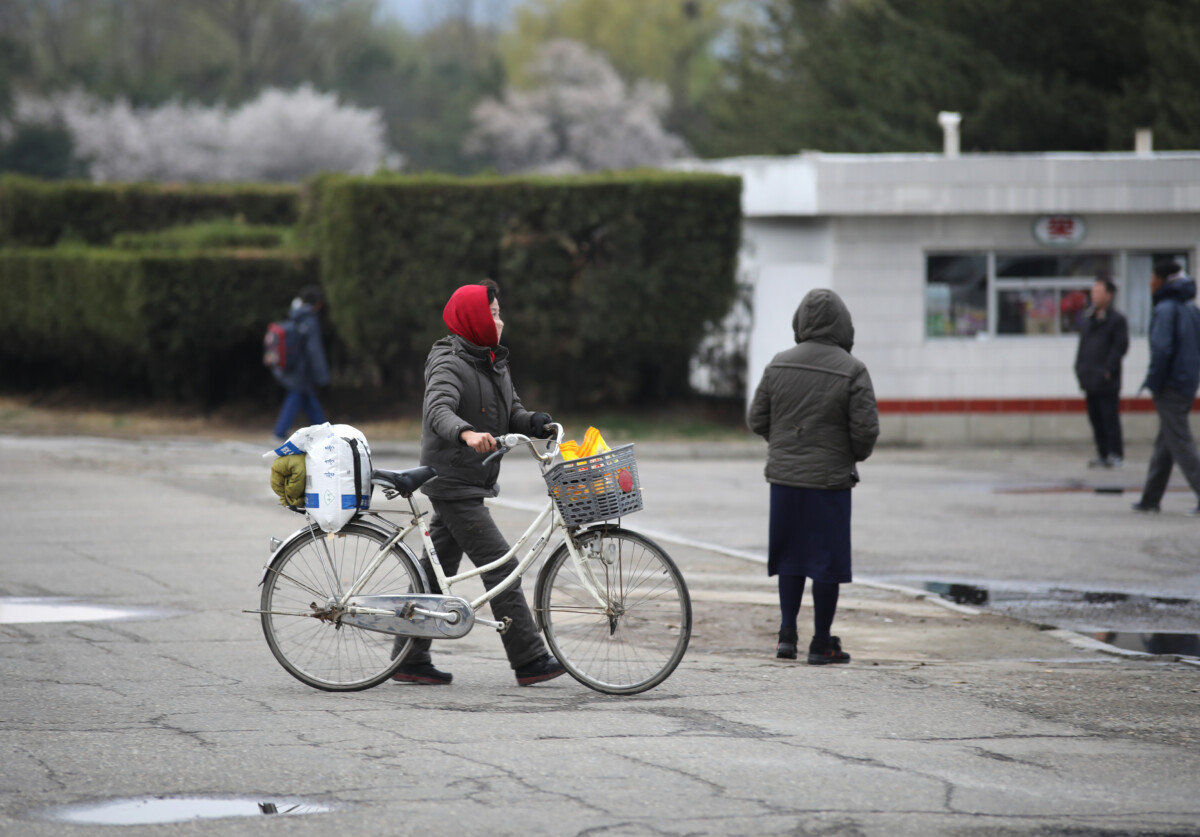
Even in the privileged city of Pyongyang, residents long for the better days before modernization. (Image: iStock/Omer Serkan Bakir)
In North Korea, the word “tax” does not exist. Instead, we talk of a “usage fee.” Why the euphemism? To be frank, I don’t know. I suspect the government wants to impress upon us that we North Koreans aren’t capitalists.
Of course, changing a word doesn’t change reality. But strangely enough, it confuses people and this confusion serves a purpose.
North Korea doesn’t copy all aspects of capitalism. Only parts of it. Personally, I think it would be far better if the regime copied everything. Then it wouldn’t take away everything that belongs to us, and we wouldn’t live in constant anxiety, wondering when the next ration will arrive.
So let’s talk about the “taxes” North Korea insists don’t exist.
Out of many examples, I’ll explain one usage fee: electricity charges.
After escaping North Korea, the experience that shocked me most was China at night and the sight of brightly lit streets.
Lights are beautiful. The sight made me realize how deprived I had been. Electricity is so scarce in my country that when it comes, you feel like you’re on holiday.
I remember this from my childhood. Even if we were playing hide-and-seek in the dark and the power came on, we all screamed in delight and ran home to eat.
I tell you, dinner under bright light tastes so much better. You have to experience a meal in darkness to know the difference.
The worst was when the power went out as we were eating. My mother would tiptoe and feel her way around to find candles so we wouldn’t knock over the table.
We were lucky to be able to afford candles. Most households used oil lamps, which had a pervasive smell and left soot stains everywhere.
Mother lit candles all around the house. “To protect your eyesight,” she said. As a result, candle burns scarred our furniture. Blackened holes in desks, TV stands, and dining tables.
I singed my bangs countless times, dozing off studying by candlelight.
Electricity left many traces and memories in our lives.
The problem was that, despite the rare supply, we still had to pay a regular fee for it. The average worker’s monthly wage last year was about 30,000 won. The electricity usage fee comes to around 10,000 won. You can see the problem.
The government sometimes sends electricity on special days, like Lunar New Year or the Day of the Sun (founding leader Kim Il-sung’s birthday). Why so? To lift our spirits, replacing despondence about our life with gratitude to you-know-who.
The thing is, though, they send it during the day. In case you forgot, the main purpose of electricity in the house is to light the darkness. What use is it in daylight? But it’s also useful for TV, you say. True, but in North Korea, TV starts after 5 p.m.
As a side note, men play a minor role in household life in my country. Because of the broken system, they cannot go out and earn money. So some people jokingly refer to men as “daytime lamps.”
Back to the subject of night lamps. These night lamps are so dim that there is nothing more than a faint glow from the red coil inside the bulb. You have to strain your eyes to see. The glowing coil is too weak to light a room.
Later, in South Korea, I saw such bulbs used for decorative purposes in cafés. Seeing rows of glowing coils, I thought, “How beautiful they look.” That which I hated in North Korea now lit up South Korean cafés with a cozy charm.
The world truly looks different depending on what you have.
Because electricity was so weak, every household needed a transformer. Most had a 2-kilowatt device, and some people connected two to draw more power. But electricity was limited. If one household used more, another lost its share. We were competing “fairly” in a supposedly equal society.
Sometimes the government did its job and sent stronger electricity. When that happened, households with two transformers suffered the consequence of overvoltage. Sometimes this caused fires.
But ultimately, the biggest villain in this story is the government and its inconsistent supply.
In recent years, electricity has only been supplied when something bad has occurred. This makes people suspicious. For example, one day we rejoiced at the power coming on, only to hear the news of the arrest of Jang Song-thaek, the ruler Kim Jong-un’s uncle and at the time the number two authority in the country.
There was another time when the electricity came, and we soon learned of his father, Kim Jong-il’s death.
So now, when the lights come on, I worry.
One day, I was deeply upset when the power didn’t come. I had severe stomach pain and went to the hospital. The nurses said they couldn’t take an X-ray because there was no electricity. I sat on a bench, clutching my stomach, waiting forever for the power to return.
I was there for about two hours. I shuddered at the thought that people could die from this.
The electricity never did arrive that day. My pain eventually subsided on its own.
Looking back, I realize I have almost no good memories associated with electricity in North Korea.
Our society boasts of free education, free healthcare, free this and that. Everything is said to be free. But in reality, it isn’t. The government collects money for electricity it doesn’t provide, insisting it’s not a tax but a “usage fee.”
It’s been more than a century since Edison powered that first lightbulb, yet North Koreans still don’t enjoy electricity’s benefits.
In Pyongyang, floorboards were torn up and traditional underfloor heating pipes replaced with electric heating in the name of modernization. Every household was forced to bid farewell to its firewood stoves.
Now the people supposedly enjoying the privilege of living in the capital spend winter hugging containers of hot water through the freezing nights, and the elderly long for the life they had before modernization.
This is the reality of living in a country without taxes. You pay money, yet your body still suffers.

Born in Chongjin in 1990, Jang Mi was not a studious child, but under her mother’s influence, she graduated from high school and went on to university to take math and science. She worked as a wedding video editor for seven years until her defection in 2019.
Latest posts by Jang Mi (see all)
- When will the Koreas be reunited? - October 1, 2026
- Is the Kim family still Big Brother? - September 6, 2026
- Electricity, not slogans: What North Korean women really need - August 3, 2026