

Kim Jong-un’s diplomacy aims to strengthen ties with Russia and China, rather than play them off one another
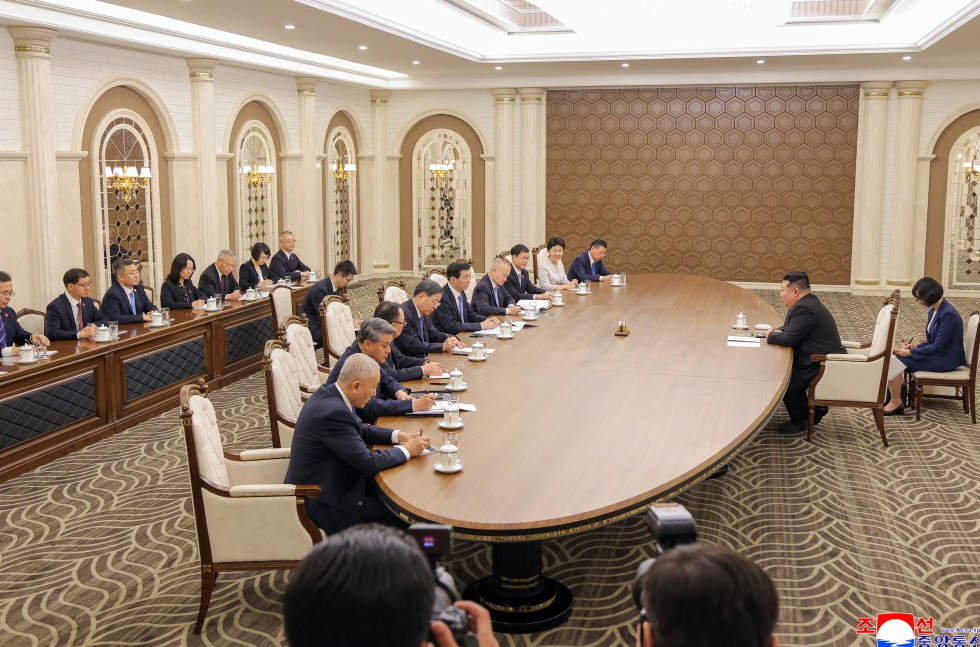
Top Chinese official Wang Huning visited Pyongyang last week, indicating that the restoration of North Korea–China relations is moving forward.
Wang, a member of the Standing Committee of the Political Bureau of the Chinese Communist Party and chairman of the Chinese People’s Political Consultative Conference, arrived in the North Korean capital on July 15 at the start of a three-day visit.
Widely regarded as China’s fourth-ranking official, Wang was there to mark the 65th anniversary of the signing of the Sino-North Korean Treaty of Friendship, Cooperation and Mutual Assistance. But his message was more than ceremonial.
In a meeting with Kim Jong-un, he expressed China’s intention to implement the agreements reached by the leaders of the two countries a month earlier and to expand cooperation in the political, economic and cultural spheres.
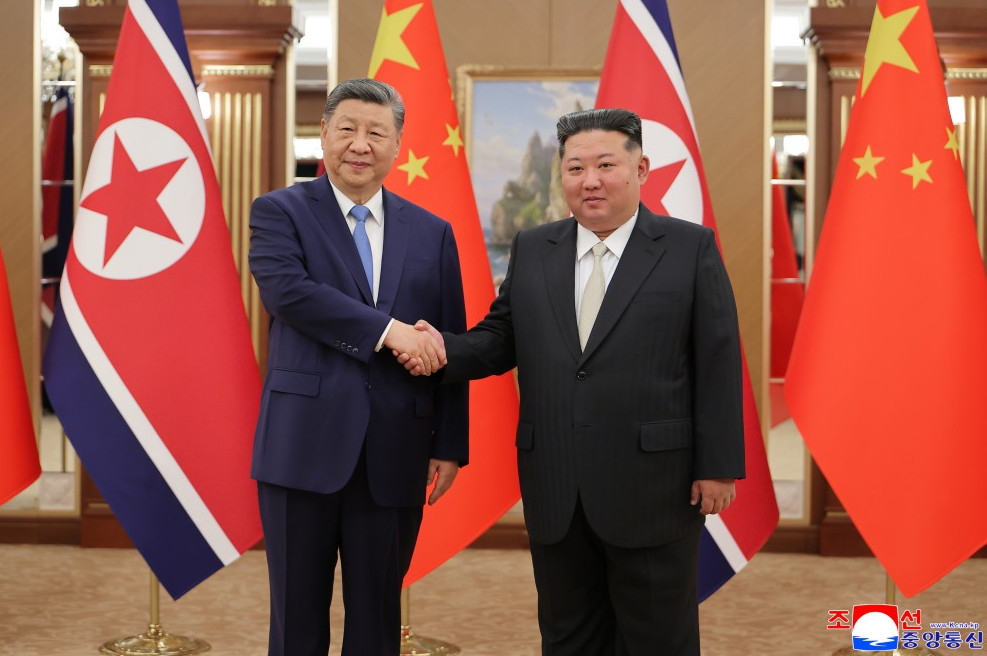
Wang’s visit came on the heels of Chinese President Xi Jinping’s visit to North Korea in June.
Xi’s two-day state visit was his first trip to North Korea in seven years. He and Kim agreed to relations strategic communication through high-level exchanges and expand practical cooperation in the political, economic and cultural fields. Kim, meanwhile, expressed support for China’s “One China” principle, while China emphasized that it would continue developing bilateral relations regardless of changes in the international situation.
Wang’s visit was essentially a follow-up step intended to move forward on the implementation of those agreements.
That is not to say that any shift by the North Koreans away from Russia is on the cards.
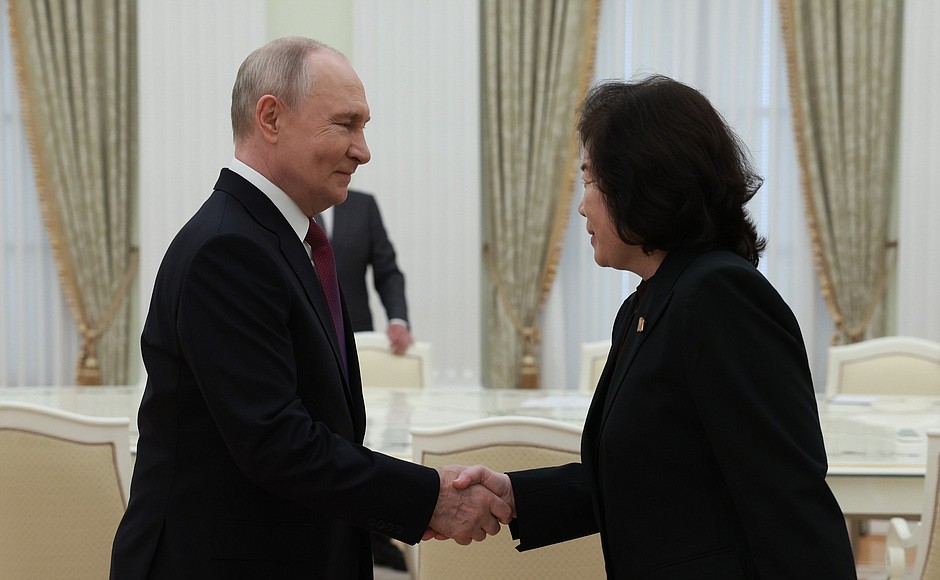
After Wang returned to Beijing, North Korean Foreign Minister Choe Son-hui flew to Moscow to meet Russian President Vladimir Putin to reaffirm Kim’s commitment to ties.
Indeed, Pyongyang was signaling the strategic relationship with Russia even as it welcomed the Chinese delegation.
Kim’s diplomatic strategy is not to choose between China and Russia, but to expand relations with both and thereby increase North Korea’s options.
I worked for several years in state institutions in Pyongyang and witnessed how the party and government interpreted visits by foreign leaders and senior officials and presented them to the public. They were framed as demonstrations that the leadership of another country had come to Pyongyang in recognition of the North Korean supreme leader’s authority and strategic importance.
Differences and conflicting interests between the two countries were rarely disclosed in domestic propaganda.
Because I left North Korea in 2024, I cannot directly verify how these latest visits were presented to the public. Judging from North Korea’s established propaganda methods and past practices, however, the successive visits by Xi Jinping and Wang Huning are likely to be used to promote the idea that Kim’s international standing has risen.
North Korea’s domestic propaganda, however, must be distinguished from the actual dynamics of North Korea–China relations.
China’s efforts to restore relations with North Korea must be understood against the backdrop of the rapid expansion of North Korea–Russia relations. Moscow has become a central pillar of North Korea’s diplomatic and security strategy.
This development has altered North Korea’s previous dependence on China and enabled Pyongyang to exercise greater bargaining power in its dealings with Beijing.
North Korea is well practiced in this kind of leverage diplomacy. In 2017, when China voted in favor of UN Security Council sanctions against Pyongyang over nuclear tests and ballistic missile launches, there was no summit to address the impact on relations between Xi and Kim. But then, once plans for a North Korea–U.S. summit began to move forward in 2018, Kim visited Beijing and met Xi for the first time before traveling to Singapore to meet Trump.
The current rapprochement with China can be interpreted within the same framework.
For China, North Korea is both a buffer preventing the military influence of the United States and its allies from extending closer to the Chinese border and a strategic asset through which it can maintain influence over developments on the peninsula. Should North Korea become excessively close to Russia, China could lose some of its longstanding influence and its ability to shape Northeast Asian affairs. North Korea, in turn, can use China’s desire to avoid such an outcome to obtain greater economic and political support.
Yang Moo-jin, a professor at the University of North Korean Studies in Seoul, recently described the renewed high-level exchanges between North Korea and China as the result of converging interests: North Korea seeks China’s economic and geopolitical support, while China wants to preserve its influence on the Korean Peninsula and avoid losing the initiative in Northeast Asian affairs.
It was noteworthy that neither the North Korean nuclear issue nor denuclearization was publicly mentioned in the account of the Xi–Kim summit. That is not to say it was not discussed in closed-door meetings.
Hong Min, a senior research fellow at the (South) Korea Institute for National Unification, was quoted by Reuters as saying that North Korea had sought to minimize the impression that it was subordinate to China or merely receiving benefits from it, instead emphasizing an equal relationship.
Ja Ian Chong, a professor at the National University of Singapore, said that the absence of any reference to the nuclear issue suggested that China wanted to frame the visit in terms of friendly relations between neighboring countries rather than controversial issues.
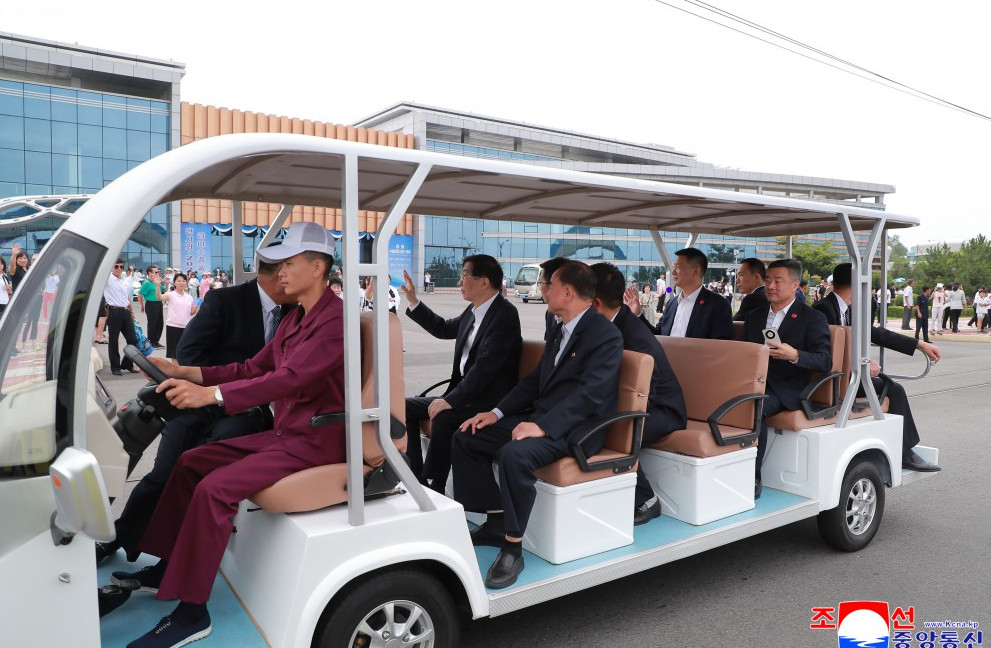
During Wang’s visit last week, North Korean media showed the Chinese delegation touring the Wonsan Kalma Coastal Tourist Area, pointing to the economic dimension of the restored relationship.
Wang reportedly praised the quality of the facilities and landscaping, while the delegation received a briefing on the resort’s operations and development prospects. Should the number of Chinese tourists visiting North Korea increase, tourism could become an important source of foreign currency for Pyongyang.

Taesung offers informed perspectives on North Korean society, grounded in years of experience within a key state-run institution. After defecting to South Korea in 2024, he now focuses on providing analysis of the country.
Latest posts by Kim Taesung (see all)
- Korea’s Unification paradox: Two states, one people — but for how long? - October 15, 2026
- A 52-year-old gunshot reopens South Korea’s historical divide - October 11, 2026
- A DMZ mine tests Lee Jae-myung’s North Korea policy - October 8, 2026