

The landmines were supposed to keep enemies out. Who were they really keeping in?
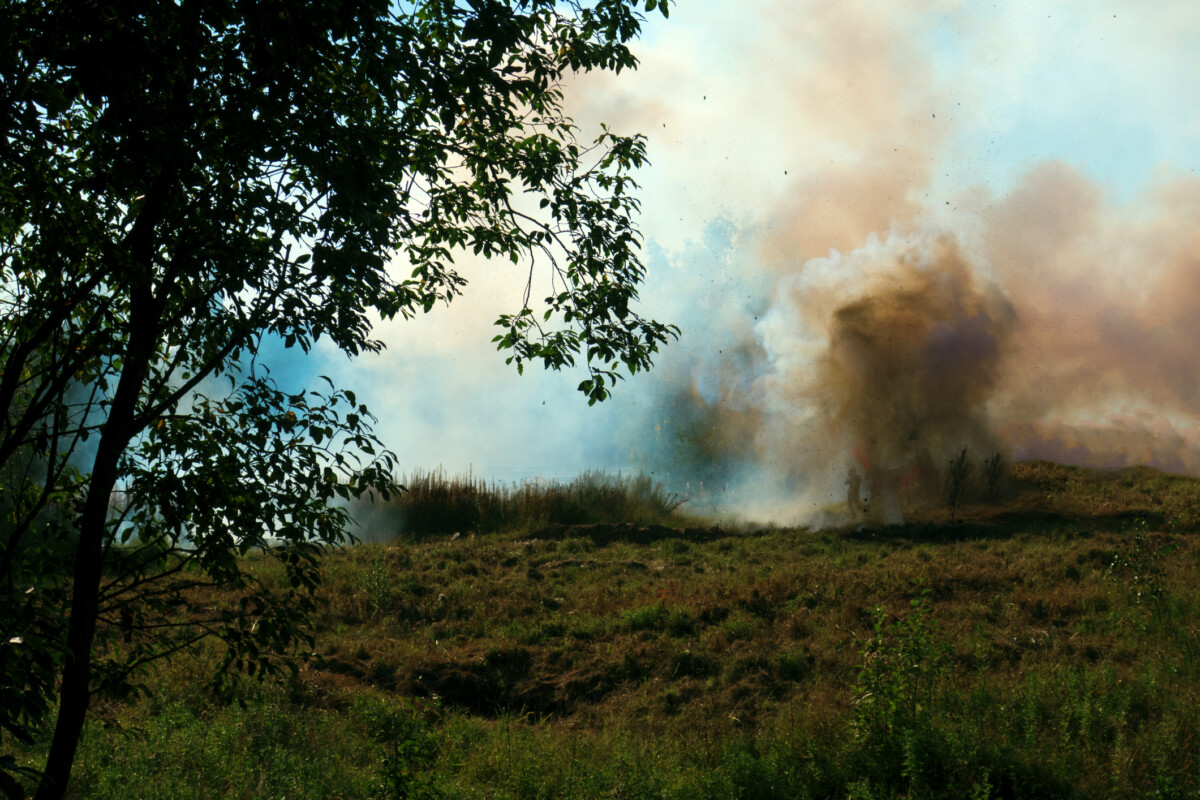
“A landmine cannot distinguish between someone entering and someone leaving. It simply explodes when stepped on.” Image: iStock/Anastasiia Kuznetcova
A few days ago, a news report left me staring at the screen, unable to look away.
On Sept. 21, three South Korean soldiers were injured in a landmine explosion while operating in the Demilitarized Zone (DMZ). Two were seriously wounded, including one who lost his foot at the ankle.
On Oct. 5, the South Korean military announced that a joint investigation with the United Nations Command had concluded that the explosion was caused by a landmine planted by North Korean troops about 10 meters south of the Military Demarcation Line.
The news brought back memories of the coastal village on North Korea’s front line where I lived until about three years ago. People there had also lost their legs to landmines. Above all, I remembered the two children next door whose mother had been killed in an explosion.
My hometown lies on North Korea’s western coast, facing South Korea across the Yellow Sea. Just across the water was Yeonpyeong Island, where we were taught that our enemies were stationed.
North Korean authorities warned that South Korean spies could infiltrate the country by sea. Soldiers guarded the coastline, electrified barbed-wire fences were erected, and landmines were buried in certain areas.
We were told these measures were necessary to protect us. I never questioned them.
But whenever rumors of a landmine accident spread through our village, people always asked the same question:
“Where did it explode?”
Knowing who had been hurt mattered, but knowing where the explosion occurred was essential. It told us which places to avoid.
The electrified fences were visible. Landmines were different. No one could know what lay buried beneath an apparently ordinary stretch of ground along the shore.
Even warning signs were unreliable. Some areas were marked as minefields despite having no mines. Residents relied instead on neighbors’ experiences and rumors. Sometimes, we discovered that a place was dangerous only after someone had been injured.
Then, one day, the lady next door was killed.
She was an ordinary mother, raising her family and struggling each day to put food on the table. Then a landmine exploded, and she was gone.
I still think about those children. On their first night without her, who did they cry out for?
In North Korea, losing a parent meant more than grief. When a family’s breadwinner died, those left behind could lose their means of survival.
Those who survived landmine explosions faced hardships of their own. Trading required walking; gathering firewood meant climbing mountains. Losing a leg could mean losing the ability to support a family. Prosthetic limbs and rehabilitation were not readily available.
Yet somehow, we grew accustomed to the danger.
We mourned those who were injured, then returned to our daily struggle to survive. What we never forgot was where the accidents had happened.
We learned where not to go, but rarely asked why the landmines had to be there in the first place.
Someone else had planted them, but the burden of avoiding them fell entirely on ordinary people.
So whom were these landmines, supposedly intended to keep outsiders out, really stopping?
What if a North Korean tried to cross that same stretch of sea in the opposite direction, hoping to escape?
A landmine cannot distinguish between someone entering and someone leaving. It simply explodes when stepped on.
In effect, landmines supposedly planted to keep enemies out also prevented North Koreans from escaping. I cannot know whether that was their original purpose. But their effect in restricting people’s movement was unmistakable.
And these barriers extend far beyond North Korea’s coastline.
In a video, North Korea Under Lockdown: The Truth About COVID-19 as I Experienced It, I discussed how border controls tightened during the pandemic went far beyond disease prevention, severely restricting movement and contact with the outside world.
North Korea dramatically expanded fences and guard posts along its border with China. According to a 2024 report by Human Rights Watch, satellite imagery covering 321 kilometers revealed double-layered fencing along most of the area, with triple-layered fencing in some locations.
The report also cited accounts that six people attempting to cross the border near Musan County in September and October 2023 were killed by landmine explosions. Although unverified, these accounts suggest that mines may have been placed along routes used by people trying to escape.
To the south, North Korea has expanded its construction of fences, barriers and minefields along the Military Demarcation Line since 2024. In October that year, it also blew up sections of the road and railway connections linking North and South Korea.
Each measure is justified in the name of national security or border management.
But to me, they tell a different story. Barriers supposedly built to keep outsiders from entering also close off the routes by which people inside might leave.
Physical isolation restricts more than movement. When fewer people cross borders, fewer outside stories, ideas and sources of information find their way in.
Watching The Truman Show recently made this connection even clearer.
Its protagonist, Truman, has no idea that his entire world is an enormous television set. To prevent him from leaving, the show’s creator stages an incident in which Truman loses his father at sea when he is a child.
Traumatized by the experience, Truman grows afraid of water. He believes he lives freely, unaware that someone else has determined how far he can go.
Life in North Korea felt much the same to me.
We were taught that our enemies lived in South Korea, that the outside world was corrupt and diseased, and that only the Party and the state could protect us.
But if the outside world is truly so terrible, why must people be prevented from seeing it for themselves?
Truman was trapped not only by the walls of the set but also by the fear he had been taught to feel toward the world beyond them.
There is, however, one crucial difference between the film and reality.
The creator who kept Truman captive did not plant landmines along the shore.
In the film’s final scene, Truman overcomes his fear and reaches the edge of the only world he has ever known. The creator urges him to stay, warning that the outside world is dangerous while his familiar world is safe.
But Truman opens the door and walks out.
At least Truman had a door he could open.
For North Koreans, even searching for such a door can mean risking their lives.
North Korean authorities continue to tighten border controls, erect higher fences and install more obstacles, including landmines. Yet the very need for increasingly formidable barriers to restrict people’s movement speaks volumes.
People naturally want to know what lies beyond their own world. They want to see other ways of life and decide for themselves where and how to live.
In my hometown, there was also a path across the sea to another world.
But along that path, there was no door.
There were landmines.
Barbed-wire fences and landmines may stop people from leaving. But how long can they imprison the desire for freedom?
I believe it is ultimately only a matter of time.

Kim Yumi, a North Korean defector, was born and raised in Haeju, South Hwanghae Province, a coastal military area. Growing up near a naval base, she was able to secretly watch South Korean news programs and TV shows, thereby uncovering the vibrant, democratic society of South Korea. Yumi and her husband made the brave decision to escape North Korea and seek a better future. Now in Seoul, she is actively involved in raising awareness about the realities of life in North Korea, especially on her YouTube channel, “@KimYumiTV.”
Latest posts by Kim Yumi (see all)
- The landmines were supposed to keep enemies out. Who were they really keeping in? - October 15, 2026
- For North Korean footballers, Japan is more than just an opponent - October 7, 2026
- Under the same full moon, two versions of the same holiday - September 25, 2026