

North Korea drops ‘unification’ from party charter, boosts Kim Jong-un’s power
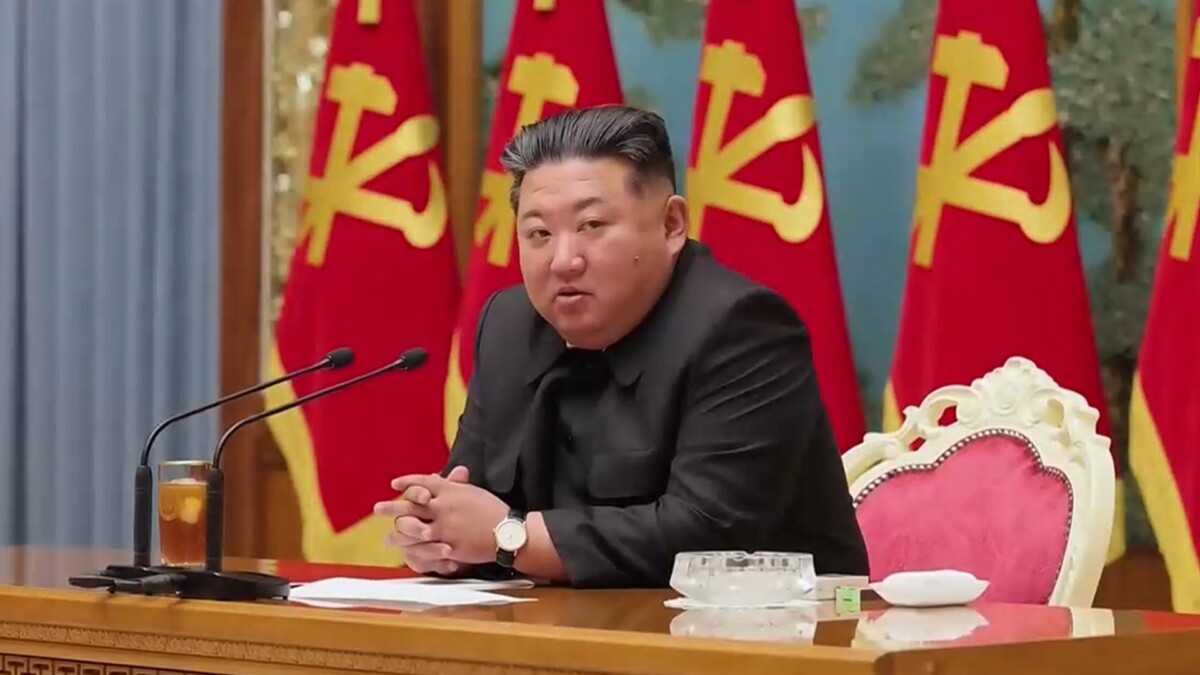
The revised charter elevates Kim Jong-un’s status and reduces the symbolic prominence of previous leaders
North Korea has removed references to “peaceful reunification,” “great national unity” and “South Korea” from the governing charter of the ruling Workers’ Party of Korea (WPK), further institutionalizing its policy of treating the two Koreas as separate states.
At the same time, the charter has been revised to explicitly define powers held by Kim Jong-un as general secretary of the WPK, while reducing references to the ideological and historical legacy of former leaders Kim Il-sung and Kim Jong-il.
The changes to the charter, which function as the country’s highest political code, suggest an effort to redefine inter-Korean relations while further consolidating a system of rule centered on Kim Jong-un.
According to a report released by the South Korea-based Institute for National Security Strategy (INSS) this month, the WPK charter was revised at its 9th Party Congress in February.
The report – “Analysis of the Party Charter Adopted at North Korea’s 9th Party Congress and Their Policy Implications” – said the revisions focused on strengthening the party’s organizational structure and institutionalizing a system of unitary leadership under Kim. The charter also incorporated a party-building line encompassing “political, organizational, ideological, disciplinary, and work-style construction.”
The most notable change is the sweeping removal of language related to South Korea and to unification.
Expressions previously included in the preamble, such as “peaceful reunification of the motherland,” “united front,” “South Korea,” “great national unity” and “on a nationwide scale,” have disappeared.
Also deleted were provisions associated with North Korea’s previous revolutionary strategy toward the South, including calls for “the withdrawal of U.S. imperialist aggression forces from South Korea” and opposition to U.S. political and military domination and foreign interference.
The deletion of language related to unification and national unity did not begin with the 9th Party Congress. North Korea had already removed such expressions when it revised the charter in June 2024, after Kim Jong-un defined inter-Korean relations as those between “two hostile states.”
The full text of the charter, published this year and incorporating the revisions adopted at the February 2026 Congress, has revealed the full extent of the changes.
However, the expressions “two hostile states” and “two hostile belligerent states,” which North Korea has used in official speeches and statements, were not themselves written into the charter.
While North Korea has incorporated its “two-state” policy into the charter by deleting references to unification and national unity, it has stopped short of including the word “hostile.”
This could indicate an effort to institutionalize the treatment of North and South Korea as separate states while leaving some room to avoid permanently defining their relationship as hostile in the party’s highest governing norms.
The revised charter also reduce the symbolic prominence of former leaders Kim Il-sung and Kim Jong-il.
Sections of the preamble explaining “Kimilsungism-Kimjongilism” and highlighting the achievements of former leaders Kim Il-sung and Kim Jong-il – Kim Jong-un’s grandfather and father, respectively – have been deleted. Expressions emphasizing their exalted status, including language about “upholding the great leaders forever in the highest esteem,” have also been scaled back.
The INSS said that, compared with previous charter emphasizing hereditary legitimacy, the latest version more clearly defines the party as currently being led by Kim Jong-un.
The powers of the WPK general secretary, a position held by Kim, have also been defined in greater detail.
The previous version broadly described the general secretary as the “head” of the party. The revised version explicitly sets out powers exercised by the supreme leader, including the authority to convene and preside over major meetings such as those of the Political Bureau, appoint and dismiss senior officials, approve the admission and expulsion of party members and candidate members, and establish or dissolve departments of the Central Committee.
By formally codifying organizational and personnel powers that Kim had already exercised in practice, the revisions further institutionalize the system of unitary leadership, according to the INSS.

At the same time, the post of “First Secretary of the Party Central Committee,” created at the 8th Party Congress in 2021 to potentially serve as the general secretary’s deputy, has been retained.
Some analysts have suggested that provisions defining the authority of the supreme leader and a deputy leadership structure could eventually be used in a future succession process. The issue has been linked in particular to succession speculation as Kim’s daughter, Kim Ju-ae, has taken on a growing public role.
However, there is no direct evidence that the revisions to the charter were made for any specific successor.
Another significant change is the introduction of provisions dealing with wartime conditions.
The revision allow some election procedures to be omitted when forming party leadership bodies at various levels during wartime. They also provide a basis for the Political Bureau to discuss and decide major issues during wartime under authority delegated by a plenary meeting of the Central Committee.
The INSS report described the changes as part of the “routinization and regularization” of preparations for war.
The provisions could allow the party’s organizational and command structures to operate more rapidly during an emergency by institutionalizing procedures for wartime decision-making.
The revised charter also introduce changes to party organization and membership.
The preamble now incorporates the party-building line of “political, organizational, ideological, disciplinary, and work-style construction,” while the minimum age for admission to the WPK has been raised from 18 to 20, marking the first change to the minimum age in 70 years.
The report said the change appears partly intended to bring the formal charter into closer alignment with reality, taking into account the education system and the age at which people typically join the party.

Taesung offers informed perspectives on North Korean society, grounded in years of experience within a key state-run institution. After defecting to South Korea in 2024, he now focuses on providing analysis of the country.
Latest posts by Kim Taesung (see all)
- North Korea drops ‘unification’ from party charter, boosts Kim Jong-un’s power - September 13, 2026
- Man jailed for spying on defectors and soldiers for North Korean agent - September 9, 2026
- Trump wants Kim back at the table. This time, Kim holds the cards. - August 28, 2026