

Illegal transfer of funds to North Korea and forcible repatriation of defectors: Will justice ever be served at the highest levels?
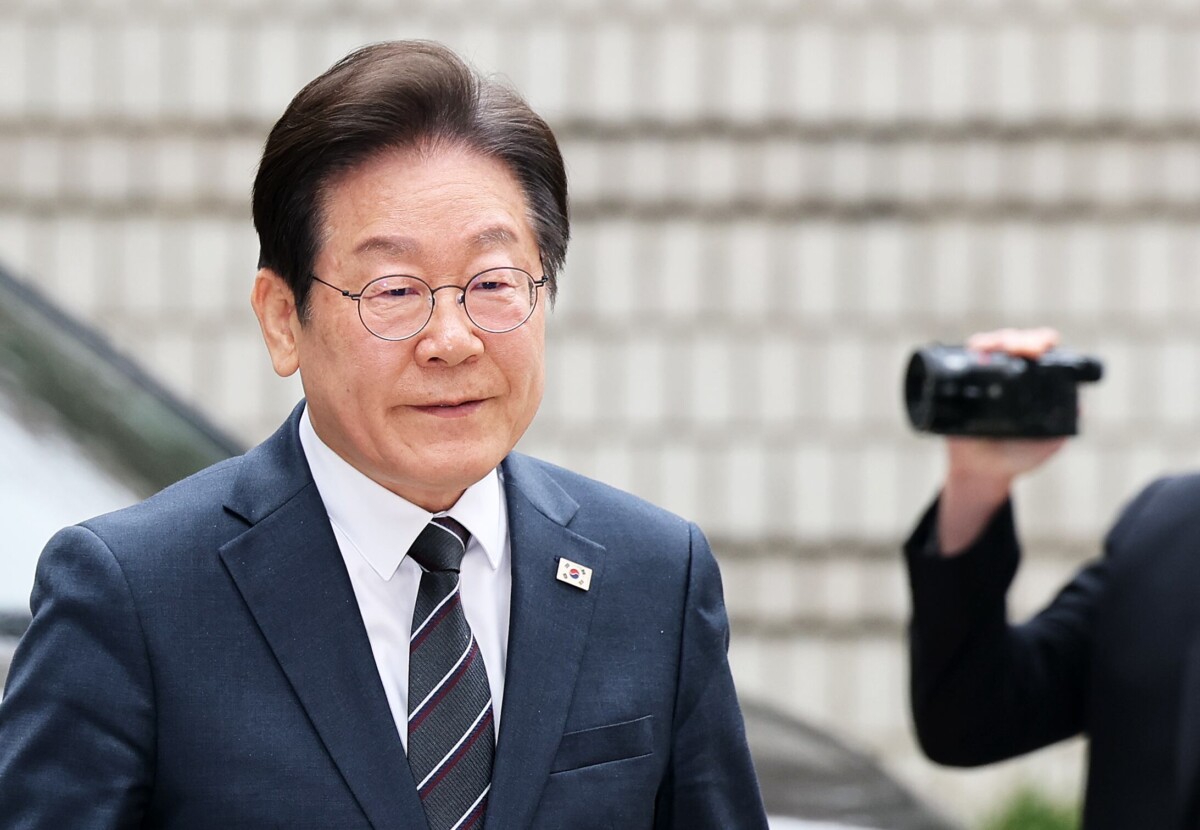
South Korean President Lee Jae-myung. Image/News1
Sign up here.
In 2024, when President Lee Jae-myung was leader of the main opposition Democratic Party of Korea (DPK), he was indicted over allegations tied to the transfer of $8 million to North Korea.
Prosecutors alleged that the illegal remittances were arranged in 2019 and 2020, when Lee served as governor of Gyeonggi Province. According to the indictment, the scheme was organized by former Gyeonggi vice governor Lee Hwa-young, who was pursuing inter-Korean cooperation projects but allegedly acted on Lee Jae-myung’s behalf.
The case also involved the Ssangbangwool Group, which prosecutors said provided and transferred the funds in violation of international sanctions and South Korean law. Prosecutors alleged the money was intended to persuade North Korean leader Kim Jong-un to agree to a visit by Lee Jae-myung.
Lee Hwa-young was convicted in 2024. However, Lee Jae-myung’s trial was suspended after he became president, as South Korean law bars the prosecution of sitting presidents for crimes other than treason or insurrection.
Conservative critics and opposition lawmakers now argue that the case may never proceed even after Lee leaves office.
Over recent months, DPK lawmakers, who hold a majority in the National Assembly, have strongly criticized the indictment and called for the charges to be dropped. More recently, the party has considered legislation that would grant a special counsel authority to dismiss the indictment.
At around the same time, the prosecutor who originally brought the case against Lee was removed from his position and later named as a suspect in a separate alleged offense connected to the investigation. During testimony before a legislative committee, the prosecutor declined to testify against himself and attempted to explain his position, but DPK lawmakers blocked him from speaking further.
The DPK and figures aligned with the pro-Lee special counsel argue that the previous administration pursued a politically motivated campaign against Lee and that the charges in the remittance case, as well as several other cases, should therefore be dismissed.
Critics, however, point to the conviction of Lee Hwa-young, who prosecutors described as Lee Jae-myung’s alleged co-conspirator.
The conservative People Power Party has accused the DPK and the special prosecutor of attempting to create a “bulletproof” legal shield for the president.
Some South Korean media outlets have also questioned efforts to dismiss the remittance case, noting that the special prosecutor has not publicly presented hard evidence that the original indictment was improperly influenced by the previous administration.
Supporters of Lee Jae-myung have argued that Lee Hwa-young’s testimony was improperly coached or coerced. Opposition figures counter that such claims are intended to raise unsubstantiated doubts and shield Lee from scrutiny over the alleged remittance scheme.
The controversy has fueled broader debate over political influence on South Korea’s judicial system. Some media outlets, lawyers and legal scholars have described the moves against the original prosecutor as politically motivated retaliation. A conservative lawyers’ group issued a statement titled: “Immediately stop the political retaliation against the prosecutor aimed at shielding President Lee Jae-myung!”
Separate controversy has also resurfaced over the Moon Jae-in administration’s 2019 forcible repatriation of two North Korean defecting fishermen.
The case involved two fishermen accused of killing fellow crewmembers before fleeing to South Korea. The administration of former President Moon Jae-in, which pursued engagement with Pyongyang, defended the repatriation by describing the men as “dangerous criminals.”
The two men were blindfolded and taken to the Demilitarized Zone. Footage released later showed them resisting and screaming after realizing they were being returned to North Korea. The images sparked outrage among human rights activists, defectors and many South Koreans.
The case became a major political scandal after critics argued that the men, who are considered South Korean citizens under the Constitution, were denied a trial and basic due process protections.
The repatriation was carried out just five days after the fishermen arrived in South Korea and marked the first forcible repatriation of North Koreans by Seoul since the Korean War ended in 1953.
Many legal experts described the move as a possible violation of both South Korean and international humanitarian law. An initial probe launched in 2021 during the Moon administration was dropped without indictments.
After Moon left office, a new investigation was launched. In 2025, four former senior officials received suspended sentences, including former National Security Adviser Chung Eui-yong, former presidential chief of staff Noh Young-min, former National Intelligence Service director Suh Hoon and former Unification Minister Kim Yeon-chul. Moon himself was not charged.
Moon was later invited to speak in Los Angeles by the Pacific Century Institute and by the RAND Corporation. Chung Eui-yong also traveled to the United States for an interview hosted by the Hoover Institution. According to critics, the repatriation case was not raised publicly at either event, though both men criticized the foreign policy of U.S. President Donald Trump.
Conservative critics argue that both the repatriation case and the North Korea remittance case illustrate what they see as growing political interference in the justice system.
They also warn that several other criminal trials involving Lee Jae-myung, which were suspended after he assumed office, could eventually be dismissed under arguments that the prosecutions were politically motivated.
Some conservatives further speculate that efforts could eventually emerge to overturn Lee Hwa-young’s conviction as well.The debate comes amid heightened political tensions in South Korea, where the DPK controls both the presidency and the National Assembly. Conservative opponents have also raised concerns over proposals to expand the Supreme Court, arguing the move could further strengthen the administration’s influence over the judiciary.
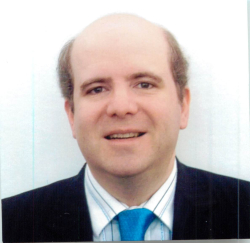
Lawrence Peck is a correspondent for NK Insider based in Seoul and Los Angeles. Having intensively researched and closely monitored the activities of pro-North Korea and other extremist groups and activists in the U.S. for over 25 years, he has been recognized in the U.S. and Korea as one of the leading American authorities on such topics, and has lectured, written extensively and been interviewed on such topics in the U.S. and Korea. He has a Bachelor of Arts degree in Political Science from the University of California, Los Angeles (UCLA) and a Juris Doctor degree from Loyola Law School of Los Angeles. He previously worked in Korea for several of the largest Korean business groups in the fields of intellectual property licensing and international business development. He also serves as an advisor to the North Korea Freedom Coalition of the U.S. Lawrence may be reached at the email address: [email protected]
Latest posts by Lawrence Peck (see all)
- Interview: The ordinary defector who fights for human rights in the U.S. - June 25, 2026
- Kim Il-sung’s long record of murder, kidnapping, and plunder in the decade before he came to power - May 25, 2026
- Illegal transfer of funds to North Korea and forcible repatriation of defectors: Will justice ever be served at the highest levels? - May 11, 2026