
As fewer North Koreans escape, their stories matter more than ever
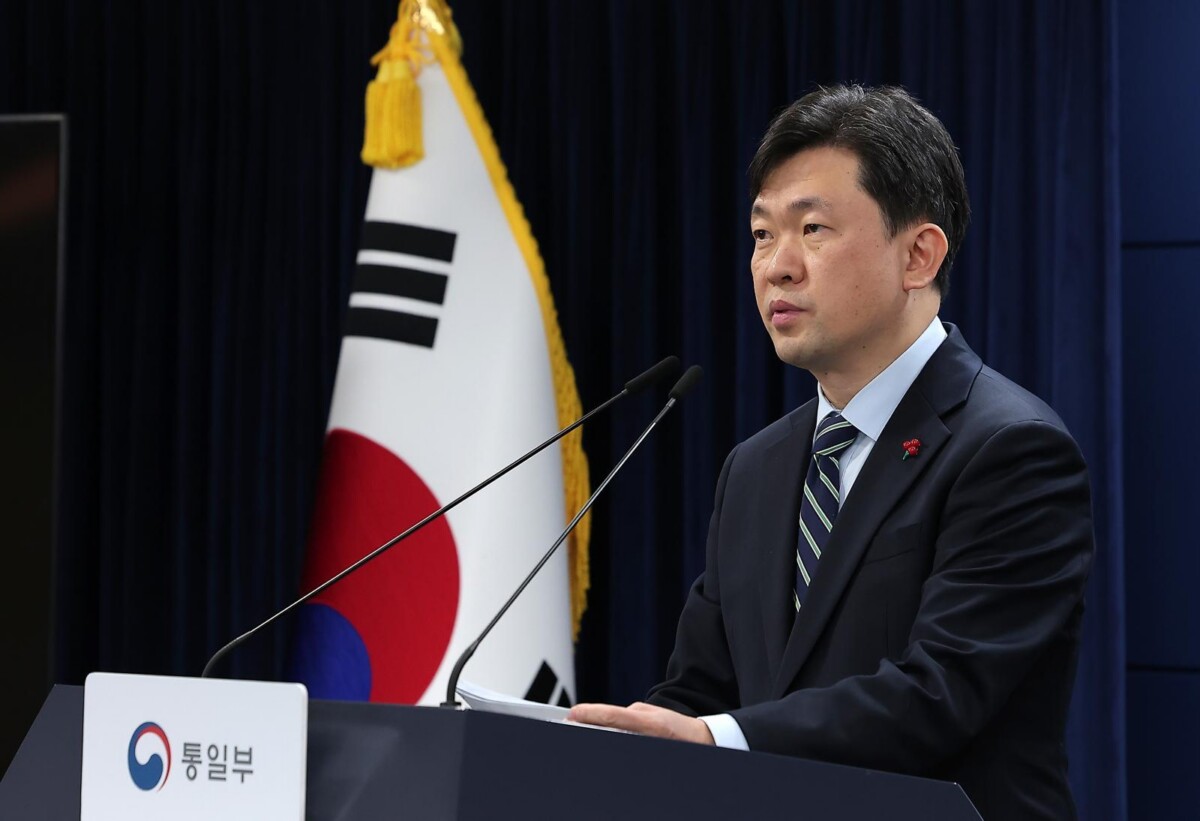
Unification Ministry spokesperson Yoon Min-ho speaks at a Seoul press briefing on Dec. 22. / News1
When Seoul’s Ministry of Unification released the latest defector statistics on July 13, it confirmed that the number of people escaping from North Korea had plummeted to a level that should serve as a wake-up call for the international community.
In the first quarter of this year, just 43 North Koreans made it to the South, the ministry reported.
This represents a significant decline. Since the Covid-19 pandemic, the number who have made the daring escape, whether by land or by sea, has plunged by nearly 80 percent, from 1,047 in 2019 to 223 last year.
These startling figures come amid Kim Jong-un’s unrelenting efforts to promote isolation and indoctrination. In 2020, North Korea enacted the “Law on the Elimination of Reactionary Thought and Culture.” Since then, the government has used anti-socialist inspection units and special police task forces to monitor the activities and foreign media accessed by North Koreans. Defectors have described the omnipresent fear that everything they do is being recorded.
The numbers released by the Ministry of Unification carry far more significance than merely a decline in successful defections. The data illustrates an increasingly restrictive environment in North Korea where citizens have virtually no autonomy over their thoughts or actions.
The intensifying crackdown on information access combined with a sharply declining escape rate is alarming. Dwindling communication channels within North Korea and a lack of successful defections mean that it will become more difficult to identify human rights abuses.
In Western news and media cycles, North Korea often appears in headlines because of nuclear weapons, military expansion, Kim Jong Un’s public appearances, or tensions on the Korean Peninsula. While these larger geopolitical developments are significant, they often overshadow the harsh realities that millions of ordinary North Koreans face every day. Living under one of the world’s most isolated and repressive regimes, North Korean citizens are subjected to ideological indoctrination, food insecurity, crippling inflation, cruel and unusual punishment, and political repression.
As opportunities to escape continue to diminish, the rest of the world loses its understanding of the brutal conditions under Kim Jong Un’s rule. This is why initiatives such as Flash Drives for Freedom have become more crucial and urgent. The dissemination of books, movies, educational materials, news articles, and offline encyclopedias loaded onto USB drives has the power to undermine the regime’s legitimacy. By delivering outside information into North Korea, FDFF can inspire and empower North Koreans to seek freedom. Once they’ve defected, their firsthand accounts are powerful, invaluable insight to everyone.
For media outlets, foreign governments, human rights organizations, and individuals, the time to act is now.
Journalists and major news agencies should publish interviews and primary source content that is grounded in the lived experience of defectors. Not only will this strengthen the quality of reporting, but it will garner attention for North Koreans whose stories too frequently go untold.
Foreign governments must continue leveraging the power of sanctions and diplomatic pressure to weaken Kim Jong Un’s oppressive, totalitarian control.
Human rights organizations can only fulfill their mission-driven work if the humanitarian conditions are well-understood. Defector stories humanize North Korea. Elevating the voices of those who have escaped sheds light on the country’s internal plight and human rights abuses. Without them, the world will remain ignorant and apathetic toward the cruel, dynastic Kim dictatorship.
Individuals can make a difference by supporting grassroots efforts, such as Flash Drives for Freedom, to directly combat censorship and propaganda. Each USB drive carries knowledge into one of the world’s most oppressive societies, and that knowledge is power.
North Korean citizens are struggling to survive under a brutally oppressive dictatorship that strips them of their humanity. They deserve uncensored access to freedom of speech and the press. When people are denied the truth, propaganda is easy to sustain. If citizens are exposed to democratic ideals, South Korean entertainment, uncensored news, and the truth about the North Korean government, it will erode the regime’s political authority. The international community must continue to promote defector stories to broader audiences across the globe in the ongoing effort to rid the world of authoritarianism.
The positive feedback loop is straightforward: the more exposure to the outside world, the more frequent defections can become. Once the number of people escaping North Korea begins to rise again towards pre-Covid-19 levels, it is the responsibility of everyone living in free democratic societies around the world to uplift the experiences of North Koreans who have lived under extreme censorship.

Natalie Meulenbroek is a senior at Tufts University studying International Relations, with a concentration in Global Health, Nutrition, and the Environment, complimented by minors in French, and Studio Art. Through Tufts Women in International Relations, she researches how humanitarian aid systems impact maternal and reproductive healthcare in Nairobi, Kenya, as part of an ongoing project generously funded by the Tufts Institute for Global Leadership. Meulenbroek also writes for the Tufts Undergraduate Law Review and creates political cartoons for Tufts Hemispheres, a student-run international affairs publication. As a Research & Reporting Intern with NK Insider, she covered political, economic, and humanitarian developments in North Korea, which deepened her commitment to promoting free, independent journalism and democratic liberties worldwide.
Latest posts by Natalie Meulenbroek (see all)
- As fewer North Koreans escape, their stories matter more than ever - August 2, 2026