

North Korea’s weapons arsenal under one roof: Inside its new Defense Revolution Museum
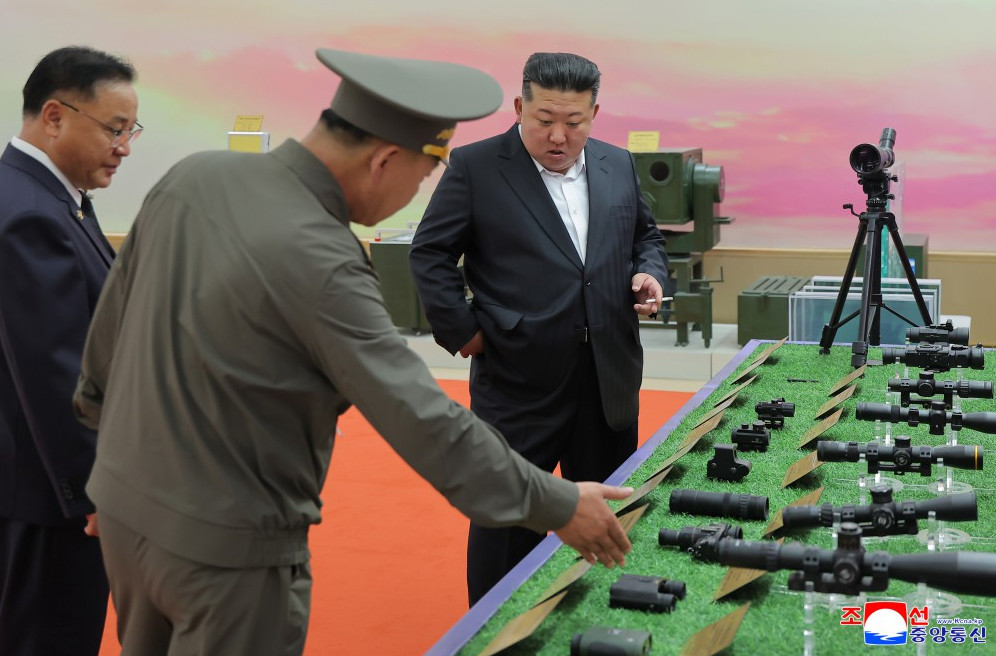
Kim Jong-un examines a display of firearms and optical equipment. Photo: KCTV
North Korea opened a new Defense Revolution Museum last month, marking the 81st anniversary of the founding of the ruling Workers’ Party of Korea (WPK).
The No. 2 Economy in North Korea refers to the military-industrial economy, which operates separately from the civilian economy, and falls under the Second Economic Committee. Under the direction of the WPK’s Munitions Industry Department, it oversees weapons production, military supplies and foreign arms trade.
The Korean Central News Agency (KCNA) reported on October 13 that Kim Jong-un had attended the museum’s opening ceremony two days earlier, on October 11, and toured its exhibits.
Photographs released by KCNA show an extensive collection of weapons systems, ranging from intercontinental ballistic missiles (ICBMs) and submarine-launched ballistic missiles (SLBMs) to multiple rocket launchers, tanks, unmanned aerial vehicles (UAVs) and small arms.
At the opening ceremony, Kim declared that “building the world’s strongest defense industry is our natural calling,” adding that “powerful Juche weapons will continue to be developed and perfected with even greater vigor, following a path of unparalleled development and evolution.”
By bringing missiles, drones and other weapons systems together in a permanent exhibition, Kim appears to be highlighting the achievements of the weapons development programs pursued under his leadership.
One of the centerpiece exhibits is the Hwasong-20 solid-fuel ICBM, first unveiled at a military parade in October 2025. At the museum, the missile is displayed alongside its massive transporter-erector-launcher (TEL). Analysts have also drawn attention to an accompanying display panel that appears to depict a missile capable of reaching beyond the continental United States, as well as a possible multiple-warhead configuration.
Military analyst Shin Jong-woo, secretary-general of the Korea Defense and Security Forum, described the exhibition as an effort “to showcase the achievements of Chairman Kim Jong-un’s defense science development plan.”
Missile expert Vann H. Van Diepen, in an analysis published on October 29, noted that a diagram of the Hwasong-20 displayed at the museum appeared to depict six reentry vehicles. He cautioned, however, that North Korea has yet to demonstrate the actual flight and reentry capabilities of such a multiple-warhead system.
Drones and conventional weapons also feature prominently in the exhibition.
The Saetbyol-4 reconnaissance drone, which resembles the U.S.-made RQ-4 Global Hawk, was first unveiled in 2023. An early version of North Korea’s new-generation Chonma-series tank made its public debut at a military parade in 2020. Various multiple rocket launcher systems are also on display, including the 600mm super-large system, whose first test-firing North Korea publicized in 2019.
Some analysts have also questioned whether certain submarine-launched missiles presented as new systems are, in fact, previously unveiled variants of the Pukguksong family.
The significance of the photographs lies not simply in the display of individual weapons, some of which have been known for years. More notably, North Korea has assembled strategic and tactical systems previously showcased at different events into a single permanent exhibition, presenting them collectively as achievements of the Kim Jong-un era.
Nevertheless, the appearance of the exhibits and their accompanying descriptions cannot, by themselves, establish whether the weapons have been operationally deployed or verify their actual performance.
Inside the Defense Revolution Museum: A Photo Tour
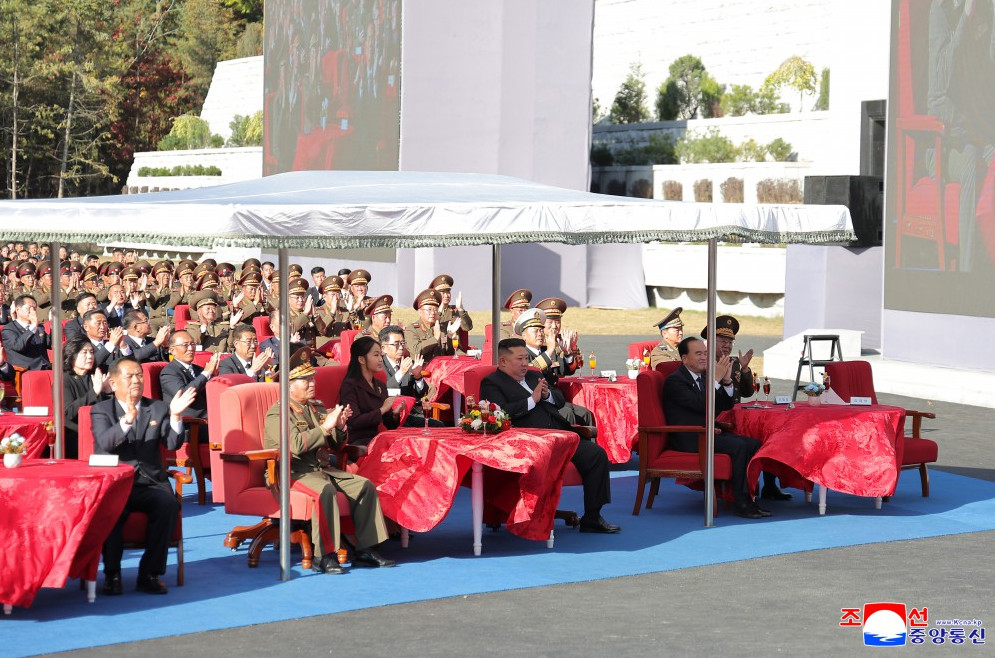
Kim Jong-un attends the opening ceremony with his daughter, Kim Ju-ae, and senior party and military officials.
Tactical Weapons and Ground Forces
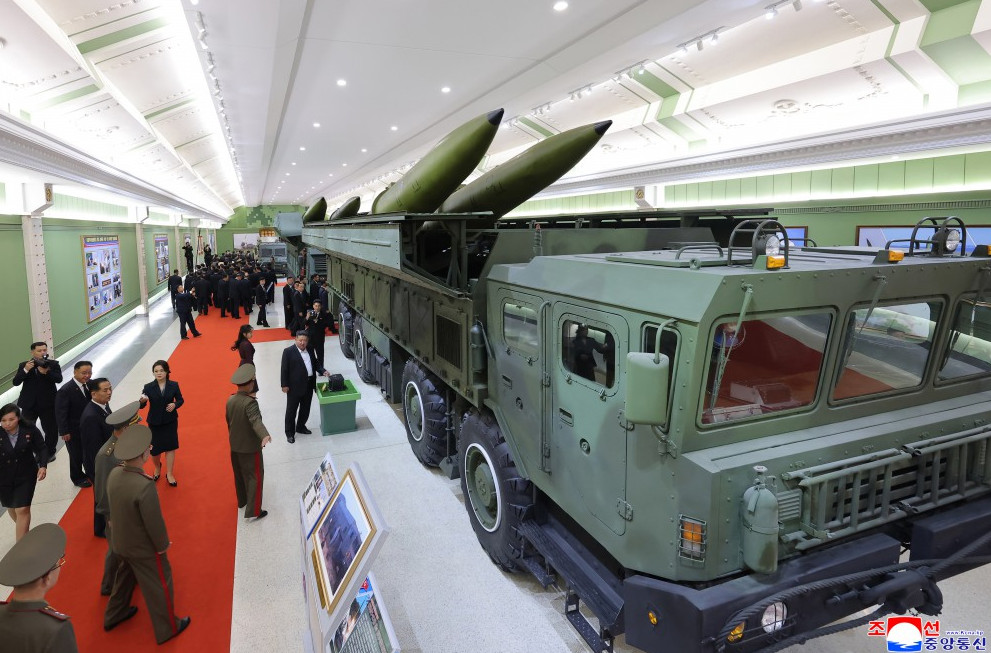
A mobile missile launcher carrying two tactical missiles.
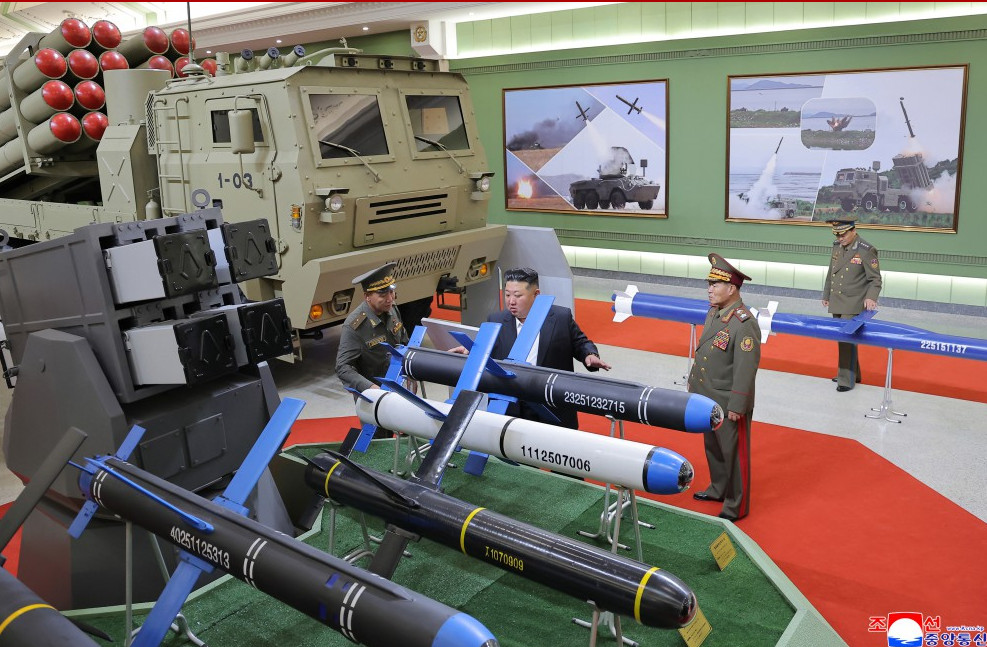
Kim Jong-un examines guided missiles and their launch equipment.
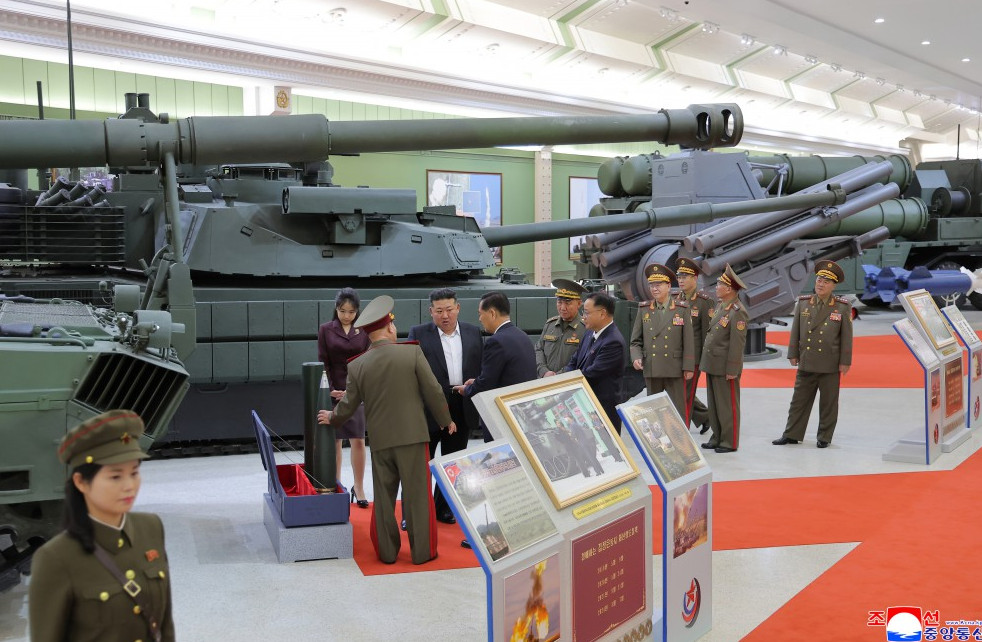
Large self-propelled artillery systems and multiple rocket launchers displayed side by side.
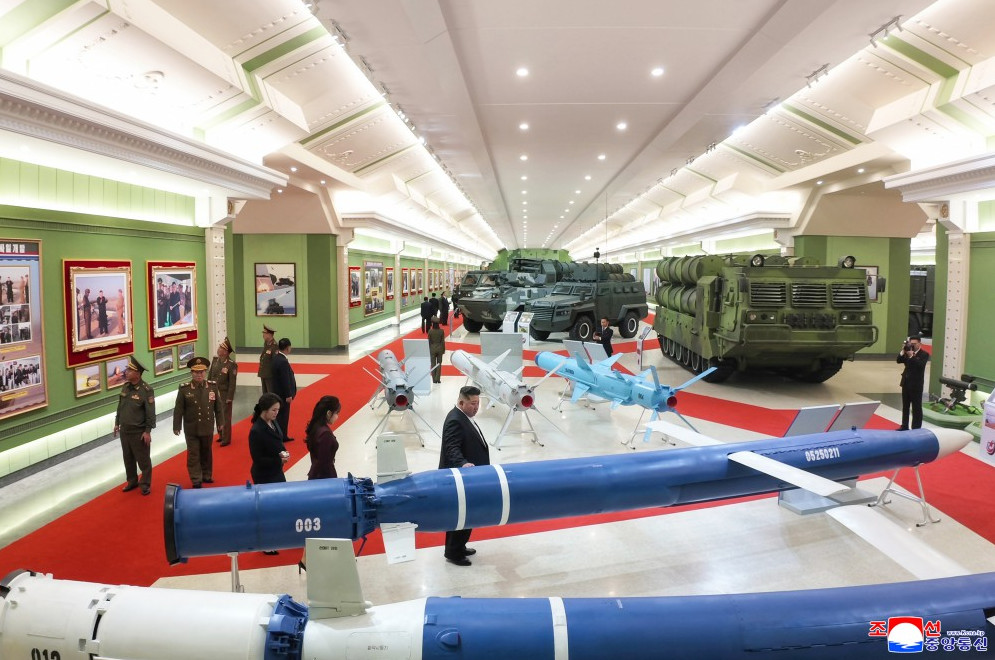
An exhibition area featuring cruise missiles and various guided munitions.
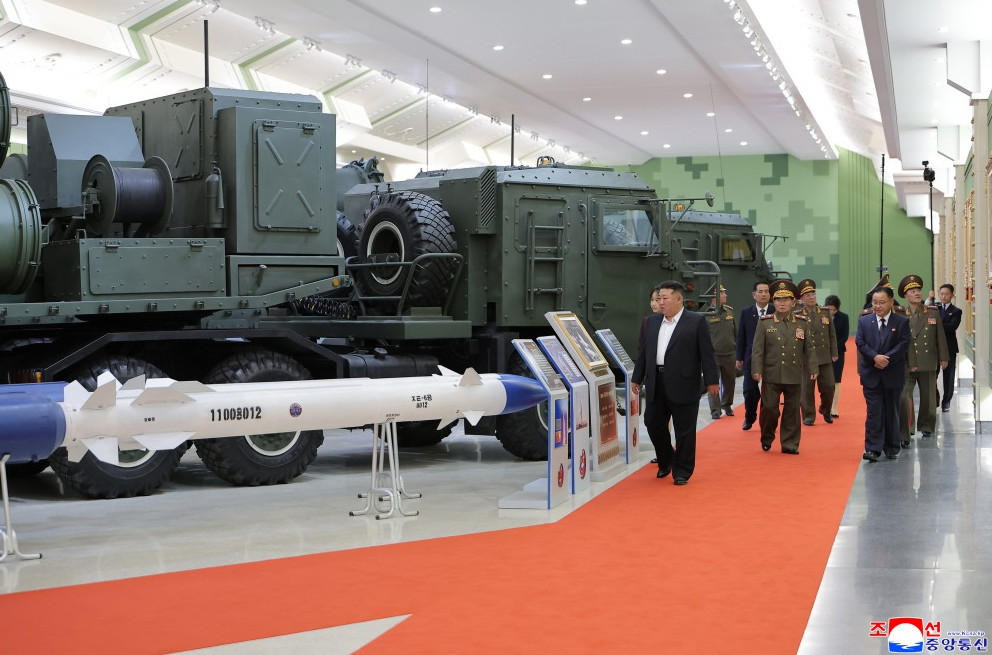
Missile launch-support vehicles.
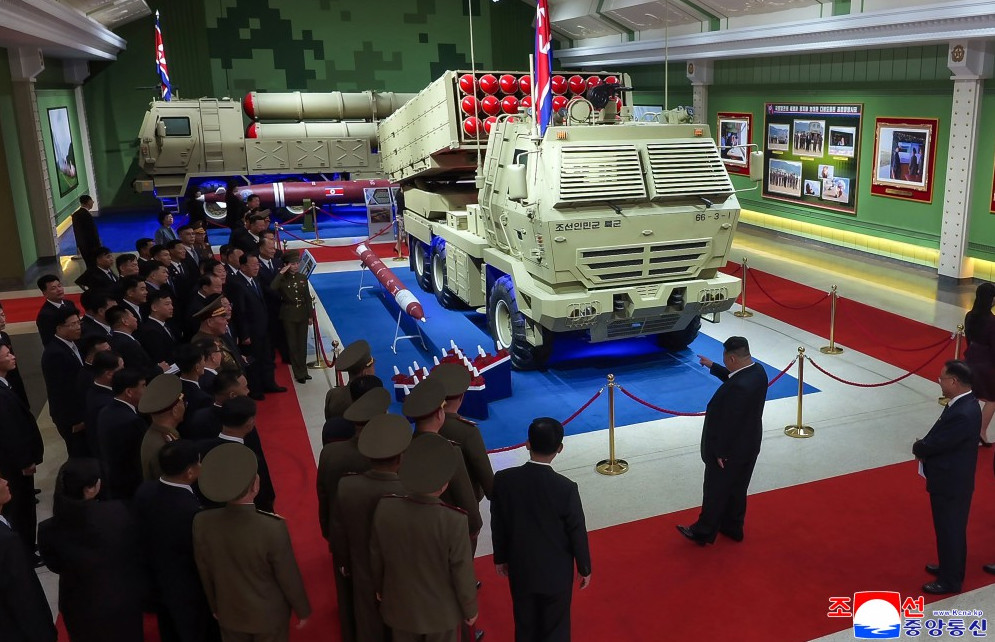
A multiple rocket launcher vehicle with distinctive red protective covers over its launch tubes.
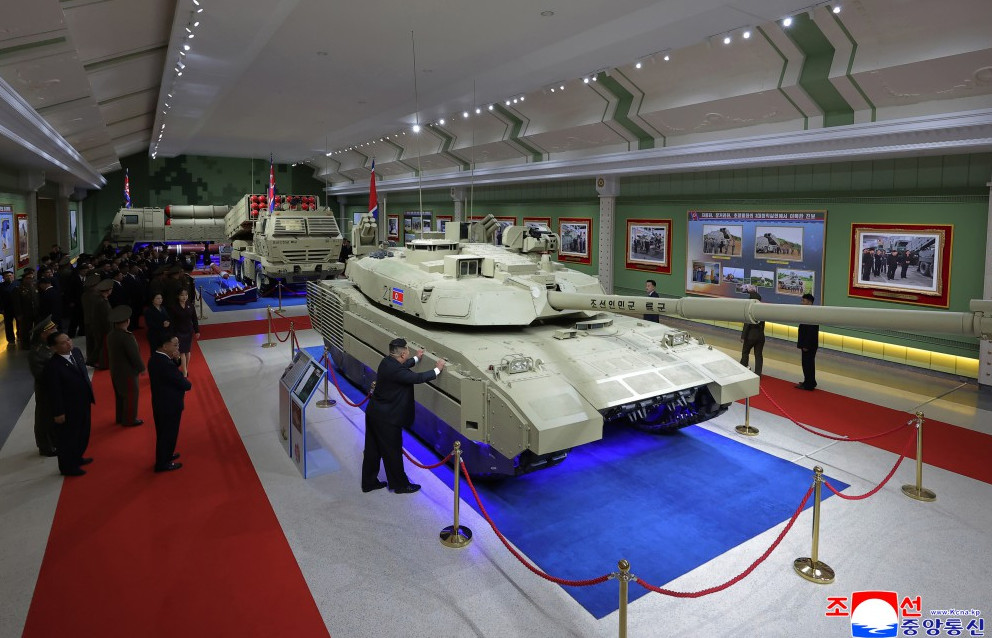
A new-generation Chonma-series tank. An early version was first unveiled in 2020.
Multiple Rocket Launchers and Naval Weapons
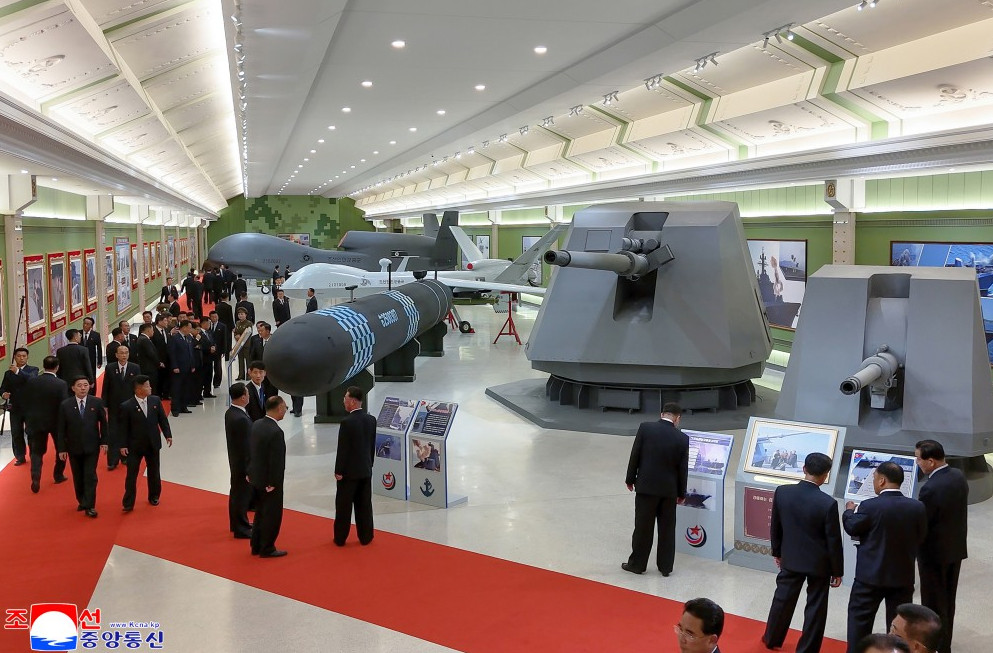
An exhibition area featuring naval gun turrets and shipborne missiles.
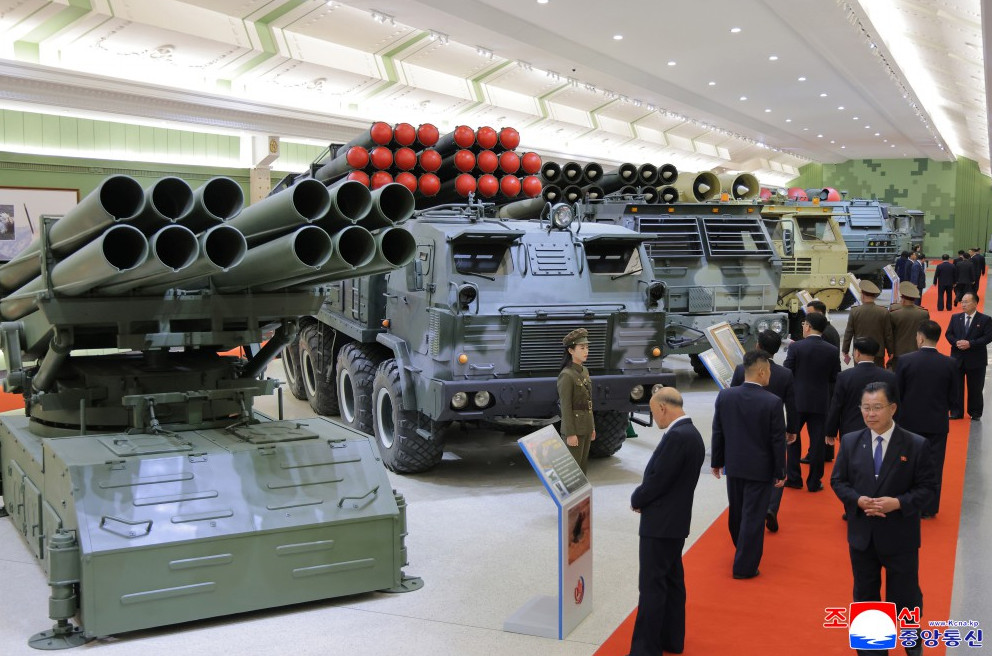
Various multiple rocket launcher systems. North Korea first unveiled its 600mm-class system in 2019.
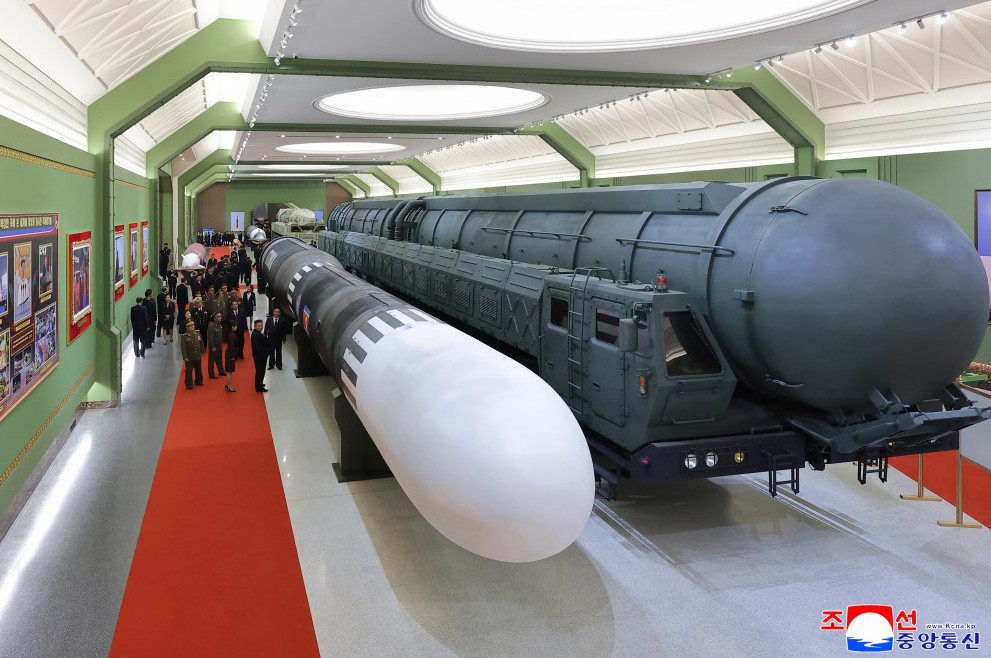
An ICBM exhibition featuring the Hwasong-20, first unveiled in 2025.
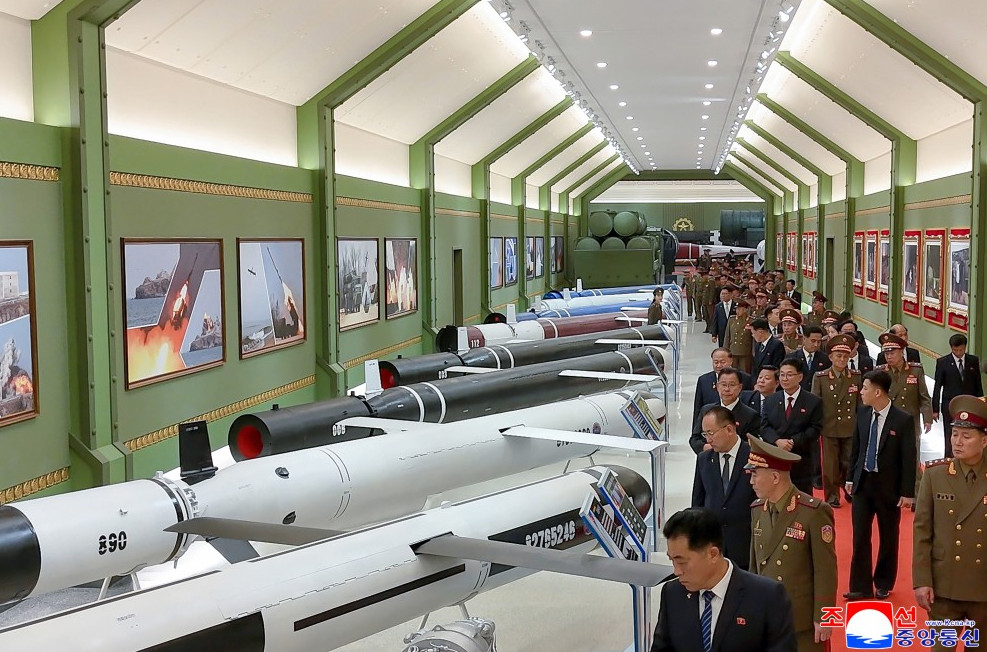
Cruise missiles fitted with wings and tail fins.
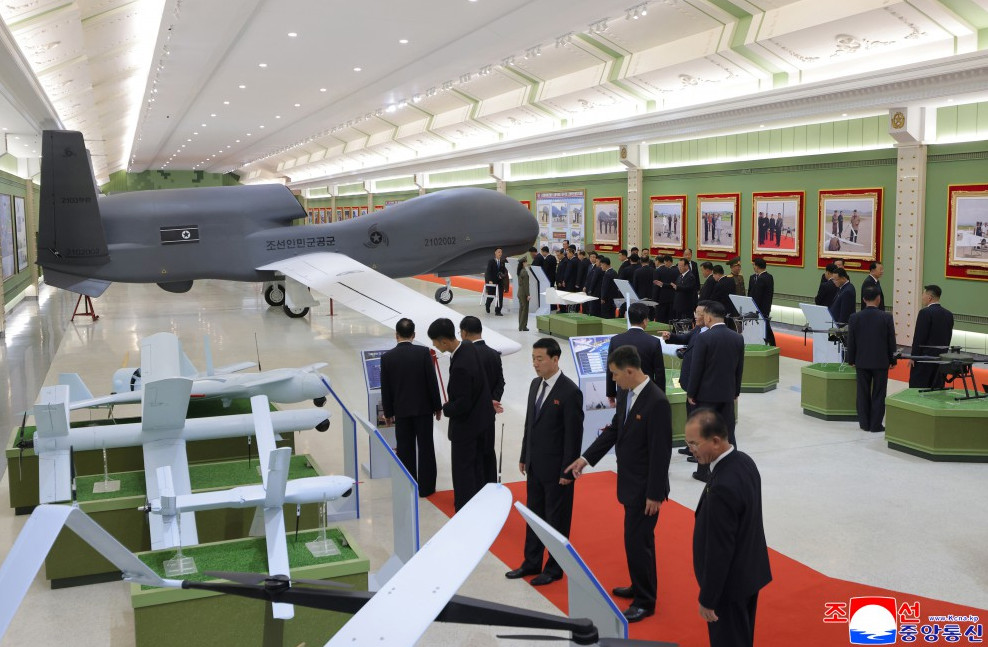
The Saetbyol-4 reconnaissance drone, first unveiled in 2023.
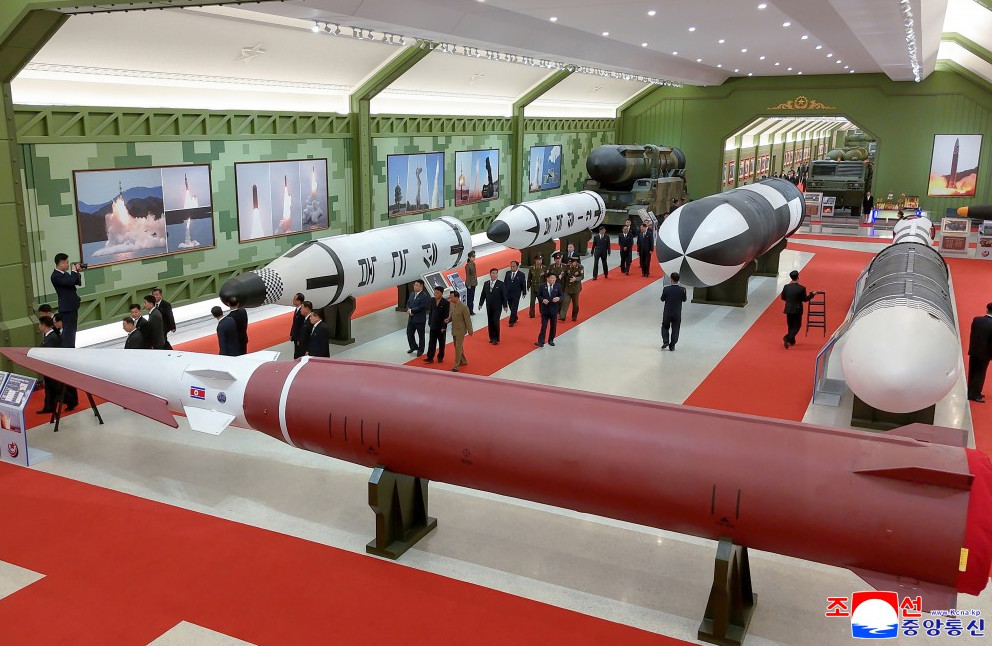
Pukguksong-series submarine-launched ballistic missiles. Some appear to be previously unveiled variants.
A Closer Look at the Exhibition
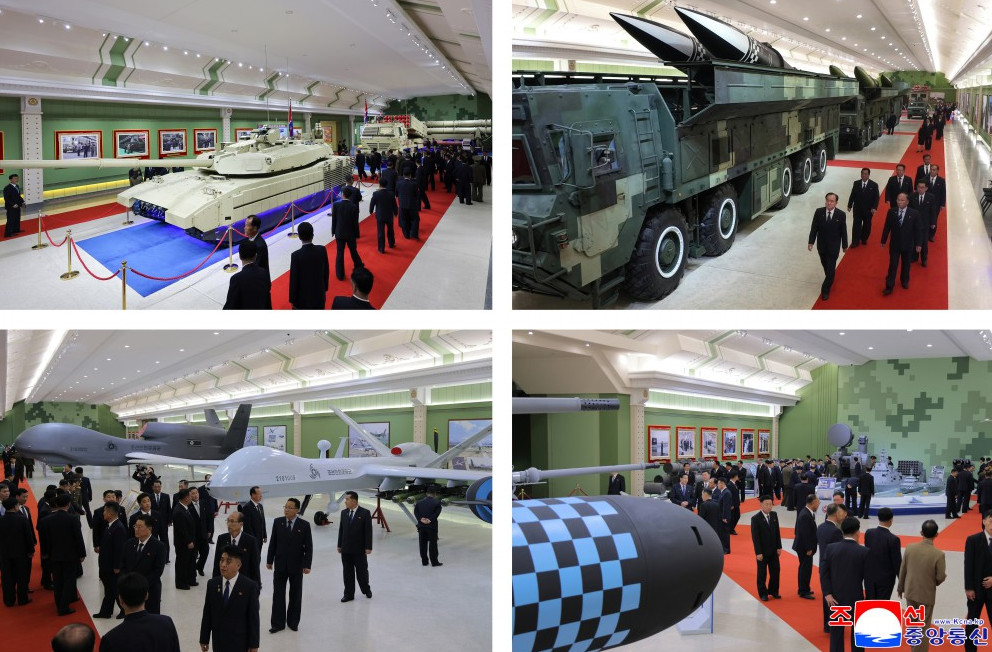
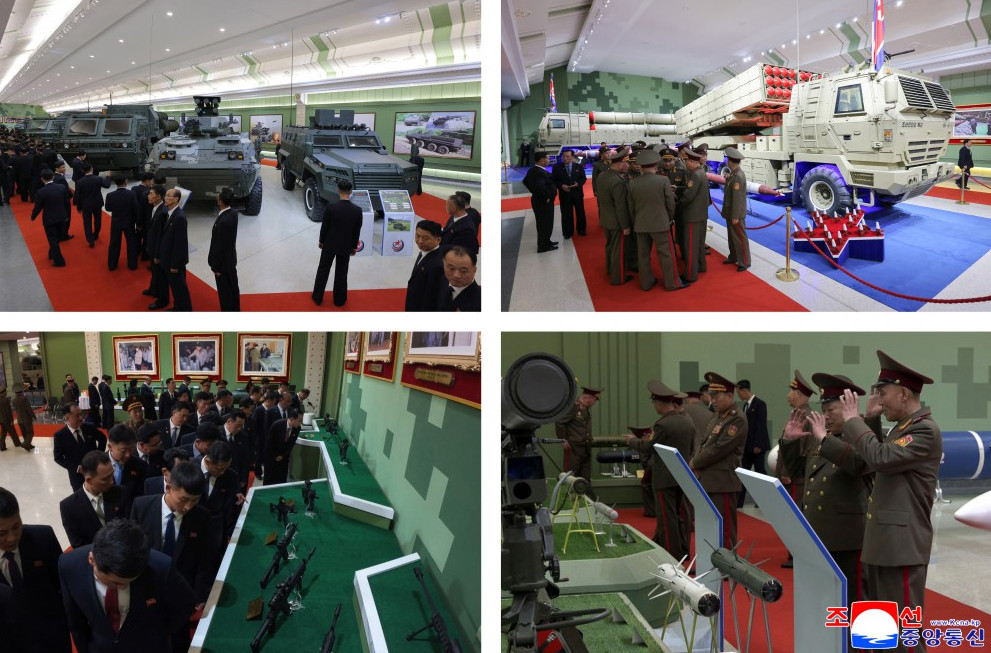
Visitors examine various weapons systems on display.
The Intercontinental Ballistic Missile Exhibition Hall
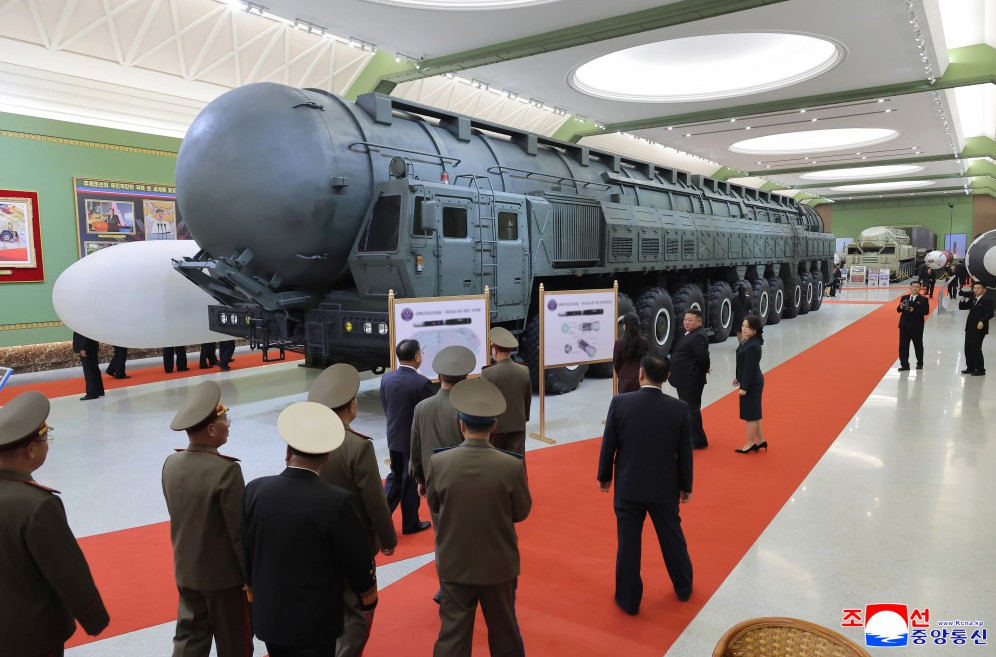
A massive missile transporter-erector-launcher.
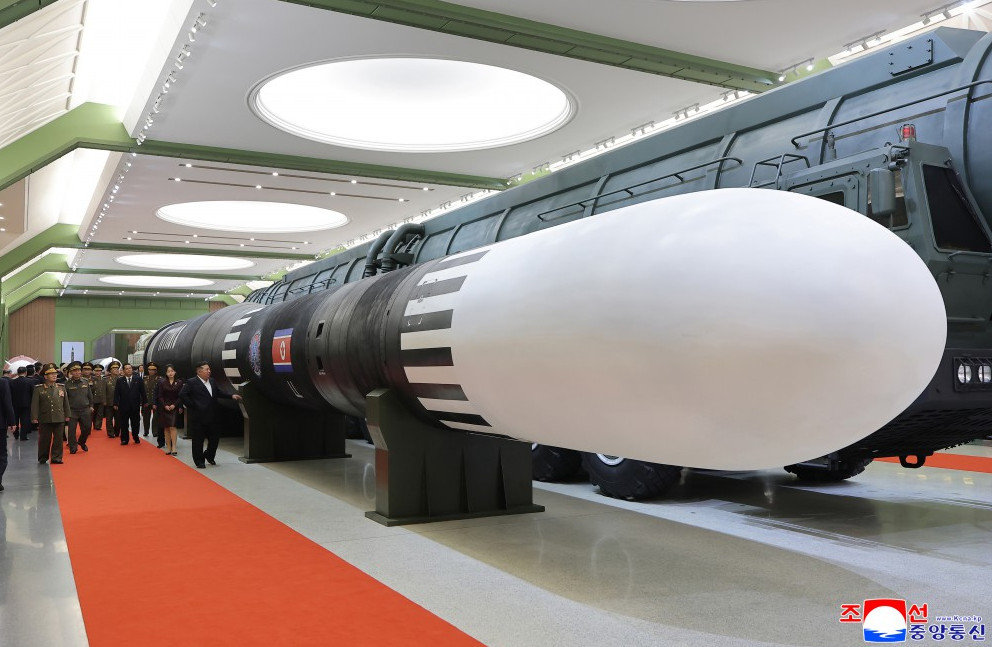
A large white nose-cone assembly displayed alongside a mobile missile launcher.
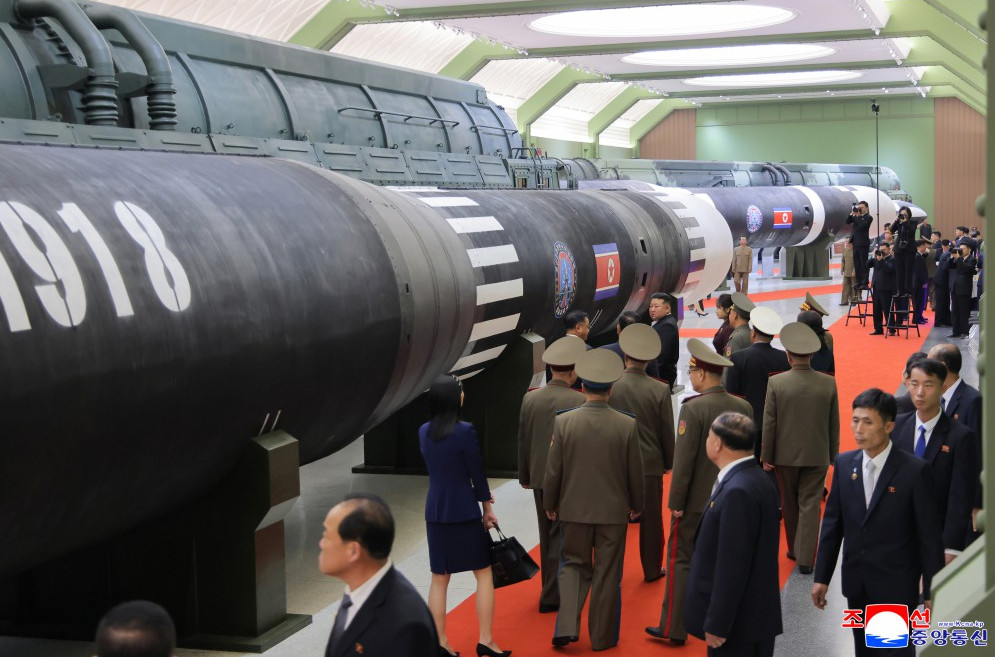
Visitors examine the body of a large ballistic missile at close range.
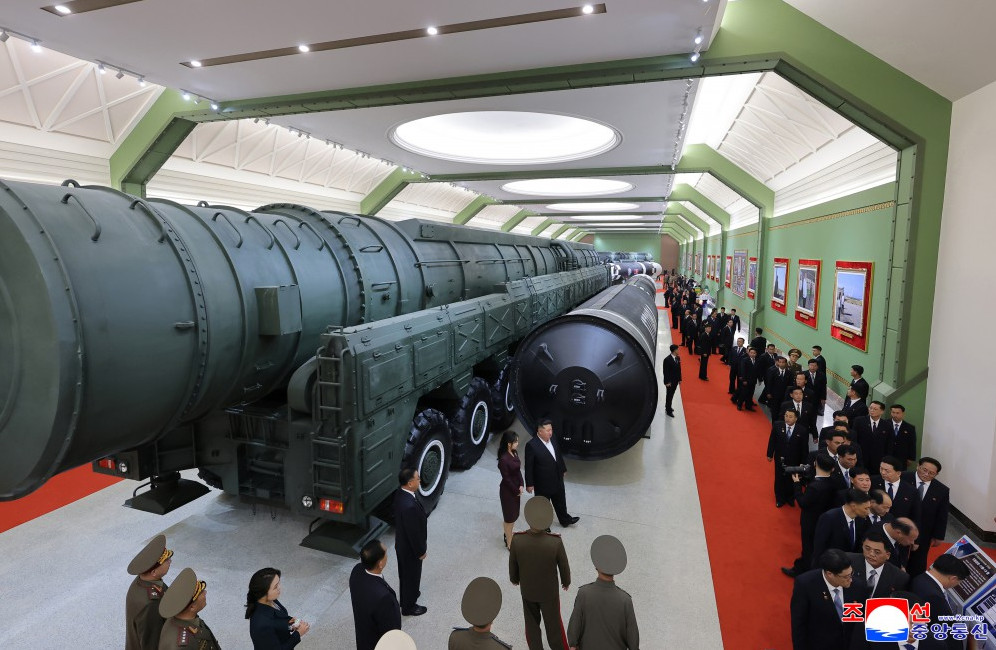
A gallery lined with massive missile launch vehicles and ICBM exhibits.
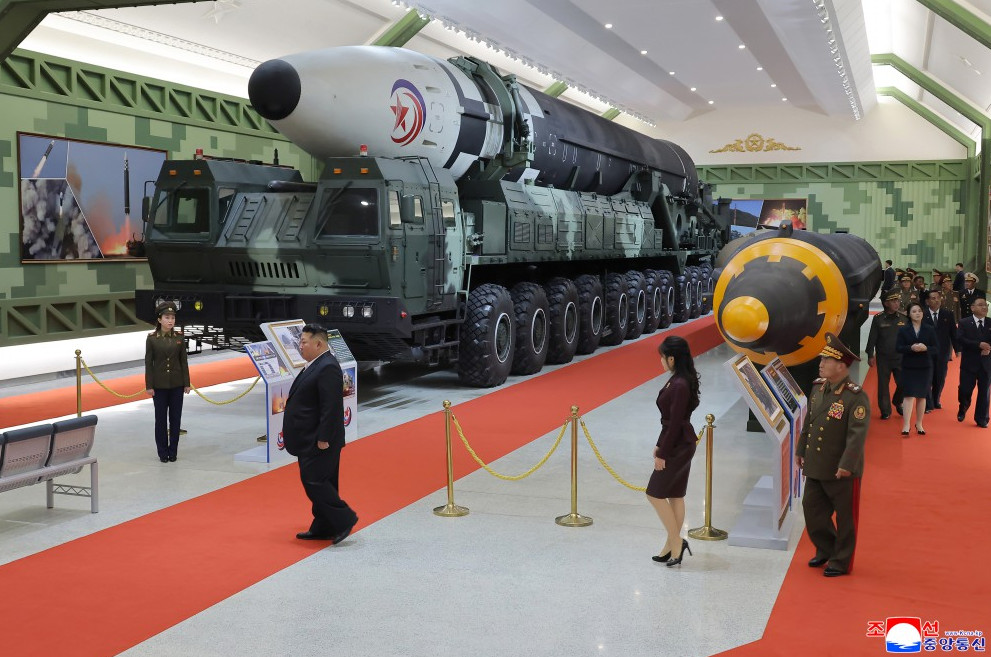
A missile launch vehicle displayed alongside a separate nose-cone mock-up.
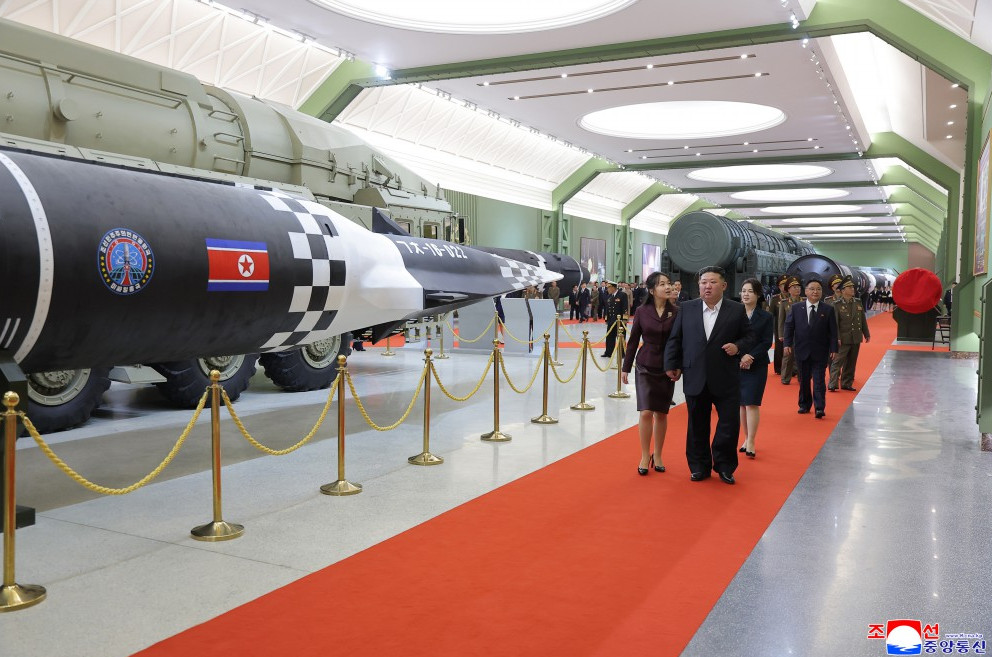
Kim Jong-un walks through the ICBM exhibition area with members of his family.
Note: Weapon identifications are based on publicly available information and visible external characteristics. Photographs alone cannot establish detailed technical specifications or verify operational performance.

Taesung offers informed perspectives on North Korean society, grounded in years of experience within a key state-run institution. After defecting to South Korea in 2024, he now focuses on providing analysis of the country.
Latest posts by Kim Taesung (see all)
- North Korea’s weapons arsenal under one roof: Inside its new Defense Revolution Museum - November 3, 2026
- North Korea showcases growing drone arsenal in military exhibition - October 31, 2026
- Korea’s Unification paradox: Two states, one people — but for how long? - October 15, 2026