

North Korea posts third straight year of 3% growth, fueled by Russia arms trade
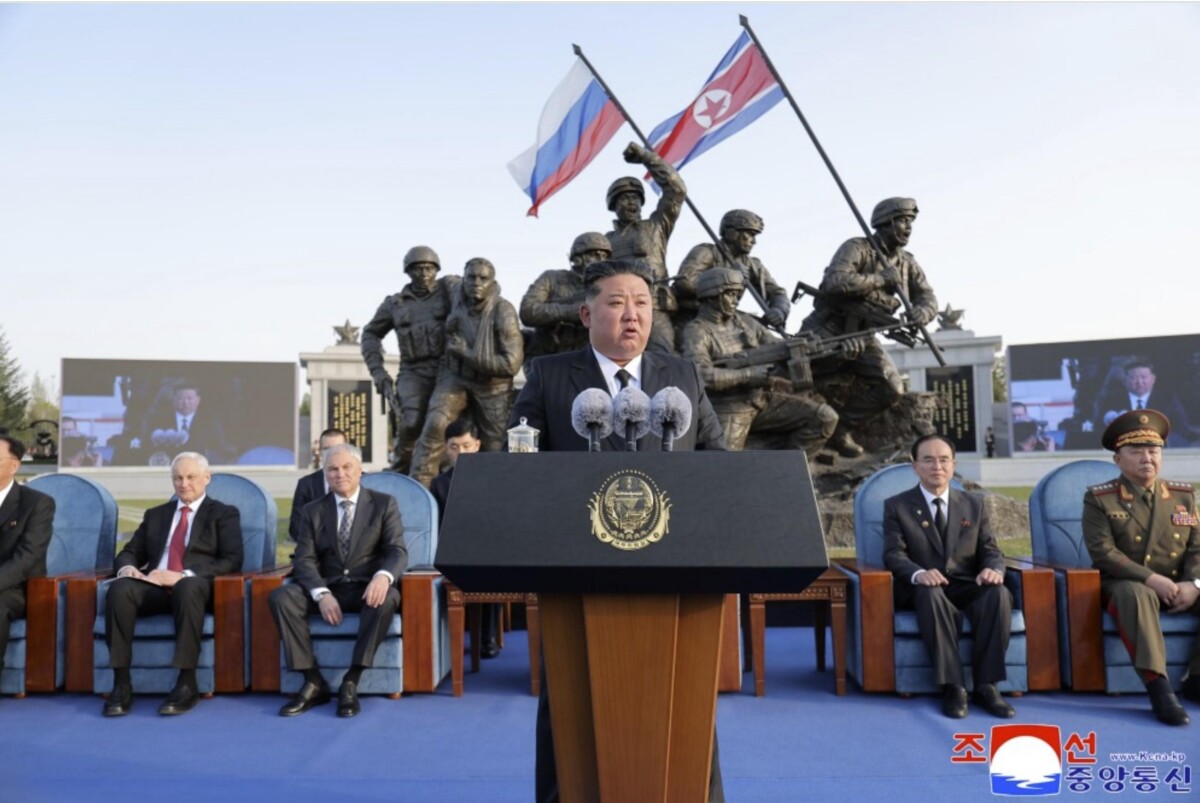
Russia ties are significantly boosting the North Korean economy (Image: KCNA)
North Korea’s economy expanded last year, marking a third consecutive year of growth, as increased arms supplies to Russia, stronger trade with China, and state-led construction projects offset the impact of international sanctions.
According to a report by South Korea’s central bank, released on July 31, the North’s economy grew 3.5% last year, following growth of 3.1% in 2023 and 3.7% in 2024.
In its report, Estimate of North Korea’s Economic Growth in 2025, the Bank of Korea said expanding economic cooperation with Russia was the biggest driver of growth.
Arms exports to Russia – which violate United Nations Security Council sanctions – are estimated to have boosted output in military-related industries, including fabricated metal products, machinery, and primary metals.
The report also cited increased trade with China and state-led development projects as supporting economic activity.
“The expansion of cooperation between North Korea and Russia had a major impact on North Korea’s economic growth,” Seo Jeong-seok, head of the National Income Coordination Team at the Bank of Korea’s Economic Statistics Department II, said in a press briefing.
Seo told reporters that higher arms exports stimulated related manufacturing industries, while an increase in Russian tourists and investment in transportation infrastructure supported the construction and services sectors.
Foreign currency earned through the deployment of North Korean troops and overseas workers also contributed to gross national income (GNI), the report said. Unlike gross domestic product (GDP), which measures production within a country’s borders, GNI includes income earned abroad by residents and the government.
Manufacturing was the fastest-growing major sector, expanding 6.6% from a year earlier. Light industry, led by food and beverage production, rose 3.8%, while heavy and chemical industries grew 7.8%, driven by increased production of fabricated metal products, machinery, and primary metals.
Construction grew 6.3%, supported by the government’s “Regional Development 20×10 Policy,” an initiative to build industrial factories in 20 regions each year for a decade while expanding public facilities including shops, service centers, and hospitals.
The Bank of Korea said road and railway construction linked to Russian tourism also contributed to civil engineering activity.
Seo said investment under the regional development policy created a multiplier effect by increasing both manufacturing output and consumer spending, which in turn boosted wholesale and retail trade and encouraged further construction.
Agriculture, forestry and fisheries rebounded 3.6% after favorable weather reversed the previous year’s decline. Services expanded 1.8%, led by transportation and communications, wholesale and retail trade, and accommodation and food services – the sector’s strongest growth since 1994.
Mining grew 1.6%, although growth slowed because of lower coal production, while electricity, gas and water supply contracted 0.4% as thermal power generation declined.
North Korea’s nominal GNI rose 9.4% to 48.5 trillion won. This represents just 1.8% of South Korea’s 2,717.1 trillion won, or about one fifty-sixth of the South’s economy.
Per capita GNI increased 9.0% to 1.873 million won but remained only 3.6% of South Korea’s 52.57 million won – approximately one twenty-eighth of the South Korean level.
Mining and manufacturing accounted for the largest share of North Korea’s GDP at 30.1%, followed by services (29.6%), agriculture, forestry and fisheries (21.2%), construction (11.6%), and electricity, gas and water supply (7.4%).
North Korea’s external merchandise trade totaled $3.13 billion in 2025, up 16.0% from $2.7 billion a year earlier. Exports jumped 30.0% to $470 million, led by prepared feathers, wigs, toys and sporting goods, while imports increased 13.9% to $2.66 billion, driven mainly by clothing and animal and vegetable fats and oils.
The figures exclude trade between North and South Korea. There were no recorded inter-Korean shipments for the third consecutive year after trade effectively ceased following the closure of the Kaesong Industrial Complex in 2016.
As North Korea does not publish national accounts, the Bank of Korea’s estimates are based on production data collected by South Korean government agencies. The calculations apply South Korean prices and value-added ratios and should not be regarded as official North Korean economic statistics or as directly comparable with national accounts published by other countries.

Taesung offers informed perspectives on North Korean society, grounded in years of experience within a key state-run institution. After defecting to South Korea in 2024, he now focuses on providing analysis of the country.
Latest posts by Kim Taesung (see all)
- North Korea drops ‘unification’ from party charter, boosts Kim Jong-un’s power - September 13, 2026
- Man jailed for spying on defectors and soldiers for North Korean agent - September 9, 2026
- Trump wants Kim back at the table. This time, Kim holds the cards. - August 28, 2026