
Cryptocurrency can help North Korean defectors save their families
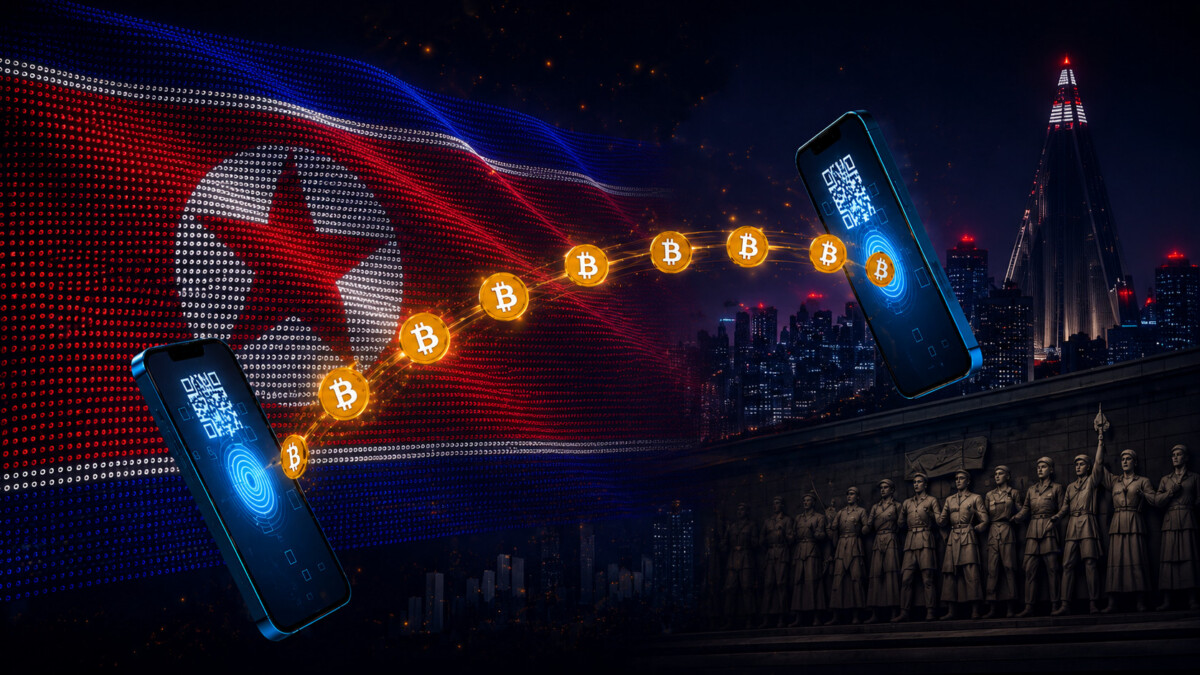
Cryptocurrency will not bring down the Kim regime. But if it helps a family in North Korea receive a larger remittance, it has already expanded human freedom in meaningful ways. (Image: iStock/Alex Sholom, cgtoolbox)
Every year, thousands of North Korean defectors resettled in South Korea send money home to families they may never see again.
The transfer chain that makes this possible is a remarkable piece of infrastructure: a defector contacts a broker in South Korea, who converts the money and wires it to a counterpart in China, who coordinates with a phone broker inside North Korea by operating a smuggled Chinese handset near the border. Cash is delivered by hand, sometimes carried across the river.
The system works, but the cost is staggering.
Before the pandemic, brokers typically charged about 30 percent for each transfer. After North Korea sealed its borders for COVID-19 and China intensified surveillance, commissions doubled. Media reports have documented rates of 50 percent, with some defectors describing brokers charging as much as 70.
Hong-Sik Hwang, a Seoul-based defector, estimated in 2025 that just $1,440 to $2,160 could feed a family of four for a year inside North Korea. At that scale, every percentage point lost to a broker converts directly into food, medicine, and survival that never arrives.
This is the problem my research paper sets out to address. As an Oslo Scholar interning with NK Insider through the Human Rights Foundation’s Oslo Scholars Program, I spent this summer examining how cryptocurrency can be leveraged to advance financial freedom for North Korean defectors — those who have already escaped the country, and those still inside it who may intend to.
My analysis is grounded in case studies I’ve helped conduct on cryptocurrency adoption by civilians in five other authoritarian contexts — Venezuela, Nicaragua, Rwanda, Myanmar, and Russia — and applies their lessons to the specific conditions facing North Koreans.
None of these cases map onto North Korea directly. Its sealed intranet, mandatory smartphone surveillance app, and criminal penalties for foreign media possession — that even include public execution — make inside-country adoption of cryptocurrency unrealistic for the foreseeable future. But the lessons about how crypto helps people on the outside of authoritarian systems transfer powerfully.
The highest-leverage place to start utilizing crypto is the remittance corridor itself. The first two legs of the transfer chain, from defector to South Korean broker and from South Korean broker to Chinese broker, already move through bank accounts.
They involve actors with smartphones, internet access, and real financial infrastructure, and they carry the costs of that infrastructure: wire fees and foreign exchange conversions that reduce the original amount sent by up to 70%.
A cryptocurrency transfer could replace those transaction fees for close to a dollar in flat fees — depending on the type of cryptocurrency — and settle in seconds. The final cash leg delivered to North Koreans must remain physical for the foreseeable future. But collapsing the international banking layer recovers a meaningful share of what families currently lose to transaction fees.
In the near term, defector-led organizations should pilot cryptocurrency remittance transfers, integrate crypto literacy into existing educational programs, and adopt cryptocurrency as operational infrastructure.
In the medium term, the microSD cards and USB drives already moving through the Flash Drives for Freedom pipeline should carry offline wallet software and a basic Korean-language primer on cryptocurrency. In the long term, as information penetration continues inside North Korea, broader adoption may follow.
It is important to keep in mind that opportunity without education is just exposure to risk. The same features that make cryptocurrency valuable — self-custody, irreversible transactions, independence from banks — also make it unforgiving. Any effort to introduce cryptocurrency to new users must pair access with practical training on wallet security, scam recognition, and responsible self-custody to avoid financial exploitation.
Cryptocurrency will not bring down the Kim regime. But if it delivers more of a remittance to a family in North Korea, lets a defector organization operate with greater financial flexibility, or allows a woman fleeing through China to carry her savings past a checkpoint, it has already expanded human freedom in meaningful ways.
That is where crypto’s promise begins for North Korea: not with transforming the country from the inside, but with strengthening the people already working to reach it from the outside.
This research was conducted using publicly available information, existing research papers, case studies prepared through the Democratic Futures Project, and the perspectives of North Korean defectors. The findings and views expressed are solely my own and do not represent the official position of the Human Rights Foundation or NK Insider.
Readers may follow me, Ahryanna McGuirk, on LinkedIn for updates on my work.
Read the full research paper in the attached PDF.

Ahryanna McGuirk is a Jefferson and Echols Scholar at the University of Virginia from Hawai’i. She studies Global Development and Economics with a focus on the intersection of human rights, education, and social enterprises. As a Democratic Futures Project Fellow, she conducts research on nonviolent activism in the Philippines, which led to the publication of Care at the Core: The Power of the People in the Grassroots. She also collaborates with the Burmese Democratic Futures Working Group to produce policy analyses and weekly conflict briefings on the Myanmar Civil War. Additionally, McGuirk works with the Democratic Futures Cryptocurrency Task Force, examining how digital currencies support financial freedom under repressive regimes. She aims to continue bridging grassroots advocacy and policy development to advance democratic resilience in vulnerable communities.
Latest posts by Ahryanna McGuirk (see all)
- Cryptocurrency can help North Korean defectors save their families - August 4, 2026
- Can technology safely connect North Koreans to the outside world? - July 19, 2026