

The unspoken burden of being a woman in North Korea
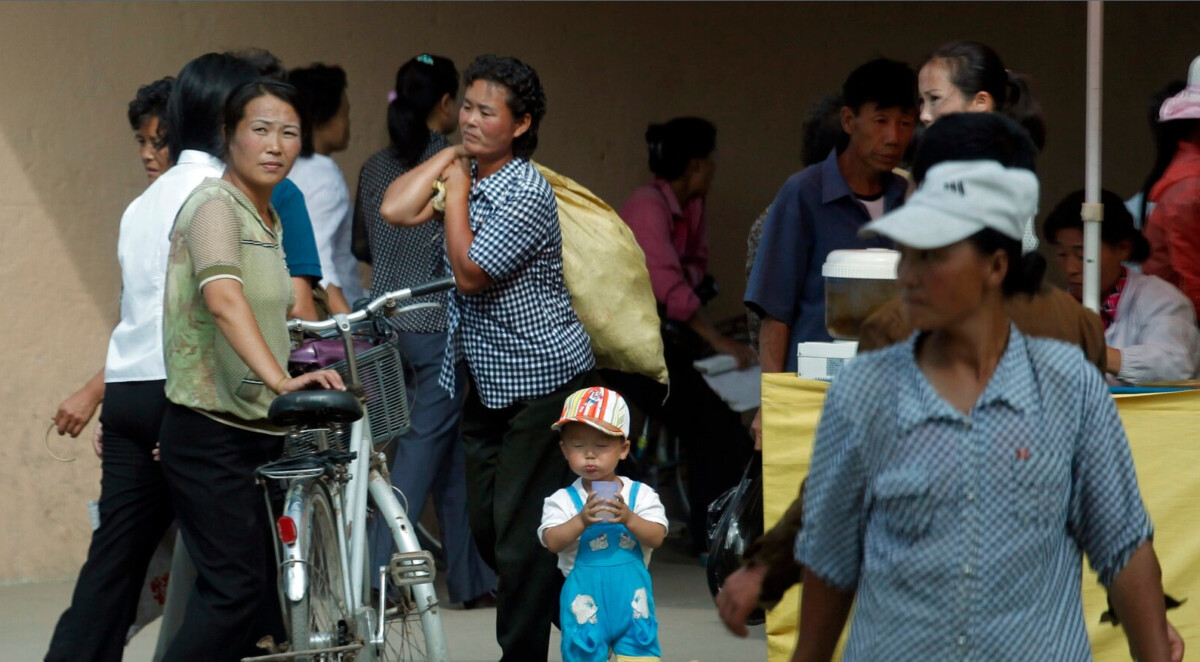
Women at a market in Rason in the northeast of North Korea. Courtesy of Carlos Barria / Reuters / Landov
A few days ago, I was interviewed about the lives of women in North Korea. At first, I thought I would simply speak about what I knew, what I had lived through, and what I had seen.
But as the questions continued, memories buried deep inside began to return.
They were memories of things that once felt normal. Moments I had passed over in silence. Things I had endured without knowing I had the right to object. Experiences I did not even recognize as human rights violations.
After the conversation with the journalist, my heart would not settle.
When I lived in North Korea, I had never really thought about the phrase “women’s rights.” I never learned those words. At school, I was taught over and over to be loyal to the leader and the party. But I do not remember anyone ever telling me that women have the right to protect their own bodies and minds.
I did not know I had the right to say no. I did not know I could speak up when someone treated me carelessly.
Like all women there, I learned to endure. Endurance is treated almost like a virtue. Silence becomes a way to survive.
If a woman is harassed, hears degrading remarks, or experiences unwanted physical contact, it is difficult to make an issue of it.
Women move on. “I was unlucky,” they tell themselves. “If I speak up, I’ll only suffer more.”
In a society where the state, the organization, and the family come before the individual, women’s suffering is easily buried.
Women who trade in the jangmadang markets are often vulnerable to inspectors and people with power. If someone speaks to them inappropriately, comes too close, or makes them uncomfortable, they cannot protest. If they speak up, they could be banned from trading. Their goods could be confiscated. Or worse.
So they pretend nothing is wrong, even when they feel humiliated, even when they are afraid.
That is how women learn to survive.
The same is true in workplaces and organizational life. If a superior or official makes offensive jokes, treats a woman carelessly, or looks down on her because she is a woman, challenging him can be dangerous. Power relations in North Korea are too strong. A person’s position and connections can determine another person’s life.
For a woman to say, “I don’t like this,” is not always simple. It can become a risk.
We learn to put survival before feelings.
After coming to South Korea, I learned many things anew. One thing struck me deeply: harassment and sexual violations against women are not tolerated here. Of course, women in South Korea also face difficulties and discrimination. But at least there is a social standard that recognizes such acts as wrong. There are laws and systems that allow victims to speak out.
When I realized that a woman’s body and dignity should not be treated carelessly — not at work, not at school, not on the street, not in public spaces — I thought of the faces of so many women I had known in North Korea.
Did they know what they endured was wrong? Did they know they had the right to reject someone who treated them carelessly?
What breaks my heart now is the realization that women in the North do not have the language to explain their suffering. If you do not know the phrase “human rights,” it is hard to understand that what happened to you was a violation of them. If you do not know the term “sexual harassment,” you may not know how to name the shame and fear you felt when it happened to you. If you have never learned the word “freedom,” it is hard to recognize how oppressed your life is.
North Korean women are strong. But that strength does not come from freedom.
It comes from having to endure for too long.
They feed their families by working in the markets. They carry the responsibilities of wives and mothers at home. They participate in organizational life and state mobilizations. Yet despite carrying so much, they are not taught the rights that would allow them to protect themselves.
The right to have their bodies and dignity respected. The right to reject injustice. The right to speak about harm.
These rights barely exist in their daily lives.
After the interview, I thought for a long time about the women I had seen in North Korea. Women who swallowed their tears in silence. Women who laughed off injustice after being wronged. Women who were broken inside but still had to return to the market the next day.
Their silence did not mean they were okay.
They were silent because they could not speak. They endured because they could not raise the issue. They blamed themselves because they had never imagined they could be protected.
I want to tell North Korean women this: the discomfort you felt was not wrong. If you were afraid, it was not because you were weak. What happened to you was not nothing. No one has the right to treat your body or your heart carelessly.
There is nothing women should have to endure simply because they are women.
The human rights I learned about after coming to South Korea were not some grand, distant idea. They were the strength to protect myself in daily life.
The right to say no. The right to ask for help. The right to believe that my body and mind deserve respect.
That interview was not just an interview. It was a moment to look back on my own life and once again confront the silence and pain North Korean women still carry.
One day, women in North Korea must come to know this: they are human beings who deserve respect.

Kim Yumi, a North Korean defector, was born and raised in Haeju, South Hwanghae Province, a coastal military area. Growing up near a naval base, she was able to secretly watch South Korean news programs and TV shows, thereby uncovering the vibrant, democratic society of South Korea. Yumi and her husband made the brave decision to escape North Korea and seek a better future. Now in Seoul, she is actively involved in raising awareness about the realities of life in North Korea, especially on her YouTube channel, “@KimYumiTV.”
Latest posts by Kim Yumi (see all)
- Under the same full moon, two versions of the same holiday - September 25, 2026
- The freedom to ask: Where should we go today? - September 18, 2026
- When the past became hope - August 28, 2026