

Women footballers return to the South but an invisible DMZ remains
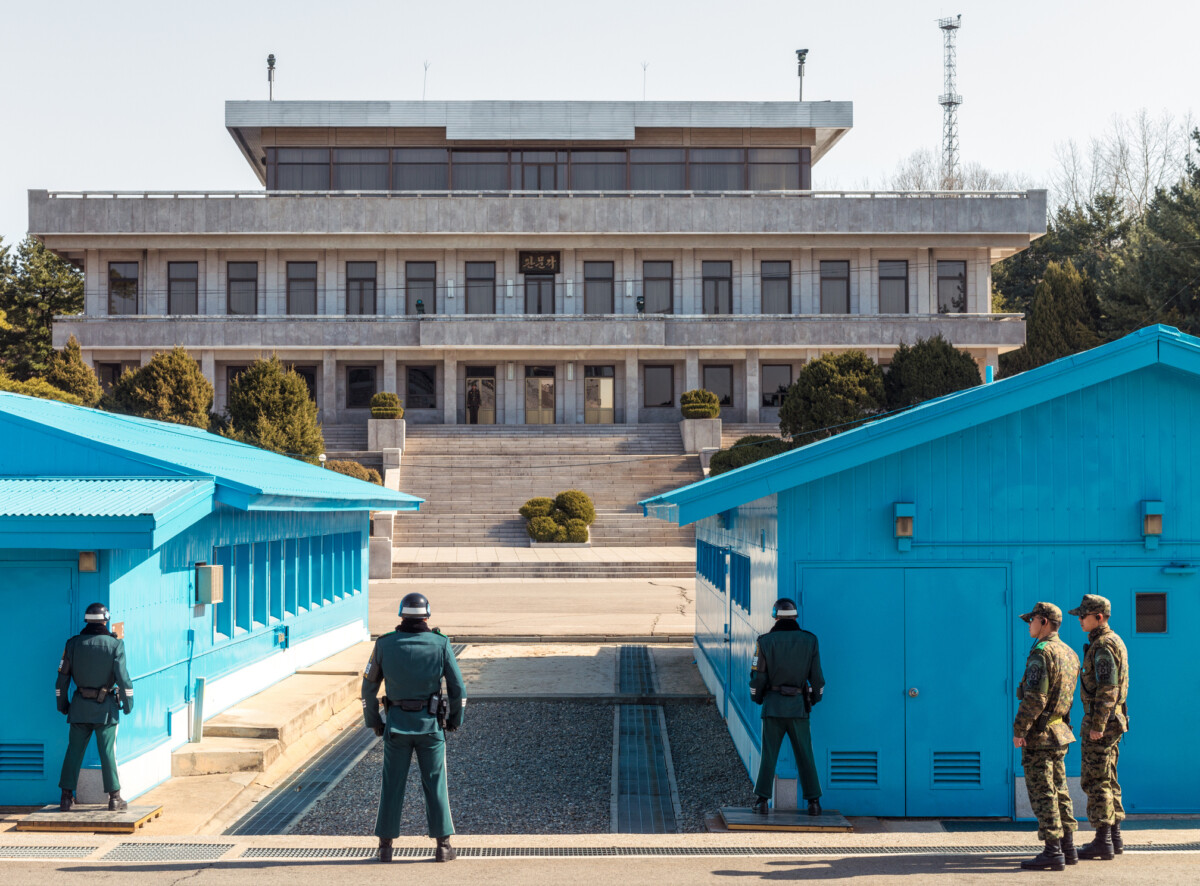
South Korean soldiers face the North Korean side of the DMZ. (Credit: iStock/georgeclerk)
Sign up here.
As May warms the land, one piece of news has lingered in my mind. On May 20, women from a North Korean football club will play in South Korea for the first time in eight years. For many, this may seem like a welcome moment of sports exchange. But to me, it carries more complex and deeply personal emotions.
North Korea’s women have long been recognized for their prowess on the international stage. With rigorous training and strong organization, they have demonstrated competitiveness in Asia and around the world. Yet behind that success lies a reality hidden from outsiders.
As someone who once lived in North Korea, I experienced that system firsthand.
In fact, I once came close to becoming a player myself. As a child, I was known at school for being good at football and was given an opportunity to be selected by a higher-level institution. At the time, I saw it as a life-changing moment.
“If I work hard, I can make it to Pyongyang and give my parents a better life,” I thought. With that determination, I trained harder than anyone else. It was a time filled with sweat and exhaustion, but I endured because I had hope.
But the outcome was completely different from what I had expected. In the end, the spot did not go to me. It went to the child of a wealthy family.
In North Korea, background and money often carry more weight than ability. It was then that I first experienced, painfully and directly, how bribery can determine opportunities. Watching a place I believed I had earned through hard work slip away for no good reason left me with deep shock and anger.
Those feelings did not fade easily. A sense of injustice and a shattered dream lingered. For a long time, I could not forget what had happened. The incident remained in my heart like a grudge. The question, “Why not me?” kept echoing in my mind.
As I look back on that moment now, I see it very differently. In fact, I sometimes think it was a turning point that changed my life for the better. If I had been selected, I would likely be living a completely different life. I would have been bound to a path dictated by the state, and it would have been difficult to live as I do now—thinking freely, speaking freely, and choosing the life I want.
Today, I live in South Korea, doing the work I want to do and pursuing the values and dreams I believe in. This life is not something to be taken for granted.
What felt like despair at the time was, in hindsight, an opportunity.
Because of these personal experiences, I cannot help but view the visit of the North Korean players differently. They are undoubtedly talented athletes, but they are also individuals shaped within a highly restricted environment. I can imagine how much competition—and how many unseen criteria—must have influenced their journey to this stage.
They also move not as individuals, but as representatives of the state. Even during overseas visits, their behavior and speech are strictly controlled, and opportunities for free interaction are limited. It is difficult to know what South Korea will mean to them or what they will see and feel. But one thing is certain: every moment they experience here will carry significance beyond a simple visit.
There is one hope I quietly hold. I hope that their time in South Korea will not end as just another match. I hope that what they see beyond the stadium—the freely moving people, the streets, the everyday scenes, the natural expressions of daily life—might offer them a glimpse of another world. And within that, even if they cannot express it in words, I hope they may feel a sense of possibility and hope—something they can begin to dream of for themselves.
At the same time, however, this hope comes with a heavy feeling. They have families in North Korea. Their loved ones are also the greatest constraint on their choices. Even if they see more, feel more, and come to understand more, they cannot necessarily act on it. To encounter dreams and possibilities, yet be forced to set them aside—that is a burden I understand all too well.
They, too, will likely see and feel many things during this visit. Those moments will stay with them, somewhere deep in their hearts. But at the same time, they will have to accept the reality that they must return, carrying those memories quietly within them, without the freedom to choose differently.
That is why this moment feels all the more poignant: under the same sky, speaking the same language, yet unable to fully reach one another. And still, I quietly hope that within this brief encounter, even the smallest seed of change might take root—and that one day, that seed will be able to grow freely, without constraint.

Kim Yumi, a North Korean defector, was born and raised in Haeju, South Hwanghae Province, a coastal military area. Growing up near a naval base, she was able to secretly watch South Korean news programs and TV shows, thereby uncovering the vibrant, democratic society of South Korea. Yumi and her husband made the brave decision to escape North Korea and seek a better future. Now in Seoul, she is actively involved in raising awareness about the realities of life in North Korea, especially on her YouTube channel, “@KimYumiTV.”
Latest posts by Kim Yumi (see all)
- The landmines were supposed to keep enemies out. Who were they really keeping in? - October 15, 2026
- For North Korean footballers, Japan is more than just an opponent - October 7, 2026
- Under the same full moon, two versions of the same holiday - September 25, 2026