
Pressure on all citizens to supply fertilizer creates a clandestine trade
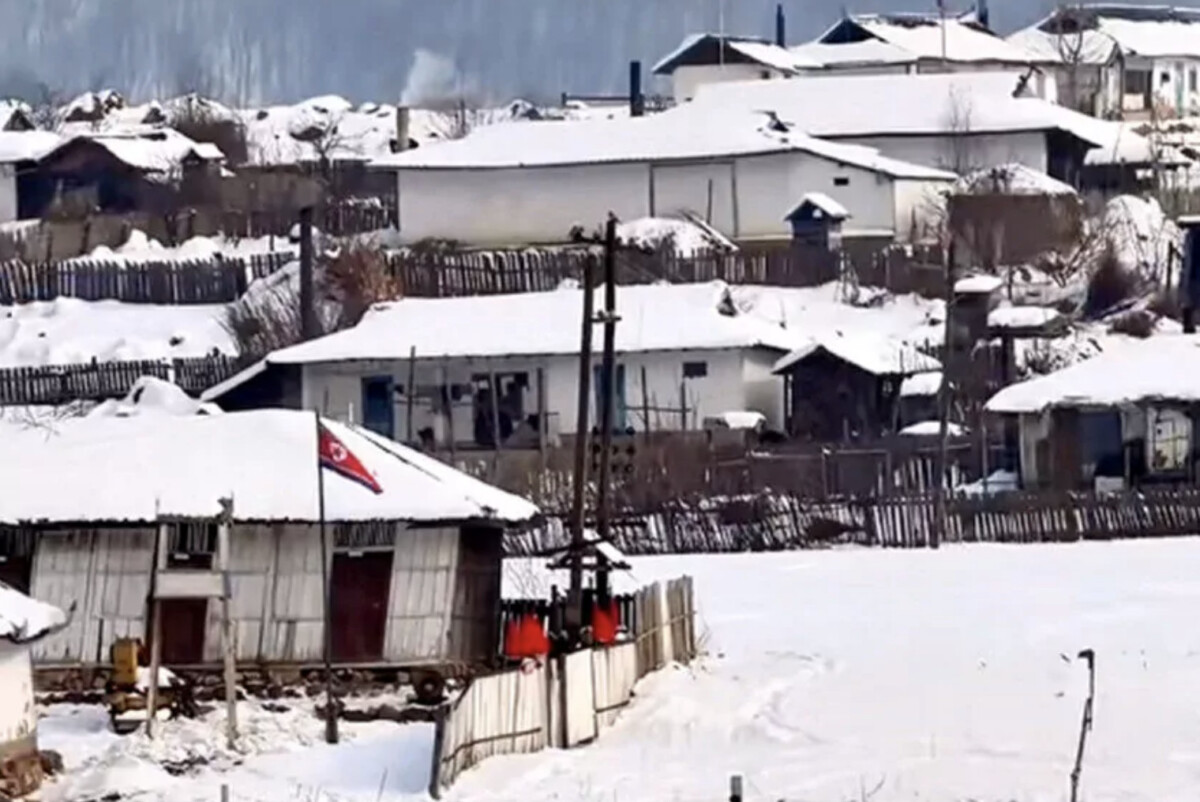
A border village in Kimjŏngsuk County, Ryanggang Province. Image / NK Times
Fertilizer has recently become a significant commodity in North Korea. Sources reached in the northern provinces bordering on China say that the official setting of fertilizer production as a priority for the new year immediately prompted a clandestine trade.
“Since late last year, fertilizer has become a commodity in cities and counties including Hoeryong,” said a knowledgeable contact in the city which is in North Hamgyong Province. “It started selling a couple of weeks ago at 50 won per kilogram, and by January 5, prices had risen to as high as 200 won.”
The source, who spoke on condition of strict anonymity, said that the authorities had made production of fertilizer the first “battle task” of the new year and that this had immediately established its value as a precious item.
At the end of December, in preparation, factories and enterprises ordered workers to “bring fertilizer on the first day back to work.” This instruction led employees to collect and sell fertilizer, and as demand grew among buyers, prices quickly soared, he said.
“Actually, the people buying fertilizer are not ordinary residents,” he said. “In the past, relatively well-off residents or officials would pay poorer people to produce fertilizer on their behalf. This practice has since evolved into a system of openly buying and selling it.”
The trade perks up in this way every year, he said. “In January, every workplace conducts daily reviews of fertilizer production plans. Because of this, people begin securing fertilizer even before official orders are issued, which naturally leads to trading.”
Similar phenomena are reported in other parts of the country. In Ryanggang Province, which is also on the China border, fertilizer prices are somewhat higher than in North Hamgyong, apparently due to difficulties in securing supply. Another source, from Hyesan, the Ryanggang provincial capital, told a similar story of high demand at the end of last month.
“Fertilizer cannot be sold openly,” he said. ”But in the outskirts of the city or in alleyways, you can see people holding signs indicating they have produce to sell.” “The shortage has pushed the price up to 150–250 won per kilogram,” he said.
Last year, North Korea reportedly imposed a fertilizer quota of 400–500 kilograms per person. This led to frequent fights between people. Sources explained that during the “fertilizer battle” period, each person is required to deliver their assigned quota to the designated farm or workplace, where they receive a confirmation slip, and submit it to their office.
Those failing to meet the quota are interrogated in front of colleagues or forced to come up with fertilizer before being allowed to leave work. As a result, many of them end up buying it. Hence the commodification of fertilizer at this time of year.

Han was born in 1989 in Taehongdan county, Ryanggang province, North Korea. She graduated from Hyesan Teacher's College in 2012, after which she worked as an elementary school teacher. She defected to South Korea in 2016 and works as a reporter at NK Times in Seoul.
Latest posts by Han Eun-su (see all)