

When the past became hope
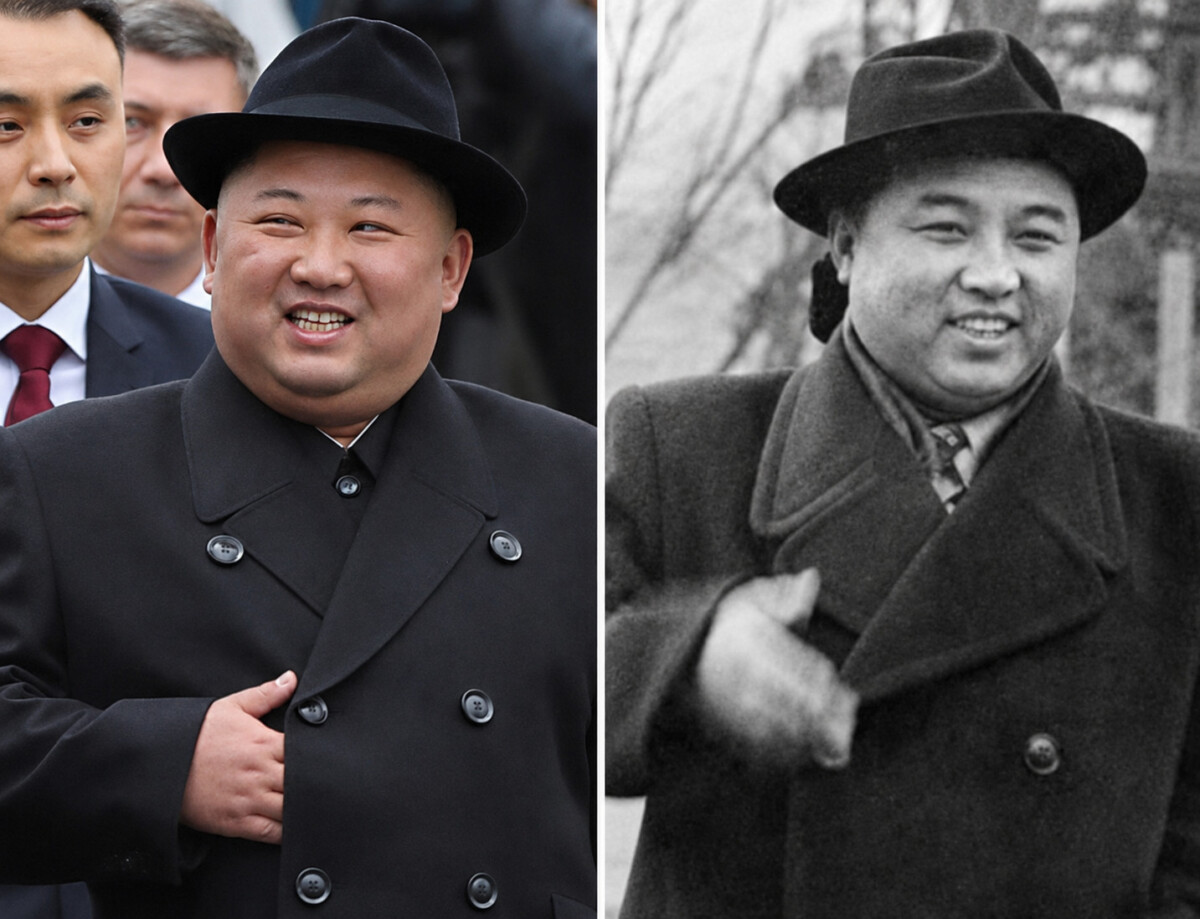
Kim Jong-un, left, is the image of his grandfather, Kim Il-sung
Today, I came across an article with a photograph of Kim Jong-un smiling brightly. The moment I saw his face as he waved to the crowd, I remembered the first time I saw his picture on TV in North Korea.
Back then, we studied his face for a long time.
“He really does look like the Great Leader when he was young.” That was what we used to call his grandfather, Kim Il-sung.
The hairstyle, the shape of his face, even the way he dressed — all of it was similar. Even his smile reminded us of Kim Il-sung in his younger years.
For North Koreans, this was not simply a matter of physical resemblance. Our memories of his grandfather were very different from our memories of what followed under his father, Kim Jong-il.
Older people where I lived would look back on the Kim Il-sung era and say:
“At least we got rations back then.”
If you went to work, you received rice. At the very least, people remembered a time when they did not have to worry every day about what they would eat.
The Kim Jong-il era, by contrast, brought memories of hunger. The ration system collapsed, and people came to depend on the jangmadang, the informal markets. The memories of the “Arduous March” — of watching people die because they could not find food — ran too deep.
So when Kim Jong-un appeared, people were not simply looking at his face. They were projecting onto it their memories of a time when life had been at least somewhat more bearable.
If he looks like Kim Il-sung, maybe he will be a little different.
Through access to outside information, people around me also knew that Kim Jong-un had studied abroad.
He was young. He had studied in another country. Maybe now our lives would finally get a little better.
That was the hope.
Even when we began hearing that Kim Jong-un was removing senior officials after taking power and replacing them with his own people, some residents interpreted it as part of a process of change. They wanted to believe that a young leader was clearing away the old guard and preparing to run the country in a new way.
But as time passed, what we saw was not a “new North Korea.”
It was a North Korea with an even tighter grip.
There were more things we were forbidden to see and more things we were forbidden to hear. Where you went, whom you met, even what you watched — all became subjects of control. People began watching what they said even inside their own homes, among their own families.
The change we had hoped for was an improvement in our lives.
The change that actually came was surveillance moving ever closer.
The COVID-19 period revealed this reality in its most extreme form. The border was closed, and movement was restricted. When the routes used by people trading back and forth with China were cut off, goods became scarce and prices rose.
People said: “Starving to death is more frightening than the disease.”
The atmosphere in the border regions was especially tense and frightening.
I still remember a young man who lived next door to me.
He had served in the military for ten years and returned home in 2022. In North Korea, when a son comes home after completing his military service, his parents normally have him take off his uniform and put on civilian clothes.
But his family could not even afford to buy him a new set of clothes.
After ten years of military service, he continued wearing his uniform for some time simply because he had nothing else to wear.
One day, he said to me:
“I’m afraid to sleep at night.”
That was the first time he told me what he said had happened while he was stationed in a forward area near the border.
He said that when border controls were tightened during the pandemic, soldiers were given strict orders: if they found anyone — or even an animal — attempting to cross the border within their assigned area, they were to shoot without hesitation. If they spotted someone and failed to stop them, they themselves could come under suspicion for having aided an attempted defection.
Then one day, he said, a family appeared in the area he was guarding: a father, a mother and a child who looked about three years old.
He raised his rifle, but he said he could not fire immediately.
The people in front of him were not armed enemies. They were not trying to attack him. They were simply an ordinary family with a small child, trying to get somewhere beyond the border.
But if he let them go, he could be punished.
In the end, he said, he pulled the trigger.
According to his account, the father first put his body between the gunfire and his family. Then the mother wrapped herself around the child.
He told me that all three died there.
I did not witness this incident myself. This is an account I heard directly from a young man who told me he had been serving in that region at the time, and I had no independent way to verify the details he described.
But I still remember the expression on his face and the trembling in his voice as he told me the story.
He said he could not sleep for days.
He was tormented by the thought that he had killed people, but he was also afraid that he himself might somehow be punished.
But what came down from his superiors was not an interrogation.
It was a reward.
He said he was commended for carrying out his duty well and was granted leave.
That only tormented him more.
People had died, and the state told him he had done well.
Parents had used their own bodies to try to save their young child, and the state called what he had done “loyalty.”
He told me that until the day he left the military, whenever he closed his eyes he saw that family. They appeared in his dreams night after night.
And only after he returned home, he said, did he begin to understand why the people he had shot at had been so desperate to cross the border.
After serving for ten years, he came home to parents who could not afford to buy him even one set of civilian clothes. The people around him lived from day to day, worrying about whether they would have enough to eat.
Quietly, he said:
“I think those people were trying to cross because they wanted to live, too.”
The state had taught a young man that shooting people who tried to cross the border was an act of loyalty. Yet after he had served that state for ten years, what awaited him was poverty so severe that his family could not even afford a set of civilian clothes.
Only when he confronted that poverty himself did he finally understand why the people he had once aimed his rifle at had been willing to risk their lives to leave.
So when I looked at Kim Jong-un’s smiling face in the news, it was not his smile that stayed with me.
A face can resemble the past, but it cannot bring the reality of the past back with it.
For us, hope did not mean moving forward.
It meant going back.
Going back to a time when rations were distributed, when at least the fear of starving to death was less immediate than it had become.
For people for whom even dreaming about the future had become a luxury, the past had somehow become hope.

Kim Yumi, a North Korean defector, was born and raised in Haeju, South Hwanghae Province, a coastal military area. Growing up near a naval base, she was able to secretly watch South Korean news programs and TV shows, thereby uncovering the vibrant, democratic society of South Korea. Yumi and her husband made the brave decision to escape North Korea and seek a better future. Now in Seoul, she is actively involved in raising awareness about the realities of life in North Korea, especially on her YouTube channel, “@KimYumiTV.”
Latest posts by Kim Yumi (see all)
- For North Korean footballers, Japan is more than just an opponent - October 7, 2026
- Under the same full moon, two versions of the same holiday - September 25, 2026
- The freedom to ask: Where should we go today? - September 18, 2026