

Weapons modernization and anti-U.S. strategic calculations amid the Russia–Ukraine war
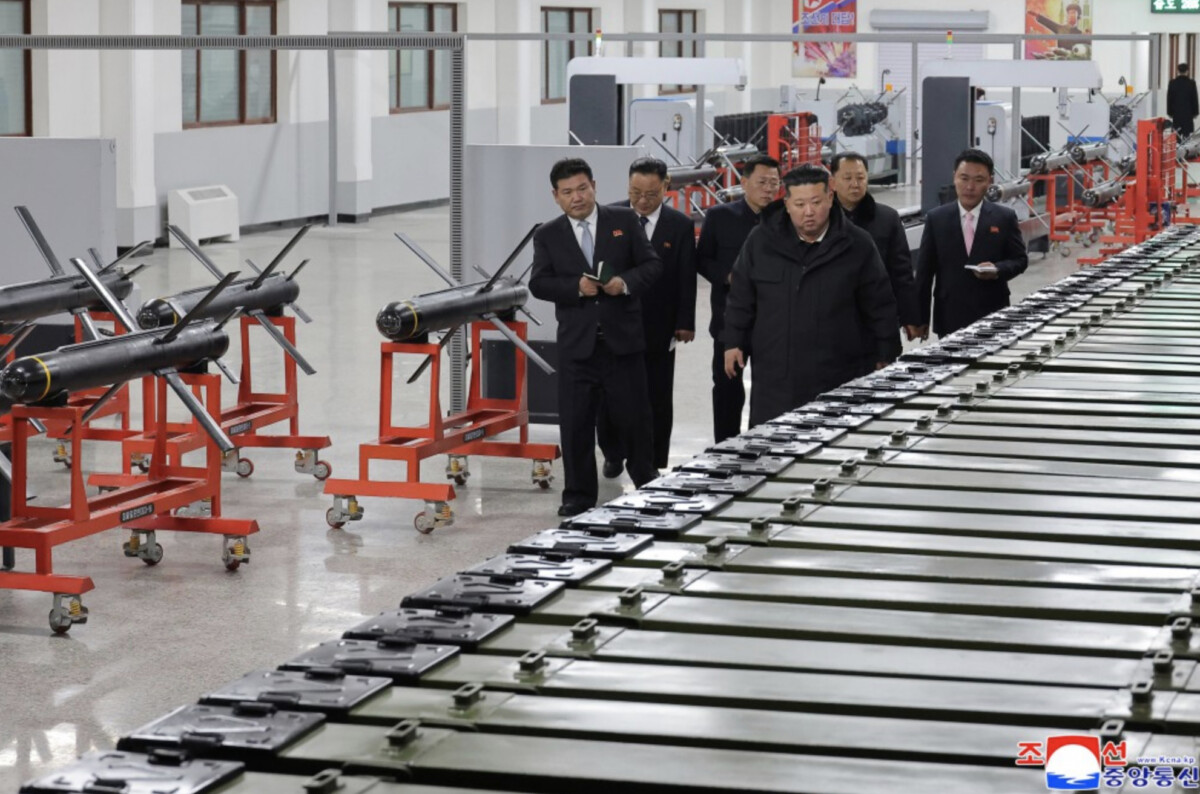
Kim Jong-un tours a tactical guided weapons facility on January 3 (Image: KCNA)
North Korea has supplied Russia with large quantities of artillery shells and military equipment during what Moscow calls its “special military operation” in Ukraine.
This support amounts to more than simple military assistance. It serves as a strategic opportunity for Pyongyang to dispose of outdated weapons while simultaneously accelerating the development of new ones.
In line with this assessment, Kim Jong-un has recently increased his visits to munitions factories, personally urging modernization of the defense industry and expansion of production capacity.
On January 3, he inspected a major munitions plant that produces tactical guided weapons and ordered a 2.5-fold increase in production capacity. He emphasized the utility of multipurpose precision-guided weapons systems, claiming they could replace multiple rocket launchers, and announced plans to systematically equip key units with these systems starting in the first half of the year.
Kim also stressed the need to modernize assembly processes and optimize equipment layout, instructing a comprehensive review of modernization projects scheduled for 2026. This demonstrates the push to fill the gap left by the outdated weapons and shells it has supplied to Russia by accelerating the development and production of new tactical guided weapon systems.
Kim is not only strengthening its defense industry but also using the war support to bolster his domestic political legitimacy.
On January 5, he visited the construction site of a memorial hall for overseas military operations, leading an event to honor the sacrifices of war heroes. He framed the war as a “holy struggle for justice and dignity,” revealing his intent to suppress public discontent and reinforce loyalty to the regime.
The memorial hall is expected to serve as a venue for Victory Day celebrations and major holidays, thereby strengthening the regime’s legitimacy.
Meanwhile, the state has intensified its criticism of South Korea and the United States while deepening strategic ties with Russia. Kim Jong-un declared to Vladimir Putin that he “unconditionally respects and supports all your policies and decisions,” highlighting the close alignment with Moscow.
On the UN stage, Pyongyang has actively defended Russia’s position. On January 13, Kim Song, North Korea’s permanent representative to the UN, condemned Western criticism and justified Russia’s military actions as an exercise of the right to self-defense. This underscores North Korea’s self-appointed role as a diplomatic shield for Russia in the international arena.
Behind these moves lies a strategic calculation: defense industry modernization, internal regime cohesion, and the formation of an anti-U.S. strategic front. By providing Russia with outdated weapons in exchange for advanced technology and resources, Pyongyang both suppresses domestic discontent by glorifying war support as patriotic sacrifice and strengthens deterrence against the U.S. amid growing security concerns, such as Washington’s pressure on Venezuela, Iran, and Cuba.
North Korea’s intent to position itself as part of an anti-Western coalition is evident in its coordinated stance with Russia at the UN.
Looking ahead, North Korea is likely to continue its military and diplomatic cooperation with Moscow. The more U.S. pressure intensifies, the deeper Pyongyang will embed itself in an anti-U.S. bloc centered on Russia and China.
Modernization of munitions factories and development of new weapons will accelerate through deals with Moscow, while symbolic initiatives, such as memorial hall construction, will reinforce domestic loyalty and turn war support into a source of regime legitimacy.
Ultimately, North Korea is leveraging the Russia–Ukraine war along three axes: defense industry modernization, internal cohesion, and external strategic reinforcement. This is not mere wartime assistance but a comprehensive calculation aimed at regime survival and the consolidation of an anti-U.S. strategic front.

Daenam’s journey began in North Korea, where he was employed at a state-run company serving the nation’s elite. Seeking freedom, he defected and now continues his life as a college student, building a new future.
Latest posts by Kim Daenam (see all)
- North Korea responds to Iran crisis: Will Pyongyang go down a path of “reckless survival?” - March 2, 2026
- Party Congress reaffirms rejection of reunification, South Korea is now an “enemy” - March 2, 2026
- Regime showcases new nuclear-capable rocket launchers ahead of Party Congress - February 24, 2026