
The threat of America’s isolationist faction and Korea’s autonomy faction to the U.S.-ROK alliance
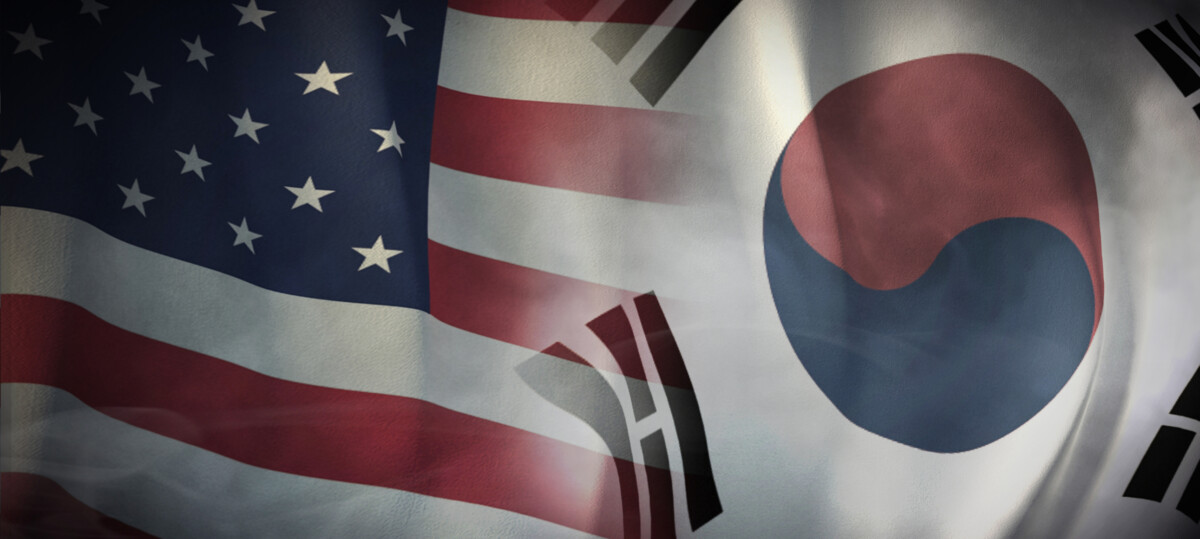
For better or worse, whatever transpires in U.S.-ROK relations in 2026 and the remainder of the Trump administration will depend not only on decisions made by North Korean dictator Kim Jong-un. It will also be determined by political trends and leaders, their advisors, legislators, and opinion-shapers in Washington, D.C. and Seoul.
Any threat to the alliance, as well as to American power and influence in the Asia-Pacific region in a broader sense, will derive not exclusively from the regimes in Pyongyang and Beijing, but also from the machinations of those in the U.S. who are part of what may be termed the isolationist faction in American politics and what is known in South Korea by various names including the autonomy faction, the independence faction, and the self-reliance faction.
Although the terms for this Korean group have very misleading connotations, it will be referred to in this article as the autonomy faction (AF).
The isolationist faction in the U.S., which is sometimes referred to as the “America only” group, as distinct from the much larger and more important non-isolationist “America first” forces, is one whose advocates and allies disingenuously reject the term isolationist. However, since it does very accurately reflect their views and policy positions in practice, they will be referred to as the isolationist faction (IF) in this article.
Since the current South Korean president is from the Democratic Party of Korea (DPK), which has a legislative majority, and the U.S. president is from the Republican Party, which has a majority in both houses of Congress, this article will primarily focus on these parties and the factions which are part of or claim to be allied with or supportive of them.
As for far-left and pro-North Korean lobbyists and influencers in both countries, this discussion will mention them, but not focus primarily on them. They merit a separate article. It is sufficient to note that pro-North forces greatly benefit from AF and IF influence and have collaborated with them.
Indeed, the AF and the IF very often parrot the talking points of pro-North groups and activists, and likewise, pro-North forces frequently adopt the rhetoric of the AF and the IF. The use of the inane term “forever wars,” for example, is favored by both pro-North and IF elements in the U.S.
The IF does not include either President Trump or the overwhelming majority of his cabinet, nor does it include the majority of Republican members of Congress. In fact, Trump publicly condemned the two IF members of the House of Representatives. Following this, one of them, Majorie Taylor Greene of Georgia, last month resigned from Congress, and he other, Thomas Massie, will face a Trump-endorsed challenger if he runs for office again in the 2026 mid-term elections. In the Senate, there is also Ron Paul, but he is not quite as radical or as completely committed to the IF.
Greene, who is mocked for her bizarre conspiracy theories, has been praised by the pro-North Korea,pro-China group Code Pink and Korean American pro-North activists.
The leading IF think tanks, which certainly merit being characterized as such in spite of their denials, are the libertarian-IF Cato Institute and the leftist-IF Quincy Institute.
The main individuals in the IF tend to be opinion-shapers, such as podcasters Tucker Carlson and Steve Bannon. Although such influencers may not align with the IF on every foreign policy issue, and some of them have criticized China, they nevertheless surely fall within the broad IF category.
Bannon served for several months as an advisor in the previous Trump administration but has no role in the current administration. Carlson, who formerly had a show on Fox TV, is viewed as being particularly close to Vice President J.D. Vance, and his son works in Vance’s office.
Another IF entity, deceptively masquerading as a conservative publication, is the American Conservative site, some of whose former top staff are now affiliated with the Quincy Institute. That publication’s name may deceive those unfamiliar with its content, which is often very far from traditional American conservatism.
Some writers for the sites of the Quincy Institute and the Cato Institute, and also for the American Conservative, are justifiably accused of being racists,antisemites and generally disreputable. Aco-founder of the Quincy Institute has been accused of being an agent of influence for the Iranian regime. Although the political positions of the Quincy Institute very often align with those of the far-left, it also includes some extreme-right individuals.
There are also a few neo-Nazi podcasters and YouTubers, such as Nick Fuentes, and wild conspiracy theorists such as Candace Owens, who support and are involved with the IF. The openly racist Fuentes, for example, has praised North Korea as “the good guys,” and Owens has defended communist China’s persecution of Protestant Christians. But because their crazy views are so clearly evil, they are not a major factor in politics.
More worrying is the handful of Korean American YouTubers and podcasters who are fanatical supporters of the “Yoon Forever” movement, although they do not really represent it, and have ties to Korean American conservative groups, but do terrible damage to the U.S.-ROK alliance and to the conservative cause by spreading false conspiracy theories.
The Los Angeles YouTube host Michael Won (Won Yong-suk), for example, has apparently aligned himself with Candace Owens, and is smearing the memory of Charlie Kirk by endorsing and promoting her accusation that Kirk’s widow Erika was somehow involved in his murder and was working for the U.S. CIA and/or the Israel Mossad.
It is important to recognize the basic positions and beliefs of the IF and the AF, and note whom they sympathize with or oppose. In the case of the IF, few or none of its major elements are explicitly pro-North Korean. One partial exception, however, is the Quincy Institute. While as a whole the think tank is not pro-North, some individuals within it and its orbit, including some who write for its website, are pro-North activists or fellow travelers of the pro-North movement who are involved with pro-North groups.
Leading individuals at the Quincy Institute have stridently condemned Korean conservative and pro-alliance forces in both countries, and its website contains plentiful examples of such attacks by extreme-left and pro-North writers.
Individuals at the Cato Institute have been very sympathetic to leftist ROK forces and their policies. One of its leading figures has written that, “There is no reason that the U.S. should continue to defend the ROK…” or Japan, or Europe. The leader of a pro-North front group that has described the Korean War as a “project” of U.S. “imperialism” and published a Moon Jae-in government-funded report opposing sanctions on North Korea, wrote on the Quincy Institute’s website that U.S. sanctions, not Kim Jong-un’s dictatorship, are responsible for harming North Korea’s people.
On his podcast, Bannon has praised and promoted one of the main leaders and founders of the Quincy Institute.
Although the main position of the IF is not “subjectively” pro-North, it may fairly be termed “objectively” pro-North, as George Orwell used that term, in that it advocates and lobbies for a policy of appeasement of Pyongyang by means of major unreciprocated concessions.
IF policy preferences range from support for a no preconditions peace agreement between the U.S. and the North, to the withdrawal of all U.S. forces from the South, and from advocacy of establishing diplomatic ties with the North, to the reduction or elimination of sanctions.
This faction does not focus solely on the Korean peninsula. It also promotes appeasement of – and in some cases defends – Russia,China,Iran, and other tyrannical regimes, often by disingenuously disguising such policies as “realism.” Its positions are not totally uniform, however, and its elements vary in their views from country to country, but most well-known IF podcasters are notorious for supporting VladimirPutin and Russia.
Other common characteristics of the IF are its obsessive and extreme hostility and in some cases even hatred of Israel and Jews, and its absurd mischaracterization of all non-isolationists as “neocons.”
Regarding the AF in South Korea, some individuals commonly associated with it were officials in the former administrations of leftist presidents Roh Moo-hyun and Moon Jae-in, where they were known as the “Taliban” faction for their anti-Americanism. Many now serve in top posts of the Lee Jae-myung administration or are legislators for the ruling DPK.
Referring to them as mere advocates of self-reliance or even independence is misleading. In the case of some elements within the AF, it would be more accurate to describe them, to varying degrees, as anti-alliance or even anti-U.S. because they have been involved in anti-U.S. movements and seek to fundamentally weaken the alliance.
President Lee himself was facing charges – but has managed to have a trial postponed and is seeking to have dropped – of alleged involvement in a scheme to illegally transfer millions of dollars to North Korea, in what was apparently a bribe to persuade dictator Kim Jong-un to allow him to visit Pyongyang for a photo opportunity.
Three representative figures within the AF are Prime Minister Kim Min-seok, a former radical and anti-U.S. activist (whose brother and political ally Kim Min-woong is pro-North, pro-Hamas, and rabidly anti-U.S.), Unification Minister Chung Dong-young, an infamous appeaser of the North who was a presidential candidate of the forerunner party of the DPK and also served as Unification Minister in the administration of Roh Moo-hyun, and Jung Chung-rae, the hot-tempered leader of the DPK, who as a radical activist once raided and firebombed the residence of the U.S. ambassador in Seoul.
Recent media reports have mentioned heightened conflict between AF and pro-alliance forces within the Lee administration, noting that such factionalist infighting has reached a serious level.
Prime Minister Kim and DPK leader Jung have sided with Unification Minister Chung in these matters, outnumbering and exceeding the influence of pro-alliance forces. Even within the South’s National Intelligence Service, there are reportedly deep divisions between officials aligned with the AF and others who are relatively more pro-alliance.
It is often the Unification Minister who has the most input and influence regarding inter-Korean relations, and in recent months Chung has been making statements and floating trial balloons in a manner meant to provoke Washington by openly opposing U.S. policies and longstanding alliance principles.
Other officials in the Lee administration, particularly those who, like national security advisor Wi Sung-lac, are more pro-alliance, have had to disavow or correct some of Chung’s statements.
Chung’s worldview is exemplified by his absurd rhetorical question, “How would we view it if North Korea raised the issue of human rights in South Korea?” and his seeming endorsement of Kim Jong-un’s anti-unification policy, as well as his blaming the U.S. for the failure of talks with Kim Jong-un and claiming that the North is not the ROK’s main enemy.
In December 2025, Chung openly criticized U.S. sanctions and human rights pressure on the North, stating that his Ministry would not be involved in certain discussions with the U.S. He also picked a fight with the United Nations Command over rules regarding access to portions of the DMZ.
It is not surprising that members of Korea’s conservative, pro-alliance opposition party have challenged Chung and the Lee administration as a whole by calling their policies a “rehash of failed North Korea appeasement measures.”
When President Lee in December 2025 ridiculously stated that North Korea legitimately fears being invaded by the South, one conservative politician observed that Lee sounded as if he was a “spokesman for North Korea.” A former head of the government’s Korea Institute for National Unification described Chung’s views regarding the North as contrary to provisions of the Constitution. In other words, treasonous.
Before becoming Minister of Unification, Chung, on a visit to the U.S. as a representative of the DPK in 2024, met with members of the Quincy Institute and said that his party wanted to establish close ties with them. Chung also declared that North Korea was compelled to develop nuclear weapons due to U.S. hostility, and said Kim Jong-un would abandon such weapons if the U.S. established relations with his regime.
So far, the IF in the U.S. has not had close ties with the AF in South Korea. The exception is some individuals at the Quincy Institute who do have ties to the AF and to the Korean left more generally. In November 2025, a delegation from the Quincy Institute visited the ROK and met with one of the most rabidly anti-American and anti-alliance politicians in Korea, Kim Joon-hyung of the far-left Fatherland Innovation Party. In December 2025, Kim wrote an article published by the Quincy Institute.
Kim has been supportive of pro-North Korean forces in the U.S. for several years and has specifically praised the pro-North Korean front group Women Cross DMZ / Korea Peace Now, which endorses the withdrawal of U.S. forces and an end to the alliance.
Steve Bannon has had ties to a few Korean conservatives, but they are probably not aware of his broader isolationist views or his sympathy for Russia. Bannon’s influence recently suffered a major blow when it was revealed that he and Jeffrey Epstein were discussing a scheme to remove Trump from office during his first term. It is also possible that some Korean conservatives may be fans of Carlson, because he was previously a conservative, and they may not know that he is now an isolationist who supports Russia.
As noted, it should be kept in mind that the AF also has allies among far-left and pro-North Korean forces in the South.
In the U.S., the situation is different. Although IF has some friends within the Trump administration, it is mainly dependent on podcasters and other influencers and is focused on a kind of “hostile takeover” of the Republican Party and the broader conservative movement.
Such a “hijacking” effort is unlikely to succeed. Opinion polls indicate that the IF is a small minority, and the racism and antisemitism of some leading figures, as well as their criticism of Trump and their sympathy for some of America’s enemies, has badly damaged their reputation within the Republican Party and among conservatives.
When President Trump struck Iran’s nuclear weapons development facilities in June 2025, Bannon and Carlson were outraged and wrongly predicted that it would cause an apocalyptic world war. Also, when in December he ordered strikes against the Islamist forces which have been slaughtering Christians in Nigeria, that was another blow to Carlson, who has dishonestly denied the fact that Nigerian Christians were regularly being massacred by Jihadists.
Some influential, respected Republican and genuine conservative figures, such as Senator Ted Cruz, Secretary of State Marco Rubio, presidential advisor Sebastian Gorka, professor and historian Victor Davis Hanson, and especially attorney and Fox TV host Mark Levin (none of whom can be fairly labeled as “neo-cons”) have in recent months and weeks been speaking out against the IF, explaining that it is not really conservative in nature.
Among Korean Americans, there are, of course, leftist and pro-North elements who support the South Korean AF, and there are also a few fake conservatives in the Korean American community, particularly a few YouTube show hosts who have been deceived by the groundless conspiracy theories spread by the IF or are simply disreputable opportunists.
Since the IF holds positions which are contrary to fundamental American values and traditional American foreign policy concerns, they are likely to lose this debate and be defeated.
In South Korea, where the AF has much more influence within the government and over the administration, the problem is far more serious. Whether or not it is able to successfully implement its preferred policies and further damage the U.S.-ROK alliance and Korea’s national security largely depends on the extent to which President Lee agrees with them and provides support.
Appeasement of North Korea completely failed in the mid-to-late 1990s and again during the administrations of Roh Moo-hyun and Moon Jae-in, just as appeasement failed with disastrous consequences in Europe during the 1930s.
Recent isolationist efforts in the U.S., encouraged by demagogues as disreputable as America’s isolationists of the 1930s, will lead only to disaster, and should therefore be strongly opposed.
As Republican Congressman John E. James observed, “The siren song of isolationism is tempting. But allowing vacuums of American influence around the world to be filled by terrorists and exploited by communists is a threat to American security at home.”
Lawrence Peck is a correspondent for NK Insider based in Seoul and Los Angeles. Having intensively researched and closely monitored the activities of pro-North Korea and other extremist groups and activists in the U.S. for over 25 years, he has been recognized in the U.S. and Korea as one of the leading American authorities on such topics, and has lectured, written extensively and been interviewed on such topics in the U.S. and Korea. He has a Bachelor of Arts degree in Political Science from the University of California, Los Angeles (UCLA) and a Juris Doctor degree from Loyola Law School of Los Angeles. He previously worked in Korea for several of the largest Korean business groups in the fields of intellectual property licensing and international business development. He also serves as an advisor to the North Korea Freedom Coalition of the U.S. Lawrence may be reached at the email address: lawrence.nkinsider@gmail.com
Latest posts by Lawrence Peck (see all)