

Reporting the unreachable: why we need to keep paying attention
Journalists who cover North Korea face a simple reality: they do so despite knowing they almost certainly won’t get into the country itself — not this year, and probably not ever.
North Korea sealed its borders in early 2020 when the pandemic hit and has kept them largely closed ever since. So how do journalists write about the world’s most closed-off country? And has the lack of fresh reporting made coverage weaker or less effective?
Back in 2012, the Associated Press became the first Western news organization to establish a permanent presence in North Korea. Agence France-Presse followed in September 2016. For a brief period, international news agencies had correspondents on the ground in one of the world’s most secretive states.
That ended when COVID-19 hit. When the border was closed, AP and AFP evacuated their staff. They have not returned.
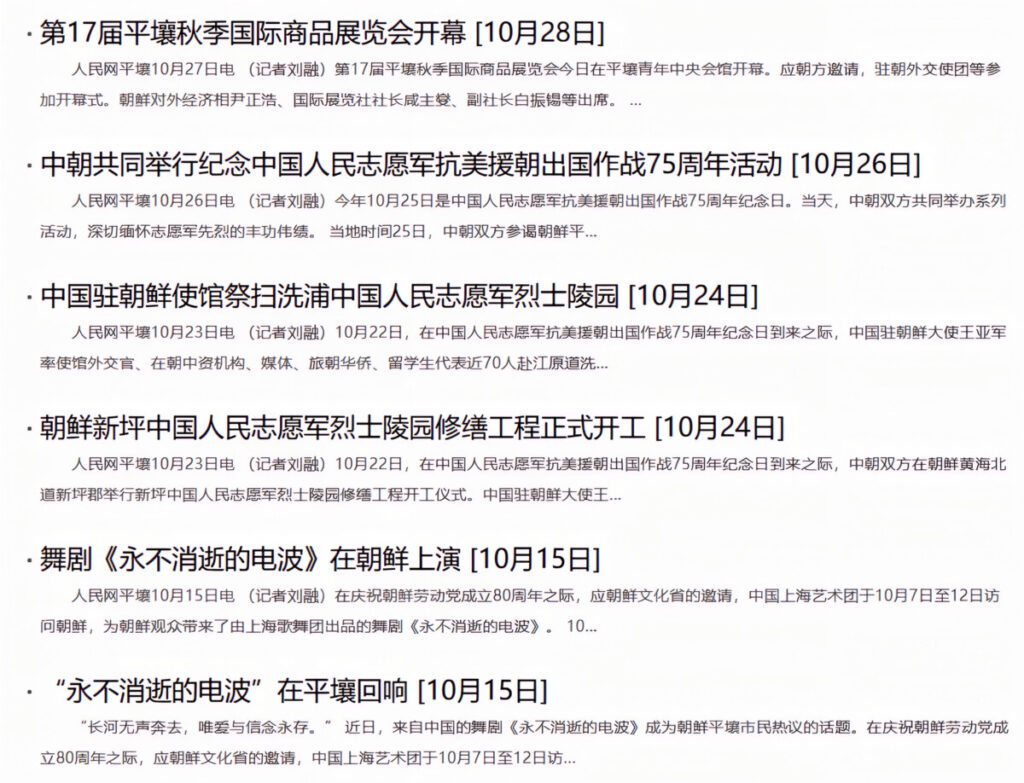
Today, there are no international media outlets stationed in Pyongyang that are able to provide independent and objective coverage. The only foreign journalists with access are from Chinese media — the People’s Daily and China Central Television — and Choson Sinbo, a pro-Pyongyang newspaper published in Japan.
Liu Rong of The People’s Daily’s and Dong Haitao of China Media Group resumed operations in Pyongyang last February. In late April, Xinhua News Agency sent bureau chief Wang Chao and correspondent Feng Yasong.
But their presence has made little difference. Coverage remains limited to diplomatic events and official announcements and is largely indistinguishable from state media. Liu Rong wrote fewer than 30 stories in 2025, nearly all about Chinese Embassy activities or government events. Investigative reporting, interviews with ordinary citizens, and examinations of daily life are absent.

So how do you report on a country you can’t enter? Covering North Korea today is like solving a puzzle with only four clues: satellite data, official propaganda, defector interviews, and international organization reports. Journalists piece these fragments together to reconstruct what’s happening.
Journalists scrutinize commercial satellite imagery from companies like Maxar Technologies and Planet Labs to track things like missile launcher movements or changes at construction sites, then try to infer what North Korea might do next.
They also monitor state media. Pyongyang’s official statements come through outlets such as the Korean Central News Agency (KCNA). Reporters analyze small changes in wording — which officials are mentioned or left out, whether “strong response” changes to “new phase” — looking for hints about policy shifts.
They also interview defectors. Changes in prices or public sentiment cannot be detected in satellite photos or official statements. People who have recently escaped North Korea — and their contacts still inside the country — provide these details. These accounts are hard to verify, but they remain almost the only way to hear voices from inside North Korea.
Then there are reports from international organizations like the International Atomic Energy Agency (IAEA) and human rights groups that provide crucial analysis of North Korea’s nuclear weapons program and human rights record.
But even these have serious limits. The country is so secretive that these organizations can’t verify information on the ground. IAEA inspectors were expelled in 2009 and have had to rely solely on satellite images since then. The United Nations human rights investigators track conditions indirectly through interviews with defectors.
Making things worse, the U.N. Security Council’s Panel of Experts, a group that monitored sanctions against North Korea for 15 years, was shut down in March 2024 after Russia vetoed its renewal. A new mechanism called the Multilateral Sanctions Monitoring Team, led by South Korea, the United States, Japan and other partners, is trying to fill the gap. But it doesn’t have the authority of an official U.N. body. In this and other ways, the world’s ability to watch North Korea is steadily eroding.
Then there is the question of public attention. These constraints of limited access combine with international crises elsewhere to reduce interest in reading about North Korea. The stories have become repetitive. For many readers, North Korea news has become routine.
One American diplomat, speaking on condition of anonymity, put it bluntly: “North Korea is dangerous. It’s important. But it’s not new.” That assessment captures the current reality. Even when concerning developments occur, the response from newsrooms has shifted. Editors now ask: “Don’t we have bigger problems right now?”
North Korea has, paradoxically, become predictable — dangerous, but predictable. Nuclear tests and missile launches follow familiar patterns. Human rights abuses and defector testimonies have become routine stories. This fatigue extends beyond international audiences to South Korea itself, where it may be more pronounced.
The generational shift is stark. Unlike those who experienced the 1950-53 Korean War firsthand, younger South Koreans lack any sense of personal connection to the conflict or its legacy of separated families. According to the Ministry of Unification, approximately 134,500 people have registered to reunite with family members in the North since applications began in 1988. As of last month, only about 34,400, roughly 26%, were still alive. The survivors are overwhelmingly elderly: 84% are over 70 years old, with almost a third in their 90s or older.
As the World War II and Korean War generation passes, interest has fallen sharply. A 2025 Korea Institute for National Unification survey found 68.1% of South Koreans are not interested in North Korea. This was a record high.
North Korea hasn’t been forgotten. It has just become familiar. The world treats it as a permanent problem, and more immediate crises take priority. Limited access, repetitive patterns, and fatigue have pushed coverage into a rut.
But this sense of familiarity is itself dangerous. While attention drifts away, North Korea’s problems keep accumulating, unsolved. And the threats keep escalating.
Research by political scientist Jason Brownlee, an expert on authoritarian regimes, shows that among 258 dictatorships that lasted at least three years between the end of World War II and 2006, only 23 tried to pass power to family members. Just nine succeeded. One of them is North Korea. When Kim Jong-il died in 2011, his son Kim Jong-un inherited power, completing an unprecedented third generation. That dynasty continues today.
And it may not stop there. Kim’s daughter, Kim Ju-ae, continues to appear at official events, suggesting the family is preparing the next generation. Given this, it is increasingly clear that the North Korea problem won’t be resolved quickly.
North Korea already possesses nuclear weapons. The Stockholm International Peace Research Institute (SIPRI) estimates the country has assembled around 50 nuclear warheads and has enough fissile material to produce up to 40 more.
In 2023, the regime unveiled the Hwasong-18, an intercontinental ballistic missile that uses solid fuel. Unlike older liquid-fueled missiles, it doesn’t require fueling before launch, dramatically reducing preparation time and making detection far more difficult
In 2024, Pyongyang claimed it had successfully tested a missile carrying multiple warheads. South Korean military officials expressed skepticism about whether the test succeeded. But if North Korea masters this technology, it could overwhelm missile defense systems. Intercepting multiple warheads from a single missile with limited defensive interceptors would prove nearly impossible.
The U.S. Defense Intelligence Agency predicts North Korea will have 50 long-range missiles capable of reaching the continental United States by 2035.
When Russia invaded Ukraine in 2022, North Korea saw an opportunity. According to South Korea’s National Intelligence Service and the U.S. Defense Department, North Korea has supplied Russia with artillery shells and ballistic missiles. Ukraine’s military intelligence directorate reported in November 2024 that North Korea had sent Russia more than 100 missiles.
The deals continued. After Kim Jong-un met Russian President Vladimir Putin in June 2024, the two countries signed what they called a “Comprehensive Strategic Partnership Treaty” which stipulates that if either country faces an armed attack and enters a state of war, the other will provide immediate military assistance.
Nuclear weapons and missiles aren’t the only concerns. In the 2025 World Press Freedom Index published by Reporters Without Borders, North Korea ranked 179th out of 180 countries, ahead of only Eritrea.
A report issued in September 2025 by the UN Office of the High Commissioner for Human Rights found that the human rights situation had not improved over the past decade, and that in many respects it had deteriorated. The UN called it a “lost decade.” The report stated, “No other population is under such restrictions in today’s world.”
According to an October 2025 report by the (South) Korea Institute for National Unification, four political prison camps in the North hold an estimated 53,000 to 65,000 detainees.
Some 26 million North Koreans continue to live under totalitarian rule, cut off from the outside world and subject to pervasive surveillance, forced labor, and arbitrary executions. For that reason, the world needs to keep paying attention.

But to do so requires new questions and fresh analysis.
Satellite photos show buildings but can’t reveal what people inside are thinking. KCNA broadcasts the government’s message but leaves out the real issues. Official reports provide numbers but miss the lives behind them.
Defectors are among the few who can explain North Korea from an insider’s perspective. They know how their part of the system works. They experienced daily life there. They sense when things are changing. And they can translate that reality in terms outsiders can grasp.
Yet North Korea is not a single story. It’s a tangle of nuclear brinkmanship, geopolitical maneuvering, systematic human rights abuses, economic survival under sanctions, and shifting power dynamics across Asia. Understanding it requires more than one lens. It demands journalists, diplomats, human rights investigators, economists, and Asia specialists, each bringing their own angle to a country that reveals itself only in fragments.
This is why outlets like NK Insider matter. When defectors join forces with specialists across these fields, something shifts. The reporting moves beyond what satellites can see or what Pyongyang wants heard. It captures texture, the whispered conversations in the markets, the subtle policy signals in state media, the human cost behind the statistics. This kind of collaborative journalism can spot what others miss: the context that can mean the difference between miscalculation and clarity, between a crisis ignored and a crisis anticipated.
The world’s attention to North Korea is fading at precisely the moment we need it most. Without sustained focus, without diverse voices asking uncomfortable questions, we risk sleepwalking toward consequences we can’t undo. Reviving that attention, in South Korea and beyond, isn’t just about better reporting. It’s about building the understanding that future generations will need to navigate what we leave them.
That understanding starts with listening to voices that have been there, voices that got out, voices that refuse to let the world look away. It starts here.

Yoonseo Im is a Seoul-based trilingual journalist and researcher. Growing up in three different countries has shaped her international perspective on the Korean Peninsula. She is a Ph.D. candidate in International Studies and holds prior degrees in Political Science and International Relations. She is also active in multiple research organizations focused on regional issues, including North Korean affairs. Her work explores the intersection of economics, industry, politics, and security in Korea and the broader region, combining academic expertise with reporting experience gained through field journalism. Contact: yxn.contact@gmail.com
Latest posts by Yoonseo Im (see all)
- How to explain the appearance of EVs on Pyongyang streets? - February 7, 2026
- 2026: In a world hungrier than ever for electricity, nuclear-armed North Korea is unable to power daily life - January 29, 2026
- Reporting the unreachable: why we need to keep paying attention - January 15, 2026