

Party Congress reaffirms rejection of reunification, South Korea is now an “enemy”
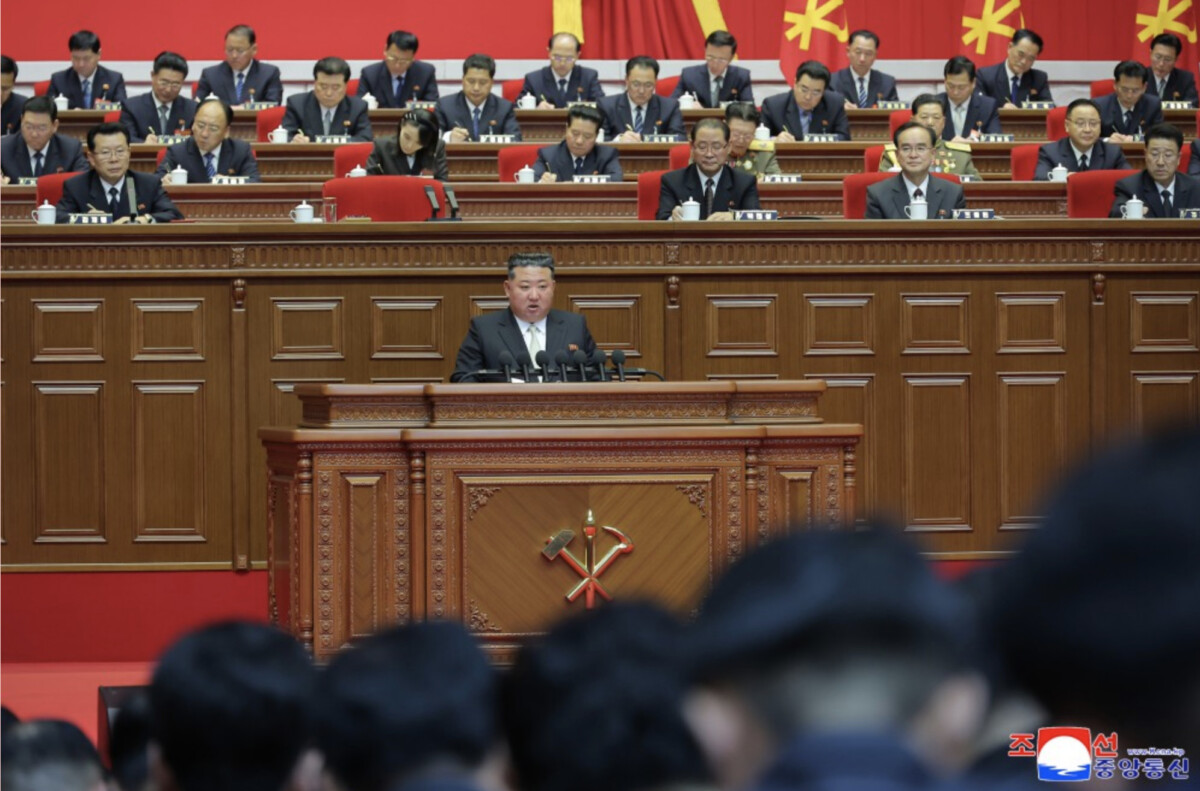
The 9th Congress of the Workers’ Party of Korea (WPK), which ended on February 25, reaffirmed Kim Jong-un’s position as General Secretary, solidifying his absolute leadership, and reaffirmed the national strategy away from any form of reunification with South Korea.
In his report to the Congress, Kim proclaimed a “final and crucial decision” to “draw a historical line under the abnormal relationship that has existed on the Korean Peninsula for nearly 80 years since the founding of the Republic,” and to redefine inter-Korean relations as those between “the most hostile of states.”
Historically, the Party Congress has served as the highest decision-making body for setting the nation’s direction and policies, though its role has fluctuated over time. Under the first leader, Kim Il-sung, it convened regularly, underscoring party-centered governance.
During the Kim Jong-il era, it was effectively sidelined by the rise of “military-first politics,” resulting in a decades-long hiatus.
Since Kim Jong-un’s acquisition of power, after his father’s death, the Congress has been revived as a central mechanism of state governance.
The timing of this latest Congress is particularly notable given the complex external environment. Amid the ongoing war in Ukraine, Pyongyang has elevated its strategic alliance with Russia to new heights and reinforced its traditional ties with China, positioning itself at the heart of a new Cold War dynamic.
It was against this backdrop that Kim Jong-un two years ago first invoked the anti-reunification “two states” doctrine and declared South Korea to be a foreign country and an enemy.
In his address, Kim signaled a complete departure from any view of South Korea as a fellow nation or a potential reunification partner, instead designating it as a primary enemy to be eradicated.
Regarding the United States, North Korea maintained a tone of harsh criticism but left room for nuance. While denouncing the U.S. as “the root cause of instability and chaos” and a “super rogue state,” Pyongyang also stated that “if the U.S. respects the current status of our state as stipulated in the Constitution of the Democratic People’s Republic of Korea and withdraws its hostile policy, there is no reason we cannot get along.”
The contrast with the uncompromising stance toward South Korea is interpreted as a strategic move to preserve leverage in potential future negotiations with Washington.
In the realm of military policy, the Congress unveiled a series of bold and sweeping plans. Kim announced a long-term roadmap to strengthen the country’s nuclear arsenal year by year, pledging to increase the number of nuclear weapons and expand their delivery systems and operational scope.
During the new five-year plan, he ordered the deployment of “secret weapons,” including land- and sea-based ICBM complexes, AI-powered unmanned attack drones, reconnaissance satellites, and powerful electronic warfare systems capable of paralyzing enemy command centers. He also called for the expansion of 600mm and new 240mm multiple rocket launcher systems, presenting concrete figures to fortify what he called “the core of war deterrence.”
On the economic front, the Congress introduced new initiatives aimed at narrowing the urban-rural divide, building on the “20×10 Local Development Policy.”
Over the next five years, North Korea plans to construct modern healthcare facilities and hospitals in 100 cities and counties nationwide and to significantly reduce disparities in education between urban and rural areas.
The Party also expressed its intent to harness cutting-edge technologies such as artificial intelligence and space development as key drivers of economic self-reliance.
However, skepticism remains over whether these large-scale construction and healthcare initiatives will genuinely improve the lives of citizens. Given the enormous resources being funneled into military expansion, experts argue that the regime will inevitably resort to extracting materials, fees, and labor from its population to fund these national projects.
This imbalance in resource allocation is expected to deepen economic hardship and fuel internal discontent. While the regime publicly champions “improving people’s livelihoods,” in reality, the burden of financing its military ambitions is falling squarely on the shoulders of its citizens.
Beneath the show of resolve and strength lies a precarious trajectory marked by deepening economic woes and the mounting sacrifices of its people. This course is likely to push the Korean Peninsula into an increasingly volatile and unpredictable phase of tension.

Daenam’s journey began in North Korea, where he was employed at a state-run company serving the nation’s elite. Seeking freedom, he defected and now continues his life as a college student, building a new future.
Latest posts by Kim Daenam (see all)
- North Korea responds to Iran crisis: Will Pyongyang go down a path of “reckless survival?” - March 2, 2026
- Party Congress reaffirms rejection of reunification, South Korea is now an “enemy” - March 2, 2026
- Regime showcases new nuclear-capable rocket launchers ahead of Party Congress - February 24, 2026