

Why is North Korea sending women to Russia?
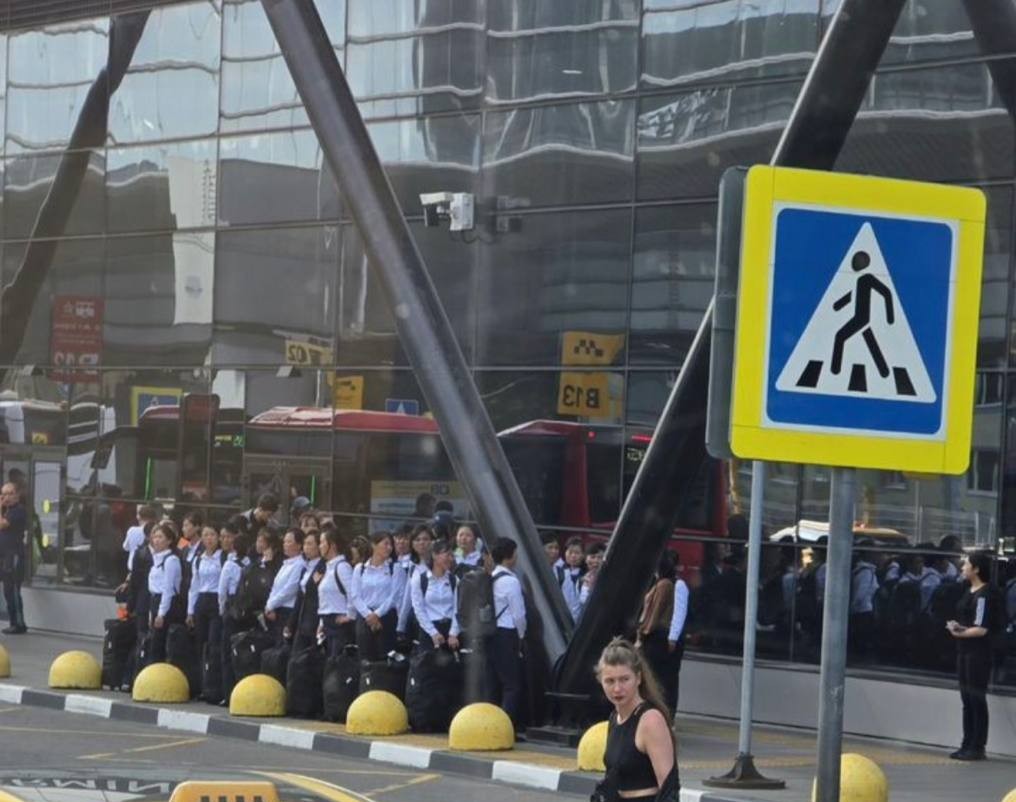
North Korean workers in Russia. Image: Russian news Telegram channel “Ostorozhno, novosti” on Aug. 9.
I recently saw a report about an advertisement on an online marketplace offering to supply 40 North Korean female workers to a single workplace. According to the report, the women could work in restaurants, production lines, garment factories or agriculture. One condition was the “package deal” – in other words, all 40 had to move and work as a single group rather than being dispatched to different workplaces.
The moment I saw the report, memories of what I experienced in North Korea just three years ago came rushing back.
During the COVID-19 pandemic, border closures dealt a serious blow to North Korea’s efforts to earn foreign currency. Around that time, rumors began circulating where I lived that people could go to China to work and make money. Officials were assigned to recruit people in each region, and both women and men who wanted to work in China began putting their names forward.
I registered too.
At the time, my thinking was simple.
Wouldn’t life be better if I could go to China rather than stay in North Korea?
If I worked abroad, couldn’t I at least save a lump sum and bring it home?
That small hope was enough for me to put my name down and pay money.
But leaving North Korea to work in China or Russia is very different from what we normally mean by “working abroad.” It is not something people can simply choose to do. There is a selection and approval process. More importantly, people often have to come up with money before they can even secure the opportunity to leave.
Even people who had no money did not want to let such an opportunity slip away. Life in North Korea was simply too difficult.
“Still, it must be better outside than here.”
“If I endure a few hard years, maybe I can earn money and bring it home to my family.”
Clinging to that hope, some people scraped together money they did not have, borrowing at interest to pay the required fees. I, too, lived in that atmosphere of expectation, hoping I would be able to go to China.
But in the end, the trip we had hoped for never materialized. In a society where there is no clear or legally enforceable mechanism for accountability, those who had trusted the assurances of a state agency and paid the required fees were simply told that the planned overseas deployment had been canceled. There was no reasonable explanation, let alone compensation or reimbursement. Rumors circulated that the episode was part of a massive nationwide fraud scheme.
For those who had borrowed money, all that remained was debt. They had to return to the markets and streets, scrambling to repay what they owed. Money borrowed in the hope of a better future became a burden hanging around their necks.
That is why, when I now hear about North Korean women being sent to Russia, I cannot simply think: They are going abroad to earn money.
What were these women told?
Were they told, “You can make a lot of money in Russia”?
Did they think, “If I endure a few years, perhaps my family’s situation will improve”?
And with what mixture of hope and desperation did they leave their homes?
The biggest problem with North Korea’s overseas labor system is the money involved. Individuals bear costs simply to be selected and sent abroad, and once they arrive, large portions of their earnings can be deducted under various pretexts. Workers may therefore pay once for the opportunity to leave and then see much of their wages taken from them after they begin working. What remains in their own hands can be far less than they expected.
And yet I understand why people still want to go.
Because I felt the same way.
When life becomes unbearably difficult, people begin thinking less about freedom or rights and more about the rice they need to put on the table for their families.
“Still, it must be better there than here.”
For someone who is desperate, that single thought can become hope.
For decades, North Korean women have filled the gaps in everyday life that the state has failed to fill. When the state’s rationing system stopped functioning, they went to the markets. When a husband’s salary was not enough to feed the family, they began trading and earning money themselves. They cooked, raised children and found ways to make money, often all at the same time.
That is why people say North Korean women are strong.
They are.
But I no longer want to describe that strength as something purely admirable.
Some forms of strength are not freely chosen. They are forced into existence by the need to survive.
The news calls them “40 North Korean female workers.” But behind that number are 40 individual lives.
One woman may have left children behind. Another may have gone to support her parents. Some may believe that if they endure a few difficult years, their families’ lives might improve, even slightly.
I understand that feeling deeply.
Only three years ago, I, too, put my name down in the hope of going to China, with much the same expectations.
So when I saw this report, the first questions that came to mind were these:
Will these women be able to choose where they work in Russia?
If the work becomes unbearable, will they be allowed to quit?
Will they be able to move around freely?
If they are not paid what they were promised, will they be able to protest?
More important than whether someone is allowed to go abroad is whether, once there, they are still able to make choices about their own life.
They should be able to decide where they work, how much they are paid, when they rest, whether they quit and when they return to their families.
That, to me, is what freedom means.
The resilience of North Korean women should not become a resource for a dictator to draw upon whenever foreign currency is needed.
Why should people who have already endured the most be told, once again, to endure even more?
I hope the women being sent to Russia can live not as instruments for someone else’s foreign-currency earnings, but as individuals who receive the full value of their labor and are able to decide the course of their own lives.
That is not an extraordinary demand.
It is one of the most basic rights every human being should have.

Kim Yumi, a North Korean defector, was born and raised in Haeju, South Hwanghae Province, a coastal military area. Growing up near a naval base, she was able to secretly watch South Korean news programs and TV shows, thereby uncovering the vibrant, democratic society of South Korea. Yumi and her husband made the brave decision to escape North Korea and seek a better future. Now in Seoul, she is actively involved in raising awareness about the realities of life in North Korea, especially on her YouTube channel, “@KimYumiTV.”
Latest posts by Kim Yumi (see all)
- Under the same full moon, two versions of the same holiday - September 25, 2026
- The freedom to ask: Where should we go today? - September 18, 2026
- When the past became hope - August 28, 2026