
Tyranny Tracker: identifying authoritarianism, illuminating freedom
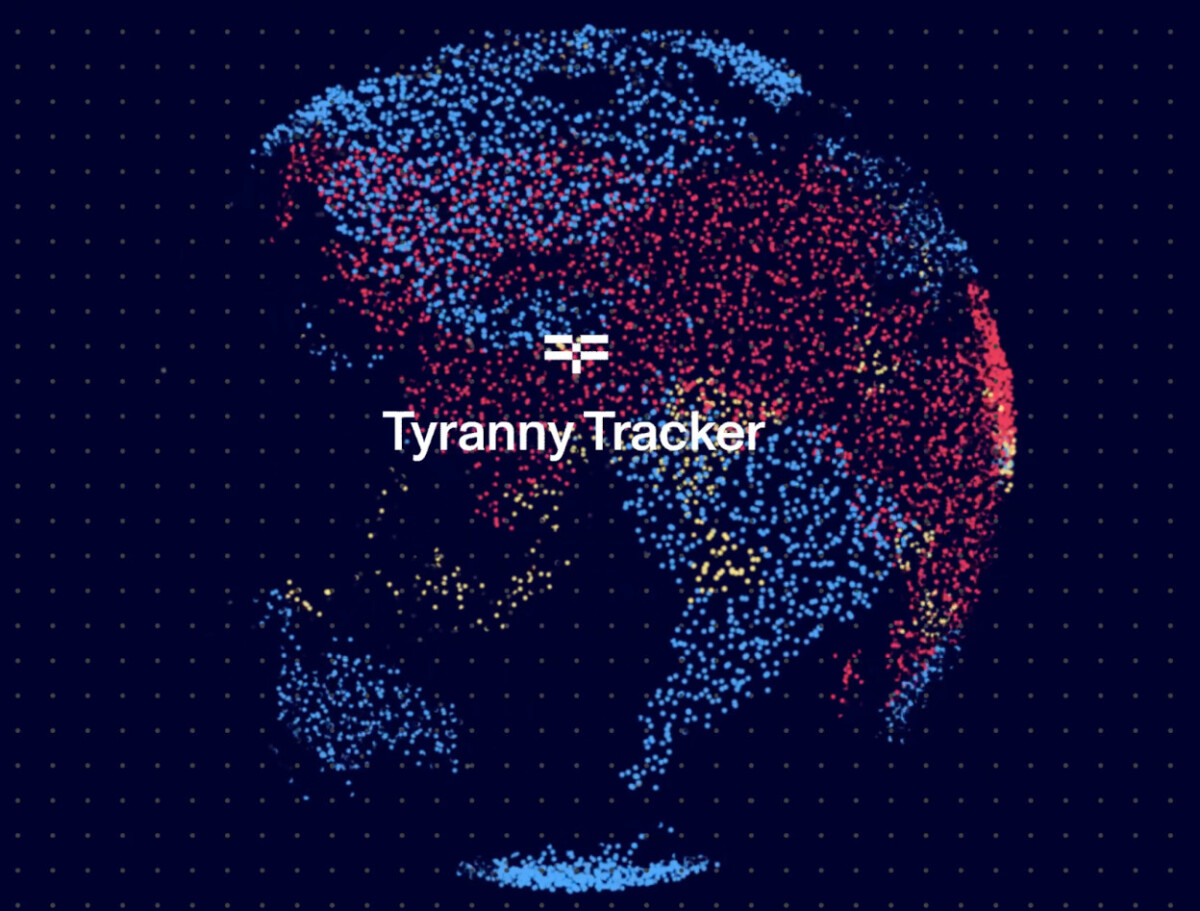
The Human Rights Foundation (HRF) has launched Tyranny Tracker — a qualitative democracy index that classifies countries and territories as democratic, hybrid authoritarian, or fully authoritarian.
What sets the Tracker apart is its methodology. In contrast to indices that rely mainly on quantitative data, the Tracker emphasizes qualitative analysis that captures nuances the numbers often miss.
It highlights executive-led backsliding, such as the forced closure of major media or the skewing of elections to block opposition. Tyranny Tracker also underscores judicial independence, recognizing that democracy ends when courts can no longer restrain authoritarian executives.
The methodology draws on interviews, academic literature, civil society reports, and over two decades of HRF’s experience defending dissidents. This makes the Tracker both rigorous and rooted in lived experience.
For me, Tyranny Tracker is deeply personal. I was born in North Korea, a country it rightly identifies as fully authoritarian. Growing up under one of the world’s most repressive regimes, I experienced what it means when dissent is criminalized, courts are powerless, and elections are staged rituals. I know what it is like when telling the truth costs a person their freedom. To survive, I learned silence. To dream, I learned secrecy. And yet, I found, even in the darkest places and at the darkest times, cracks appear in the facade of tyranny.
The Tracker defines democracies as systems with free and fair elections, freedom to criticize the government, and independent courts capable of checking abuse. Hybrid regimes erode democracy while maintaining a façade of legitimacy through manipulated elections and blocked transitions of power. Fully authoritarian regimes — like North Korea — eliminate competition and dissent, control the judiciary, rig elections, silence media, and target both real and perceived opponents with arrests and killings.
Authoritarianism is not the exception. It is the dominant mode of governance worldwide. The data is sobering: 75% of the world’s population — 6.1 billion people — live under authoritarian rule. Of these, 3 billion live under fully authoritarian regimes and 3.1 billion under hybrid regimes. Only 25% — 2.9 billion people — live in democracies.
Global trends revealed by the Tracker are stark. In Africa, 91% of countries are authoritarian, driven by coups and dismantled term limits. In the Americas, only 7% are authoritarian, though consolidation of power threatens checks and balances. The Asia-Pacific region is 87% authoritarian, the epicenter of hybrid regimes and transnational repression. In Europe and Central Asia, 38% are authoritarian, with ruling parties entrenching themselves through institutional capture. And in the Middle East and North Africa, 98% are authoritarian, characterized by sham elections and repression.
For those of us from places like North Korea, the Tracker is more than research. It is a weapon of truth. It educates the public, pressures regimes, and reminds those trapped under oppression that the world is watching. It tells them that their suffering is not invisible.
Tools like the Tyranny Tracker strengthen efforts to document authoritarianism and give hope that those cracks in tyranny will one day widen into freedom. When I see North Korea’s classification, I feel both sorrow and determination — sorrow because it confirms the reality I know too well, determination because it shows authoritarianism can be named, studied, and challenged. And one day, those cracks may split open into freedom for my homeland and for billions worldwide.
To learn more, visit tyrannytracker.org.

Seongmin is the director of the Korea Desk at the Human Rights Foundation.
Latest posts by Seongmin Lee (see all)
- Tyranny Tracker: identifying authoritarianism, illuminating freedom - March 10, 2026
- Exclusive: Documents and personal items found on the body of a North Korean soldier in Kursk Oblast region (1) - January 10, 2025
- Exclusive: Documents found on the body of a North Korean soldier in Kursk Oblast region (2) - January 9, 2025