

The people at the front are the poorest: The life of a Party member
iStock/ znm
Today, watching the news, I suddenly found myself thinking about North Korea again.
There was the propaganda, once again declaring that “the Party devotes itself to the people.” The moment I heard that familiar phrase, the voices of Party members I knew when I lived there came rushing back.
I was not a Party member. But I lived among them, and I heard their sighs and quiet complaints.
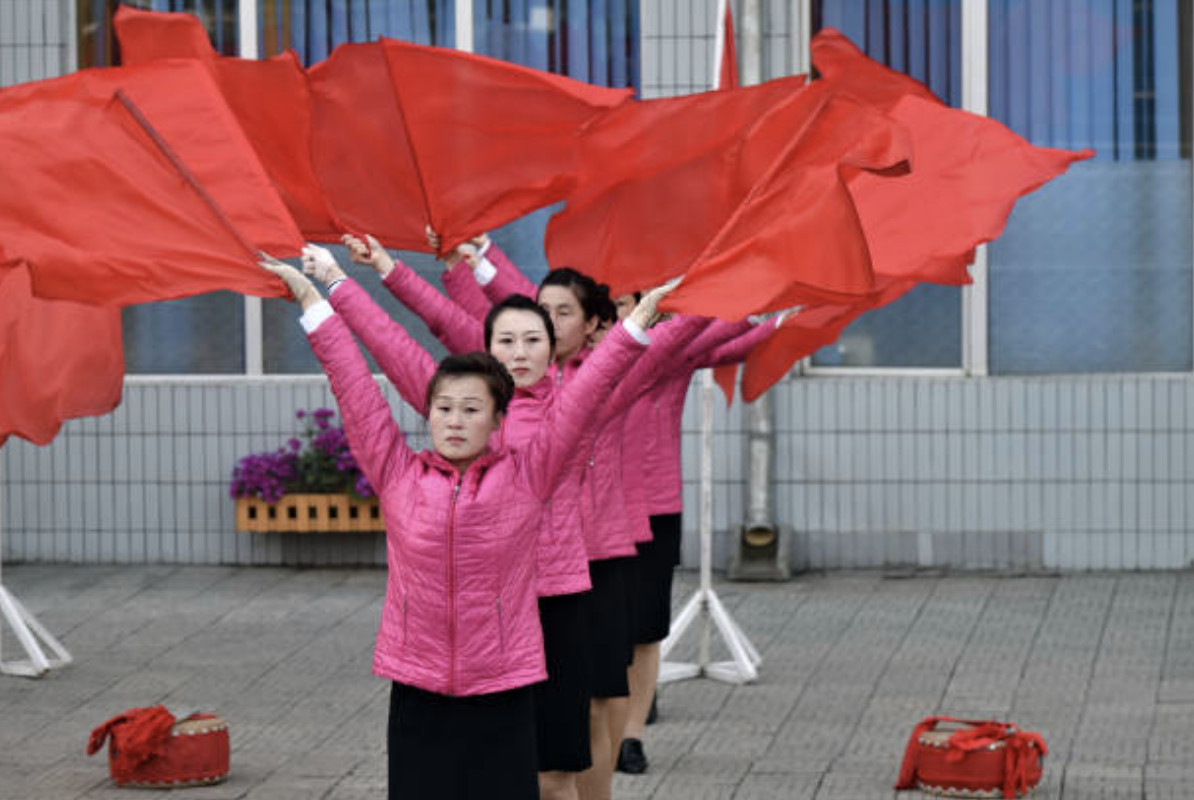
There is no question that they appear privileged. They always sit in the front row, and at various events and loyalty gatherings, they are called up as representatives.
Newspapers and broadcasts endlessly repeat phrases like “Let us live as true Party members” and “Party members lead the revolution at the forefront.” The words model, loyalty, and devotion always follow the title of Party member. Naturally, people assume that life must improve once you become one.
But no one ever tells you what life behind those words actually looks like.
What I saw in the markets, in the workplaces, and inside people’s homes was completely different. The title of Party member was not a privilege. It was a burden they could never put down, a shackle that forced them to constantly prove themselves.
My friend was a Party member. One day, she quietly said to me: “Yumi… I thought joining the Party would be a good thing, but it feels suffocating.”
She didn’t sound like she was complaining. She sounded like someone simply stating a fact.
My friend was called to meetings several times a day and could never skip ideological study sessions or self‑criticism gatherings. Even when she was sick, even when her family had no food left at home, she had to live up to “set an example first.” The Party always came before everything else. A Party member was someone with no personal circumstances.
She always smiled and said she was fine, that she could endure it, that it was only natural because she was a Party member. But I could see she was always exhausted. Her eyes were sunken, and she spoke less and less. I had seen that expression so often that only later did I realize it was the common face of Party members.
There was a middle‑aged woman in our neighborhood who was a member. She was caught during a crackdown secretly selling goods in the market. She was doing it simply to survive. If she had been an ordinary resident, she would have gotten off with a warning or a fine. But because she was a Party member, it became a much bigger issue.
They accused her of “seeking personal gain while being a Party member.”
“If I weren’t a Party member, they wouldn’t have pushed me this far,” she told me.
Her voice carried more resignation than resentment.
In truth, Party members are not people with power. They are people who shoulder responsibility on behalf of the system. They are criticized more harshly, condemned more publicly, and forced to stand at the front to repent.
“Party members must not make mistakes.”
“We live as propaganda material.”
“Party members are the poorest of all.”
These sentences never appear in newspapers or broadcasts. But they are the most accurate description of what I saw with my own eyes. Party members always had to take the lead. Even when rations stopped, even when there was no food, it was their job to persuade others.
They had to be the first to say, “Let’s endure just a little longer,” and the loudest to shout, “The Party’s policy is correct.”
But when they went home after saying those words, many found there was nothing left in their cooking pot. The gap between words and reality always fell heaviest on their shoulders. Their thoughts grew heavier, but their mouths stayed shut.
I asked myself, Why do the people forced to show the most loyalty look the most exhausted? Why are the people praised for their devotion to the Party the ones who lose the most of their personal lives?
Such questions were dangerous. Asking them out loud could have caused a political problem. So I simply listened.
Now I live in South Korea. I can speak freely and write freely. I want now to tell the truth. Party members there are not evil, nor are they in a privileged class. They are ordinary people trying to survive within the system. They just carry heavier burdens and are forced to make greater sacrifices.
The words I heard from them reveal reality more honestly than any official report. “We don’t live for the Party. We live because of the Party.”
My friend muttered that one day. I couldn’t respond. Even now, whenever that sentence comes to mind, my chest tightens. Because in that one line, the entire life of a North Korean Party member was contained.

Kim Yumi, a North Korean defector, was born and raised in Haeju, South Hwanghae Province, a coastal military area. Growing up near a naval base, she was able to secretly watch South Korean news programs and TV shows, thereby uncovering the vibrant, democratic society of South Korea. Yumi and her husband made the brave decision to escape North Korea and seek a better future. Now in Seoul, she is actively involved in raising awareness about the realities of life in North Korea, especially on her YouTube channel, “@KimYumiTV.”
Latest posts by Kim Yumi (see all)
- Is Kim Ju-ae being groomed for a support role? - March 17, 2026
- Kim Jong-un’s emphasis on women is core part of regime survival strategy - March 9, 2026
- Fate of two POWs held in Ukraine hands in the balance - March 6, 2026