

On Kim Jong-un’s “two hostile enemy states” theory and de-emphasis on unification policy
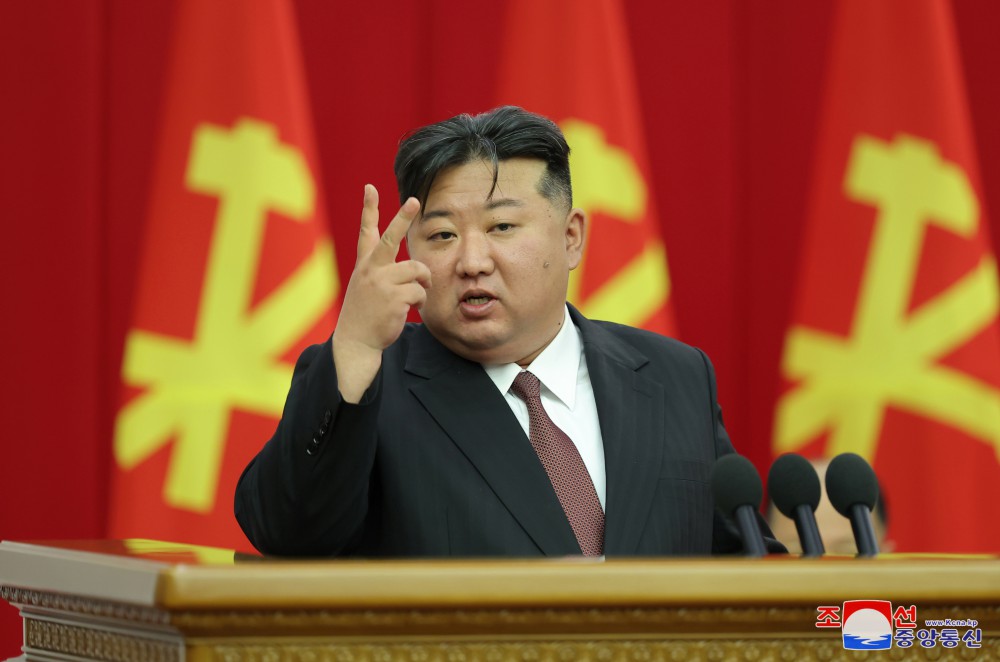
Kim Jong-un | Image: KCNA
For two years now, one of the most written about and discussed topics among Korea watchers, analysts of Asian security, and international affairs experts in general has been what is commonly referred to as the “major policy shift” by North Korea with regard to South Korea.
This supposedly monumental change was Kim Jong-un’s declaration at the end of 2023, on which he further elaborated in early 2024, that henceforth the North would consider its relationship with the South to be one of “two hostile states,” and consequently the idea that unification would be greatly de-emphasized or even dropped entirely.
As recently as September 2025, Kim again stated that the North had no intention of pursuing unification or reconciliation with Seoul.
This posture, after so many decades of promoting unification, has therefore been widely characterized as a major turnaround.
But we should ask, aside from all the sound and fury accompanying the new line, what is its practical significance regarding the North’s overall stance towards the South? Is it really as earth-shaking as advertised?
A strong argument can be made that the policy, aside from the obvious terminological changes in terms of rhetoric and propaganda, is not really all that novel on a practical level with regard to the actual behavior of the North.
In spite of its decades-long insistence on the absolute necessity and inevitability of unification, on its own terms, of course, and despite the heavy reliance on “uriminzokkiri”-type appeals to the brethren in the South suffering until an eventual reunified “Democratic Confederal Republic of Koryo” or other such Kim Il-sung-devised communization scheme, as a practical, “reality-on-the ground” matter, the change may not really be very substantial.
For example, while the North has long threatened to militarily annihilate the South at the same time as simultaneously campaigning for peaceful unification, it now avoids the mention of unification and focuses solely on the wiping out part.
Also, in reality, hasn’t the North always considered the other side to be its enemy and sought to destroy it, by whatever means? Of course, it would certainly have preferred to accomplish this via subversion, with the assistance of friendly or naively misguided forces in the South, and without having to resort to full-scale war.
Nevertheless, the realities of the “peaceful unification” efforts of the past were always predicated on its eventual domination of the South. In this context, what is billed as a major change may not be that significant after all.
We should also point out that the way the North now rules out any form of talks with the South about anything is also not new. There were periods in the past when it refused all dialogue.
Regardless of any debates as to the actual meaning and ramifications of the announced change, in 2024 and 2025, pro-North Korean and other leftist forces in South Korea and the U.S. engaged in the slow and difficult task of digesting, internalizing, and ultimately adopting and promoting Kim’s policy shift.
Just as in late 1939, communist parties, other pro-Soviet groups and individuals, and “fellow traveler” leftists throughout the world had to suddenly change their entire worldview and policy stance to loyally support and defend the Hitler-Stalin alliance and oppose war against Nazi Germany, so supporters and defenders of North Korea, and other sympathizing leftists, have had to adhere to the North’s new position, to publicly defend it, and most specifically to explain and justify it to rank-and-file activists.
For almost two years, pro-North and other leftist leaders have been giving lectures and writing articles for the purpose of explaining the shift and demanding loyalty to the new position. Leading pro-North figures assured their followers not to worry, that Supreme Leader Kim knows what he is doing, and that his new strategy would lead to victory.
As a result, virtually all of them have overcome their initial shock and acclimatized themselves to the policy change. They have not only done so by changing their rhetoric, but also by changing the names of their organizations, and even shutting down some organizations and corresponding websites that had been closely and directly identified with longstanding unification efforts. In some cases, they have even pushed out activists who were seen as being too firmly tied to the old unification stance.
This turnabout is significant in that it provides further proof, even to doubters, that there are indeed elements in the two countries which not only support Pyongyang but which are actually loyal to the point of being willing to follow its directives.
Given this, we might ask, what other actions might they engage in for the purpose of demonstrating their loyalty? Security agencies would do well to take note of this situation.
What is perhaps most astonishing, however, has been the remarkable willingness of some of the most high-ranking officials of the Lee Jae-myung administration to apparently express a sympathetic understanding with, to essentially justify, and in some cases even almost endorse Kim’s new stance. The ramifications have not yet been grasped by certain Korean watchers who for various reasons are always reluctant to criticize left-wing administrations in Seoul.
This trend began, as one might expect, with prominent far-left figures known for their past involvement in pro-North groups and their roles in the Moon Jae-in administration, but who are currently situated at the fringes of the Lee administration. But it eventually spread to left-wing elements within the ruling Korea Democratic Party and the Lee administration, especially, and rather ironically, within the South’s perhaps unfortunately named Ministry of Unification.
In fact, the Minister of Unification himself, a longtime and dedicated appeaser of the North, made it clear that he viewed Kim’s policy as a reaction to the hostility of the South’s previous conservative administration. He went even further, suggesting that his ministry might remove the word “unification” from its official name, so as to promote “trust.” Thus, it was not only hardcore pro-North Korean groups which advocated changing of names to please the North.
The late, brilliant author Saul Bellow, who won the Nobel Prize for Literature in 1976, observed, “A great deal of intelligence can be invested in ignorance when the need for illusion is great.” As if to confirm Bellow’s witty observation, some left-wing Korean intellectuals and other commentators, and astonishingly even some key members of the Lee administration and the ruling Korea Democratic Party have not only justified Kim’s new policy, but also characterized it as being advantageous to the the South and conducive to the cause of peace.
In their eagerness to promote Lee’s policy of “see no evil, hear no evil, speak no evil” regarding the North, these individuals, in and out of government, have been using all their skills to twist elementary logic and common sense almost beyond parody by asserting that Kim’s “two hostile states” approach will somehow enhance inter-Korean understanding and promote better relations going forward.
This enthusiastic rush to accommodate Kim’s new stance is surely a sign of both ineptitude and craven weakness, which even the most Lee-friendly Korea watchers in the U.S. and in the Seoul foreign press corps will hopefully and eventually come to understand.
In Bellow’s 1970 novel Mr. Sammler’s Planet, the Jewish Holocaust survivor Semmler asks “whether the worst enemies of civilization might not prove to be its petted intellectuals at its weakest moments.” Let us hope that those intellectuals and others who have long advocated for appeasement of the Pyongyang regime will in these perilous times finally come to their senses.
They should realize that it is not what the North’s propaganda and its adherents claim are the “hostile policies” of the U.S. and South Korea which have been the root cause of tensions, but rather the basic nature and goals of the regime in Pyongyang.
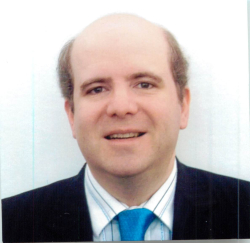
Lawrence Peck is a correspondent for NK Insider based in Seoul and Los Angeles. Having intensively researched and closely monitored the activities of pro-North Korea and other extremist groups and activists in the U.S. for over 25 years, he has been recognized in the U.S. and Korea as one of the leading American authorities on such topics, and has lectured, written extensively and been interviewed on such topics in the U.S. and Korea. He has a Bachelor of Arts degree in Political Science from the University of California, Los Angeles (UCLA) and a Juris Doctor degree from Loyola Law School of Los Angeles. He previously worked in Korea for several of the largest Korean business groups in the fields of intellectual property licensing and international business development. He also serves as an advisor to the North Korea Freedom Coalition of the U.S. Lawrence may be reached at the email address: lawrence.nkinsider@gmail.com
Latest posts by Lawrence Peck (see all)
- The campaign to nominate Kim Jong-un for a Nobel Peace Prize - March 18, 2026
- Never-ending repression: The continuous purges and ideological campaigns of North Korea and other communist regimes - March 7, 2026
- The threat of America’s isolationist faction and Korea’s autonomy faction to the U.S.-ROK alliance - February 25, 2026