

Red Youth Guards, the militarized life begins at 16
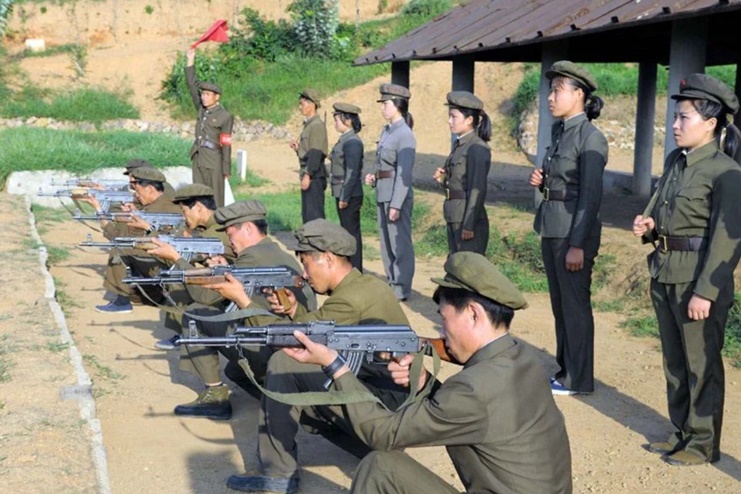
Image: DPRK Today
Childhood in North Korea ends at 16. That is when all young people are required to undergo military training in the Red Youth Guards.
This is not a choice but a compulsory gateway through which teenagers begin a militarized life. I personally went through this process, and the experience remains vivid to this day.
The Red Youth Guards was established in 1970 under Kim Il-sung’s directive as a military organization for students. Authorities present it as “military education and patriotic education,” but in reality it is a means of indoctrination into military thinking and loyalty to the regime.
Students suspend regular classes to participate in Red Guards activities. They wear uniforms, march, learn discipline, and undergo about two weeks of intensive drills that involve physical conditioning, tactical exercises, and shooting practice.
This training begins at dawn, with slogans shouted and days spent in dust and sweat. The message is constant: “You are future warriors who will defend the motherland.”
I remember feeling I was no longer a student but being raised as a soldier. Friends endured torn clothes, bleeding knees, and strict control from instructors. If one person erred, the entire class was punished. Training on gravel felt more like violence than education.
After it was over, we treated our wounds in silence, encouraging one another. Escape was impossible. Camps were deep in the mountains, guarded by armed security forces. “Just hold on a little longer,” we said. “In a few days we’ll go home.”
On the last day, we had live-fire shooting. We handled real guns and were graded on our performance. We were deemed to be excellent, good, or poor. Being rated excellent brought recognition and potential future benefits in military service or cadre selection. Anything less was judged inadequate. Many of us cried in frustration when we were rated good or poor. Our parents had come to cheer us on, so failure made us feel guilty toward them and afraid we had disappointed the country.
Looking back, more of our time was spent on military training and indoctrination than on study or play, distorting our childhood and suppressing independent thought. North Korea calls this “raising revolutionary youth,” but in reality it is molding teenagers into tools for regime preservation.
When I came to South Korea in 2023, I felt freedom for the first time. I saw people studying even at 23 or 30. That shocked me: “So this is possible. This is what freedom really is,” I thought. Here, age is not a barrier to learning. Anyone can open a book again and choose their own path.

Kim Yumi, a North Korean defector, was born and raised in Haeju, South Hwanghae Province, a coastal military area. Growing up near a naval base, she was able to secretly watch South Korean news programs and TV shows, thereby uncovering the vibrant, democratic society of South Korea. Yumi and her husband made the brave decision to escape North Korea and seek a better future. Now in Seoul, she is actively involved in raising awareness about the realities of life in North Korea, especially on her YouTube channel, “@KimYumiTV.”
Latest posts by Kim Yumi (see all)
- Can ordinary joy awaken the people of North Korea? - February 19, 2026
- Remembering the Yeonpyeong Island bombardment - February 13, 2026
- The people at the front are the poorest: The life of a Party member - February 9, 2026