

Proposal to amend Article 3 of the ROK Constitution is a flawed effort to accommodate North Korea
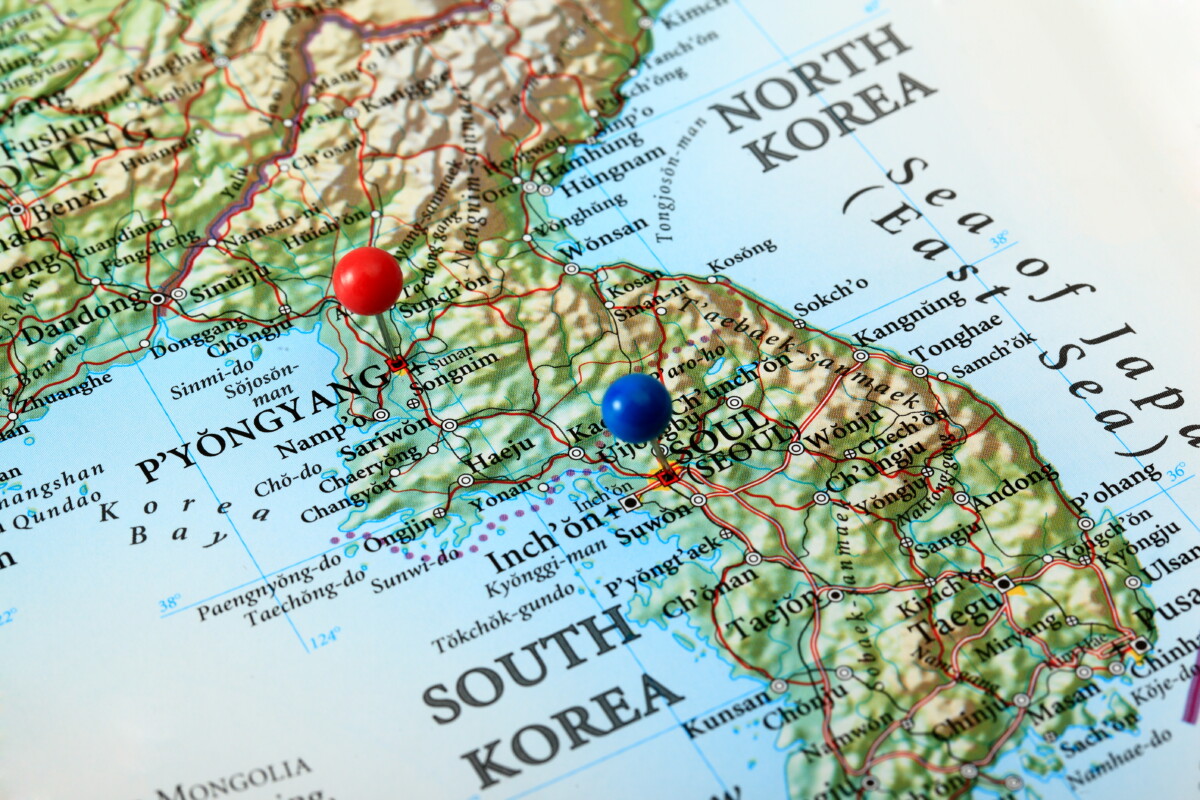
Image: iStock/rzdeb
The debate in South Korea over North Korea’s “hostile two-state theory” now seems to be going beyond mere diplomatic rhetoric.
Moon Chung-in, a prominent former presidential adviser on foreign affairs and national security, said earlier this month that North Korea would respond if Seoul were to redefine what constitutes its national territory.
“North Korea will come to the table for dialogue if we amend Article 3 of the Constitution,” he said at a session of the Korean Peninsula Peace Forum.
Moon was the architect of the Sunshine Policy of engagement that led to the first ever North-South summit 25 years ago.
He was not just expressing a casual opinion. It sounded closer to a declaration that South Korea’s constitutional order could be adjusted on the basis of North Korea’s hostile state theory.
Article 3 of the Constitution of the Republic of Korea stipulates: “The territory of the Republic of Korea shall consist of the Korean Peninsula and its adjacent islands.” Even if immediate unification is not realized, this clause has served as the minimal constitutional basis for including North Korean citizens within South Korea’s protective responsibility.
Yet the idea of changing it for the sake of dialogue with North Korea can only be read not as flexibility for peace, but as a preemptive abandonment of national responsibility.
Moon also conveyed international perceptions, saying: “I am asked whether exchanges and normalization will ultimately lead to the end of the North Korean regime, and whether that is the hidden intention of the South Korean government.”
But the problem was not international misunderstanding. The real issue is that even within South Korea, thinking that treats unification, human rights, and constitutional principles as obstacles to negotiation is becoming mainstream.
Such remarks align precisely with the Lee Jae-myung government’s emphasis on “acknowledging the reality of the hostile two-state theory.” The logic goes: since North Korea has already abandoned unification, South Korea too should discard the notions of special relations and ethnic unity, and shift toward a manageable coexistence.
But if this realism culminates in discussions of amending Article 3, it is not recognition of reality but a restructuring of reality to fit North Korea’s perspective.
The moment the hostile two-state theory is accepted, unification ceases to be a national task. The human rights of North Koreans are no longer a matter of kinship but relegated to a diplomatic issue. And once talk of revising Article 3 begins, for defectors choosing South Korea from third countries and for residents inside North Korea, the Republic of Korea is no longer a final refuge they can rely on.
“Recently I saw materials from the Ministry of Unification that identified six South Korean citizens detained in North Korea as three South Korean nationals and three defectors,” said Park, a defector in his late 30s who has lived in South Korea for eight years. “Even though we left North Korea and live with South Korean nationality, we were categorized as defectors. That made me think a lot.”
“I don’t know much about politics, but when I see people saying we should amend Article 3 just to talk with North Korea, I think they look like fools,” he said. “Even a three-year-old knows it’s difficult to maintain peaceful relations with North Korea continuously. Just look at North Korea’s capricious behavior in inter-Korean relations so far.”
He added that since the Lee Jae-myung government came in, it has become harder to bring North Korean family members out.
“Brokers know well that this government is hostile to defectors,” he said. “Of course, they want to make money, but they also feel it’s harder to come to South Korea under this government, so they charge higher fees.”
Article 3 is the constitutional basis that allows defectors to acquire South Korean nationality. For North Koreans who want to escape hellish North Korea, or defectors in China, this proposed change could sound like a message: ‘Die in hell on your own.’”
Framing the idea of changing the Constitution to accommodate North Korea’s hostile two-state theory may be politically convenient. Talking about unification invites criticism as unrealistic, and talking about human rights invites attacks as confrontational. In this context, the two-state theory and constitutional revision could eliminate all uncomfortable questions. Doing nothing could then be justified under the name of “accepting reality.”
But the Constitution must not become a bargaining chip to lure North Korea into dialogue. Just because North Korea declares the existence of two hostile states does not mean South Korea should shrink its constitutional identity and responsibilities. Recognizing North Korea’s declaration is one thing; adopting its logic as a policy premise is another.
The hostile two-state theory is a political framing created by North Korea that allows it to abandon both the responsibility for unification and for its people. Accepting that language, and even proposing to amend the Constitution, is not courage for peace but a retreat from responsibility.
Experts have assessed North Korea’s strategic change as a formula for “completing nuclear force, building a communist society, and achieving territorial integrity.” Thus, proposing to amend Article 3 of the South Korean Constitution in response can be read as tacit accommodation.
“Constitutional amendment requires a national referendum, so it won’t be easy,” said Kim, a defector working as a journalist in South Korea. “But what is frightening is that Moon Chung-in has floated the idea of changing Article 3 for the purposes of dialogue. That is a dangerous idea.”
“It reminds me of comic books I read in North Korea about spies infiltrating South Korea,” he said. “These days I see many politicians and scholars volunteering to become pets of the North Korean regime. Sometimes I wonder if they were spies planted long ago. To propose changing Article 3 as a solution to the hostile two-state theory is no different from accepting communism and recognizing North Korea as a normal state.”
Dialogue with North Korea without principle is not peace but complicity. The idea of amending the Constitution as a solution to North Korea’s two-state theory is nothing less than a declaration of defeat to North Korea’s logic.

Jia defected from North Korea in search of basic freedoms, including the right to travel and freely express herself. Her identity as a North Korean has given her a sense of responsibility to represent the voices of her family and hometown friends and is also the reason she has chosen to work as a journalist.
Latest posts by Lee Jia (see all)
- Why is the government changing the official way of referring to defectors? - February 1, 2026
- Proposal to amend Article 3 of the ROK Constitution is a flawed effort to accommodate North Korea - December 17, 2025
- North Korea’s embrace of the two-state theory a political death sentence for defectors - July 14, 2025