

Erased yet feared: How North Korea sees defectors
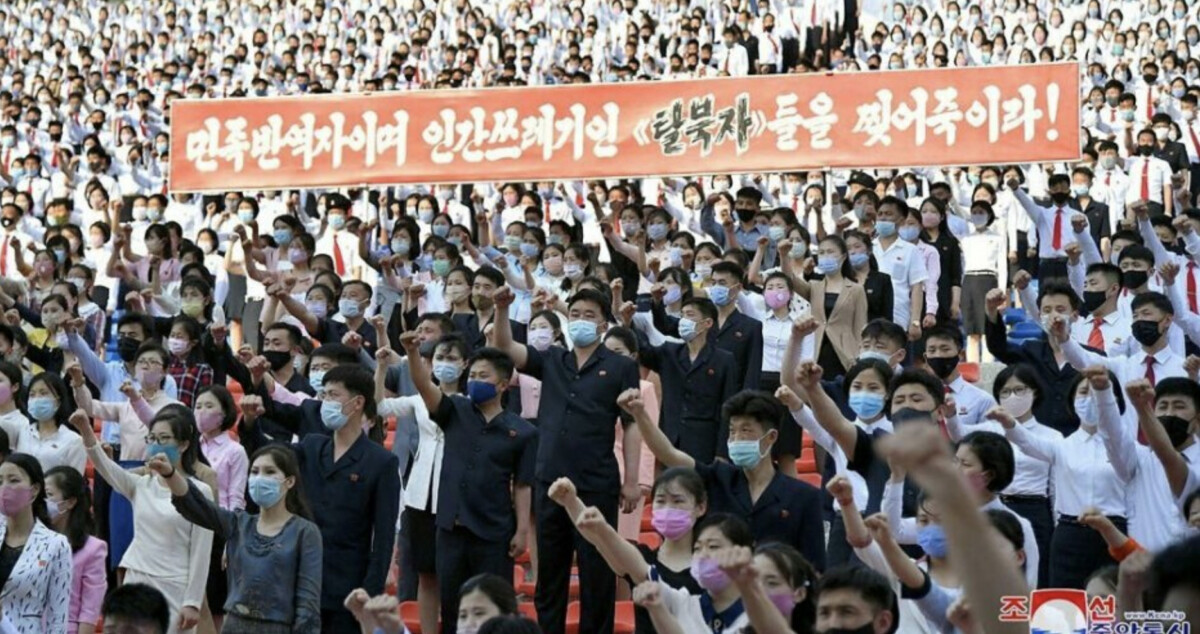
Image/KCNA
On the screen in my home in Seoul, a report was airing about how North Korea refers to defectors.
Actually, when I lived there, I rarely heard the word “defector.” It wasn’t used.
That was because their existence was erased. They were treated as if they had never existed. In schools, workplaces, and official settings, no one spoke of them. There was no mention in textbooks or newspapers of people crossing the border.
Names simply disappeared from lists, faces vanished from photos, and families fell silent.
Questions were not allowed. Asking any was dangerous. So we learned to keep silent, to pretend not to know.
But they never truly disappeared. Stories about defectors always circulated in hushed voices. Only after nightfall, behind closed doors, and after checking that no one was listening, would they surface.
“So-and-so’s family is gone,” someone would say. “They were caught near the border.”
These weren’t rumors. They were an expression of fear. That was because defection wasn’t seen as a choice. It was a forbidden line that must never be crossed.
Then, at some point, the atmosphere changed. The media began to mention defectors directly, but in the harshest of terms: “Traitors to the motherland” and “Human scum who harm society.”
People who were once never spoken of suddenly filled the screen. Rallies condemning defectors, crowds shouting slogans, scenes of orchestrated outrage played on repeat.
That’s when I began to feel something was off. If they truly didn’t matter, why all the noise?
If they had no influence, why name them, label them enemies, and teach people to hate them?
Why had silence, once deemed sufficient, turned so loud?
For the first time, I wondered. Could it be that North Korea doesn’t hate defectors, but fears them?
The reality that people defect is in fact the most uncomfortable truth for the North Korean regime. They don’t need to carry weapons or chant political slogans. Their very existence raises questions. Why did they leave? What could be out there that made them risk their lives to escape?
These are the questions North Korea most desperately wants to suppress.
So it doesn’t explain defectors. It defines them. In order to leave no room for thought.
The propaganda has always been simple: “We are right. The outside world is wrong.”
This formula has been maintained for decades. But defectors break its logic. They were born in North Korea, raised there, educated there, worked there, and still chose to leave. That fact alone defies explanation.
So defectors are no longer seen as people. They become targets to be attacked, enemies to be eliminated.
After coming to South Korea, I understood this more clearly.
I can see that each defector carries within them the truths that North Korea wants to hide. The halted rations, the ideological education that became mere formality, the exhaustion even among Party members, the children who couldn’t laugh freely.
All those memories live on inside defectors.
I was just an ordinary citizen there. I never criticized the regime. I never engaged in political acts. But now, simply because I am a defector, I have become someone the regime fears most.
I haven’t changed. What has changed is how North Korea sees me. That irony is bitter.
Defectors didn’t escape for the purpose of attacking their country. They left to survive, to save their children, to live with dignity, to find freedom.
But the regime cannot accept that choice because the very possibility of choice threatens its existence.
The fact that someone crossed over signals to those who remain that another path might exist. That’s what makes them more scary than guns, more than sanctions, more than external pressure.
Defectors don’t even need to speak. Their existence alone raises the question of whether another way of life is possible.
Now, I live an ordinary life in South Korea. I laugh with my child at the playground, speak my mind freely, and face tomorrow with both worries and hope.
But the fact that this simple, everyday life is still a dangerous story in North Korea weighs heavily on my heart.
The reason the regime lashes out so harshly at defectors is because this very ordinariness is what threatens it most.

Taesung’s journey began in North Korea, where he worked at a state‑run institution. In 2024, seeking freedom, he defected to South Korea and is now pursuing a college education to build a new future.
Latest posts by Kim Taesung (see all)
- The horizon I had to cross, the life I had to endure - March 10, 2026
- North Korea extends strategic nuclearization to its navy - March 7, 2026
- North Korea responds to Iran crisis: Will Pyongyang go down a path of “reckless survival?” - March 2, 2026