

Unusually, no mention of South Korea or the U.S. in Kim Jong-un’s new year address
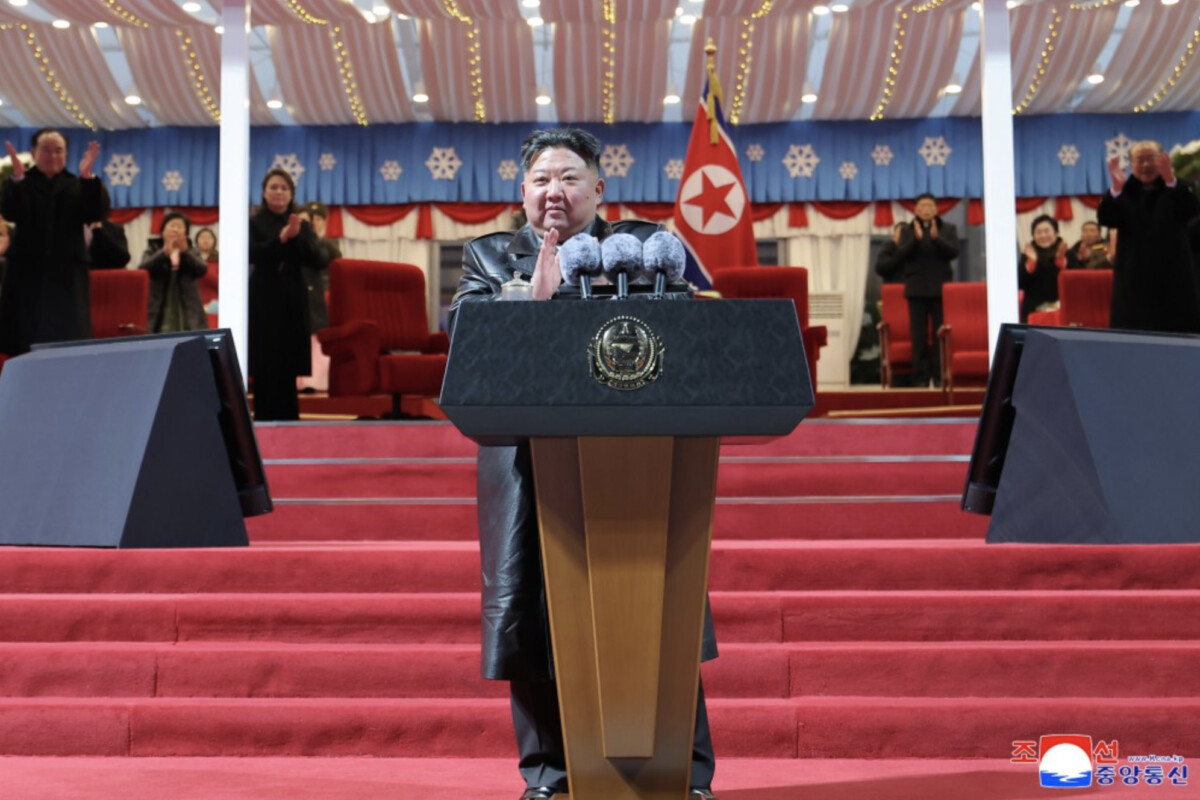
Kim Jong-un delivered his New Year’s speech on January 1. Image / KCNA
In a major departure for a new year address, Kim Jong-un made not a single reference this time to South Korea or the United States.
Instead, according to the script released by the Korean Central News Agency (KCNA), he limited himself to extending greetings to the people, to the military, and to overseas compatriots, while emphasizing the achievements of 2025 and the struggles ahead in 2026.
Three features stood out:
- Internal unity amid economic crisis – Kim made internal solidarity the top priority and stressed the people’s “patriotic devotion” and “fighting spirit.” This reflects the difficulties posed by food shortages, energy scarcity, and industrial stagnation caused by sanctions.
- Salute to troops overseas – Kim paid tribute to his soldiers abroad, fighting for Russia against Ukraine.
- Use of sporting achievement for propaganda – Kim highlighted achievements in international sports, particularly the victory of North Korea’s women’s soccer players, as a way to showcase “self-reliance” and “national pride” amid external isolation.
This all contrasts with past New Year’s addresses that almost always included messages and threats directed at South Korea and the U.S. For instance, in 2014 he warned, “If war breaks out again on this land, there will be a tremendous nuclear disaster, and the U.S. will not be safe.” In 2015, he called for “active dialogue, negotiations, exchanges, and contacts to bring about a major transformation in inter-Korean relations,” while simultaneously condemning U.S. “hostility.”
This pattern demonstrated his early strategy of managing both inter-Korean and U.S.–North Korea relations to bolster the regime’s legitimacy abroad.
But this year was devoid of any mention of South Korea and the U.S. Analysts point to several possible reasons:
- Severe domestic circumstances – North Korea faced food shortages, power outages, and economic decline throughout 2025 due to sanctions, leaving little room for external messaging. Kim emphasized overcoming these hardships through “the people’s strength.”
- New international context in the partnership with Russia – Rather than directly targeting the U.S. and South Korea, Pyongyang appears to be pursuing a strategy of confronting the West through alignment with Russia. Thus there’s no need to separately rail at the usual enemy.
- Strategic choice of minimal external messaging – In recent years, Kim has sometimes replaced the New Year’s address with conclusions from party plenary meetings, signaling a shift in format. This year’s speech likewise minimized external messages and focused on internal cohesion.
Ultimately, the 2026 New Year’s address reflects current reality in North Korea. By directing messages solely to the people, the military, and overseas compatriots, rather than issuing provocative remarks toward the traditional enemies, Kim revealed a sense of crisis over regime survival while hinting at a new international strategy centered on cooperation with Russia.
His declaration that “We will always remain faithful to the socialism chosen by our people” underscores the regime’s prioritization of internal unity over external confrontation. This is not merely rhetorical change but an inevitable course shaped by economic hardship and international isolation.

Kim Yumi, a North Korean defector, was born and raised in Haeju, South Hwanghae Province, a coastal military area. Growing up near a naval base, she was able to secretly watch South Korean news programs and TV shows, thereby uncovering the vibrant, democratic society of South Korea. Yumi and her husband made the brave decision to escape North Korea and seek a better future. Now in Seoul, she is actively involved in raising awareness about the realities of life in North Korea, especially on her YouTube channel, “@KimYumiTV.”
Latest posts by Kim Yumi (see all)
- Why North Koreans are unable to understand South Korea - April 7, 2026
- Rising oil prices send ordinary North Koreans into survival mode - March 30, 2026
- Is Kim Ju-ae being groomed for a support role? - March 17, 2026