
Suppression of protests in Iran as viewed by pro-North Korean forces
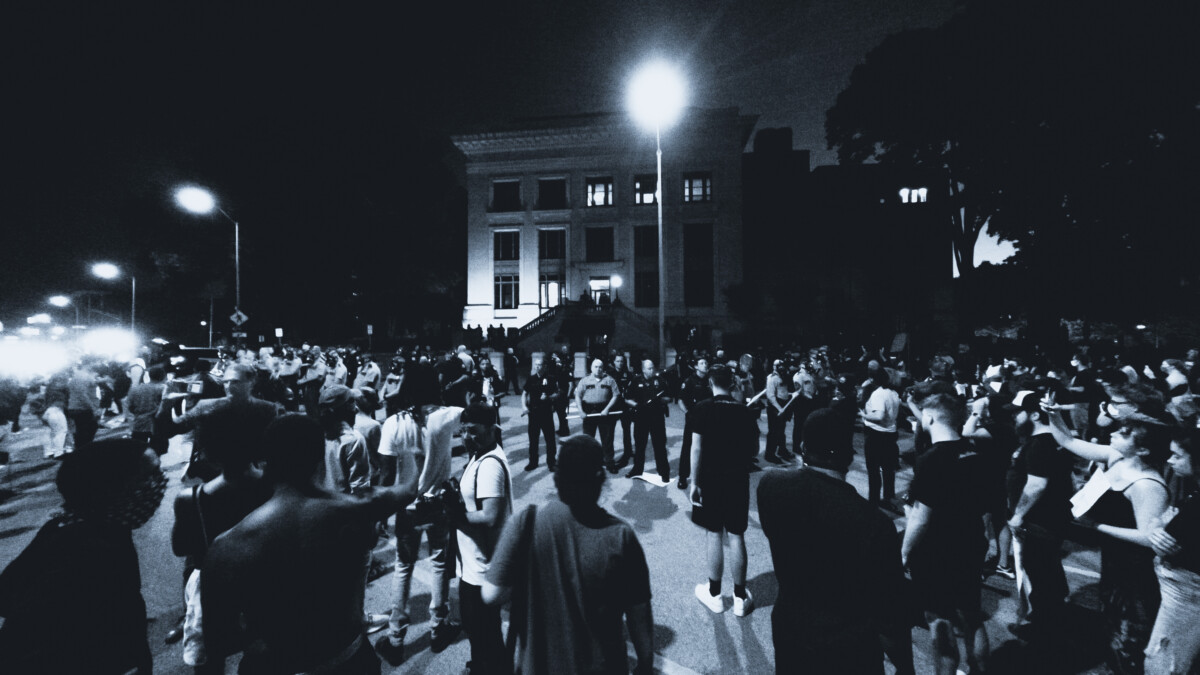
Image licensed via Canva
Pro-North Korean forces in the U.S. have opposed any U.S. military action against Iran in light of the massacre of thousands of unarmed civilian protesters by the regime in Teheran.
Similarly, the U.S.-based groups that support North Korea all opposed the operation to capture Venezuela’s narco-terrorist dictator Nicolas Maduro.
Pro-North groups have indeed opposed all sanctions on Iran and Venezuela for many years, just as they have opposed sanctions on the North. The explanation is that Iran and Venezuela are allied with Pyongyang. Also, most pro-North forces in the U.S. have ties to the regime in Pyongyang and strive to promote its policies.
Since pro-North activists are also anti-American and they often hatefully refer to their own country as the “belly of the imperialist beast,” they therefore naturally empathize with anti-American regimes.
Pro-North Korean and anti-American activists in both South Korea and the U.S. understand and greatly fear a valid point made by the former presidential speechwriter and fellow at the American Enterprise Institute Marc Thiessen. He rightly observes that if the Iranian regime falls and the country eventually becomes an American ally, as it was in the past, the U.S. would be able to re-focus its attention on threats posed by hostile dictatorships in East Asia, and re-deploy military assets from the Middle East.
In other words, the U.S. and the free world, in the absence of the mullahs’ tyranny, would be in a much stronger position to deter potential aggression in East Asia. This is clearly a future scenario which pro-North Korean and anti-American forces around the world, as well as North Korea itself, would find deeply troubling and hope to avoid at all costs.
Some of the activists who, prior to the U.S. travel ban in 2017, would participate in solidarity delegations to the North on similar missions.
The websites of groups such as the Korean American National Coordinating Council, Minjok Tongshin, and Nodutdol have fiercely defended the Iranian and Venezuelan regimes, and activists from pro-North groups have been actively participating in protest rallies opposing any U.S. actions against them.
Medea Benjamin, co-leader and co-founder of the pro-North, pro-China, and pro-Hamas group Code Pink, to cite one particular example, has visited Iran several times to express her support for that regime, and even spoke at a 2014 conference featuring Holocaust deniers and neo-Nazi leaders in Iran. She famously applauded when the U.S. was denounced as a “kingpin of international terrorism” at a Women Cross DMZ-organized propaganda event in Pyongyang in 2015.
Reza Pahlavi, the crown prince of the former dynasty in Iran, this month said that Iran “should have become the South Korea of the Middle East by now.” He noted that in 1979, at the time the mullahs took over, Iran’s GDP was five times higher than South Korea’s.
“Yet, today, Iran has become North Korea,” he said. “This is not due to a lack of human or natural resources. It is because of a regime that deprives people’s livelihoods, exploits national resources, starves its people, and supports extremist terrorist groups and spies both inside and outside the region. The regime has been sustained until now because appeasement policies delayed its collapse.”
In September last year, NATO Secretary General Mark Rutte publicly expressed serious concern over what he said was increasing military cooperation between Iran, North Korea and China, warning that these regimes were allied in increasingly preparing for confrontation with the West.
Retired U.S. Navy Admiral Jonathan W. Greenert, a former Chief of Naval Operations, has pointed out that “Iran’s nuclear and missile programs have used North Korean technology.”
In 2024 it was reported that North Korea’s new “suicide drones” are strikingly similar to the drones which Iran has been supplying to Russia. Ukraine’s intelligence chief has claimed that this is because Moscow has been sharing this Iranian technology with North Korea.
In a highly detailed and troubling report from June 2024, entitled “Iran & North Korea: Proliferation Partners,” the group United Against Nuclear Iran noted that, “The Iranian-North Korean threat is compounded by the two nations’ cooperation, especially in the realm of nuclear and ballistic missile development.”
In a perceptive 2013 article for the American Enterprise Institute entitled “Is Iran Following the North Korea Model?” Dr. Michael Rubin convincingly outlined the ways in which Iran, even at that time, was consciously learning from and adopting North Korea’s negotiation strategies regarding its nuclear weapons program. Quoting Iranian negotiators, Rubin explained how they were taking advantage of Western leaders’ proclivities to appease Pyongyang, even in light of major deceptions such as the once secret uranium-based nuclear weapons program it was developing while it was negotiating and receiving massive amounts of aid from the Seoul and Washington under the Agreed Framework.
“The Iranians also have North Korea—and Pyongyang’s success getting billions of dollars in aid and investment all while developing a nuclear bomb—on their minds when they negotiate,” Rubin said.
Meanwhile, Iranian expats in Seoul have held protests in support of the freedom struggle and in condemnation of the lethal crackdown. They have been urging Seoul to take a stronger stance than simply issuing cautiously worded statements. A January 2026 report in the Chosun Ilbo explained that these expats have denounced rallies being held by extremist forces in South Korea such as the openly Marxist-Leninist, rabidly anti-American, and anti-Israel group Workers Solidarity and others.
Interestingly, there has been an emerging ideological dispute on this topic among Marxist-Leninist and other extreme-left groups in the South. Hardcore pro-North Korean and “orthodox” (non-Trotskyist) traditional Marxist-Leninists, especially Stalinist- and Maoist-aligned groups, have openly criticized the doctrinaire Trotskyist Workers Solidarity group and the far-left Justice Party for expressing some support for the protesters in Iran, while simultaneously condemning the U.S. for supposedly being the cause of the protests and allegedly engaging in “imperialist aggression” against Iran.
The Trotskyist-aligned groups in South Korea and elsewhere take this seemingly contradictory position because they view the protests as potentially leading to an opening for communist forces in Iran, such as the Tudeh Party, to increase their influence, and perhaps even play a role in any new government if the regime falls.
However, “orthodox” communists and hardcore pro-North Koreans in South Korea and the U.S., see the issue very differently. They support the Iranian regime against the U.S. and the so-called “forces of imperialism.”
Quoting Mao, they focus on what they view as the “fundamental contradiction” between the U.S. and Iran as the most important characteristic of the present dispute, and therefore back Iran’s anti-American regime, and oppose those who are protesting against it.
Trotskyists, however, take the same approach to Iran as they do to North Korea, which they support. They have referred to the North as a “worker’s state,” thus unlike Iran under the mullahs, but they maintain that the North is nevertheless ideologically “deformed” (meaning non-Trotskyist). This means that while they don’t explicitly praise the North Korean system, they still fully defend the North in the context of its conflict with the U.S. and the South. That is why, for example, the Trotskyists of Workers Solidarity for months denied that the North has sent troops to Russia to assist it in its war against Ukraine.
Non-Trotskyist communists and certainly hardcore pro-North Korean forces in the U.S. have complained about the Trotskyist perspective on Iran, and the openly pro-North Korean American National Coordinating Council approvingly posted on its website an article from a non-Trotskyist communist writer affiliated with the Korea-based Tongil Times website which strongly criticizes the stance of Workers Solidarity and the Justice Party as an ideological “deviation.”
Of course, since these feuding communist forces live in free nations, and because Stalin and Mao are no longer alive, the Trotskyists need not fear being executed within communist regimes or assassinated abroad as Trotsky himself was, for such ideological “family disputes.” It is nevertheless essential to keep in mind that when it comes to opposing the free world, and especially their hatred of the U.S. and its allies, these Marxist-Leninists are totally united, just as rival gangsters in the U.S. might unite against the police. Even former Soviet leader Nikita Khrushchev, who solidified his own power in the Soviet Union by criticizing some (but certainly not all) of the crimes of Stalin, declared that, “When it is a question of fighting against imperialism, we can state with conviction that we are all Stalinists.”
Lawrence Peck is a correspondent for NK Insider based in Seoul and Los Angeles. Having intensively researched and closely monitored the activities of pro-North Korea and other extremist groups and activists in the U.S. for over 25 years, he has been recognized in the U.S. and Korea as one of the leading American authorities on such topics, and has lectured, written extensively and been interviewed on such topics in the U.S. and Korea. He has a Bachelor of Arts degree in Political Science from the University of California, Los Angeles (UCLA) and a Juris Doctor degree from Loyola Law School of Los Angeles. He previously worked in Korea for several of the largest Korean business groups in the fields of intellectual property licensing and international business development. He also serves as an advisor to the North Korea Freedom Coalition of the U.S. Lawrence may be reached at the email address: lawrence.nkinsider@gmail.com
Latest posts by Lawrence Peck (see all)
- Suppression of protests in Iran as viewed by pro-North Korean forces - January 24, 2026
- Outlook for 2026: Pro-North Korean and other far-left forces versus the U.S.-ROK alliance - January 12, 2026
- 2025: A year of milestone anniversaries for Korea - December 23, 2025