

Pyongyang evades sanctions to showcase autos ordinary people can’t buy
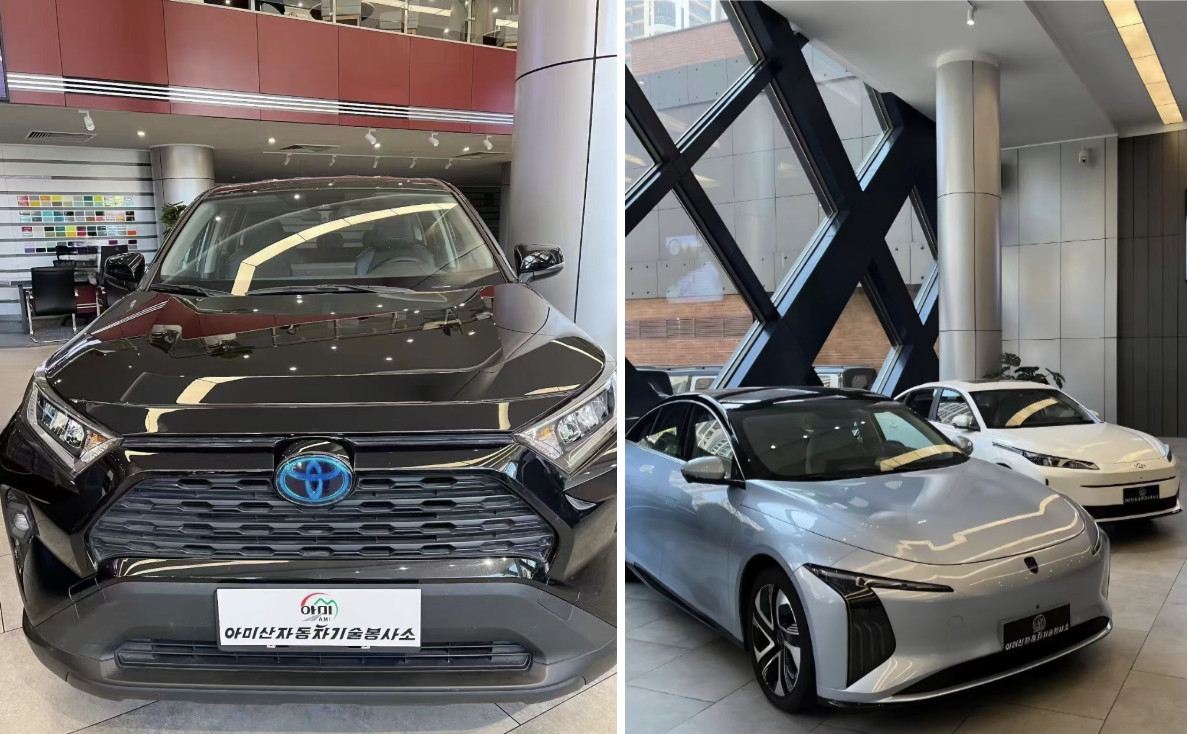
Imported cars on sale at the Amisan Automobile Technology Service Center in Pyongyang | Photo: NK Insider/Era Seo
Japanese-made Toyotas and the latest electric vehicles have made an appearance in the heart of Pyongyang in defiance of international sanctions.
The autos are on display at the Amisan Automobile Technology Service Center in the Hwasong district of the capital. The center is a car showroom and a comprehensive service facility that was rebranded in April this year.
Yet this dazzling facility is not for ordinary citizens. It is merely a stage for the regime’s foreign currency circulation system—importing luxury goods in violation of sanctions—and for a propaganda show of modernization.
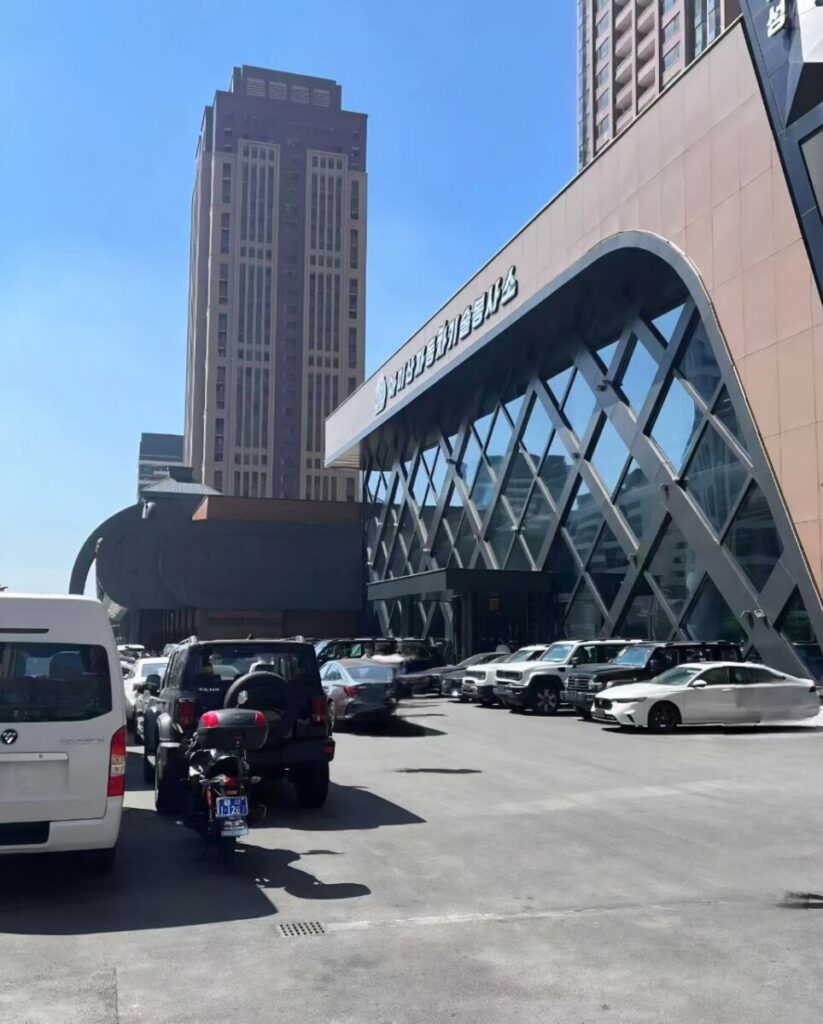
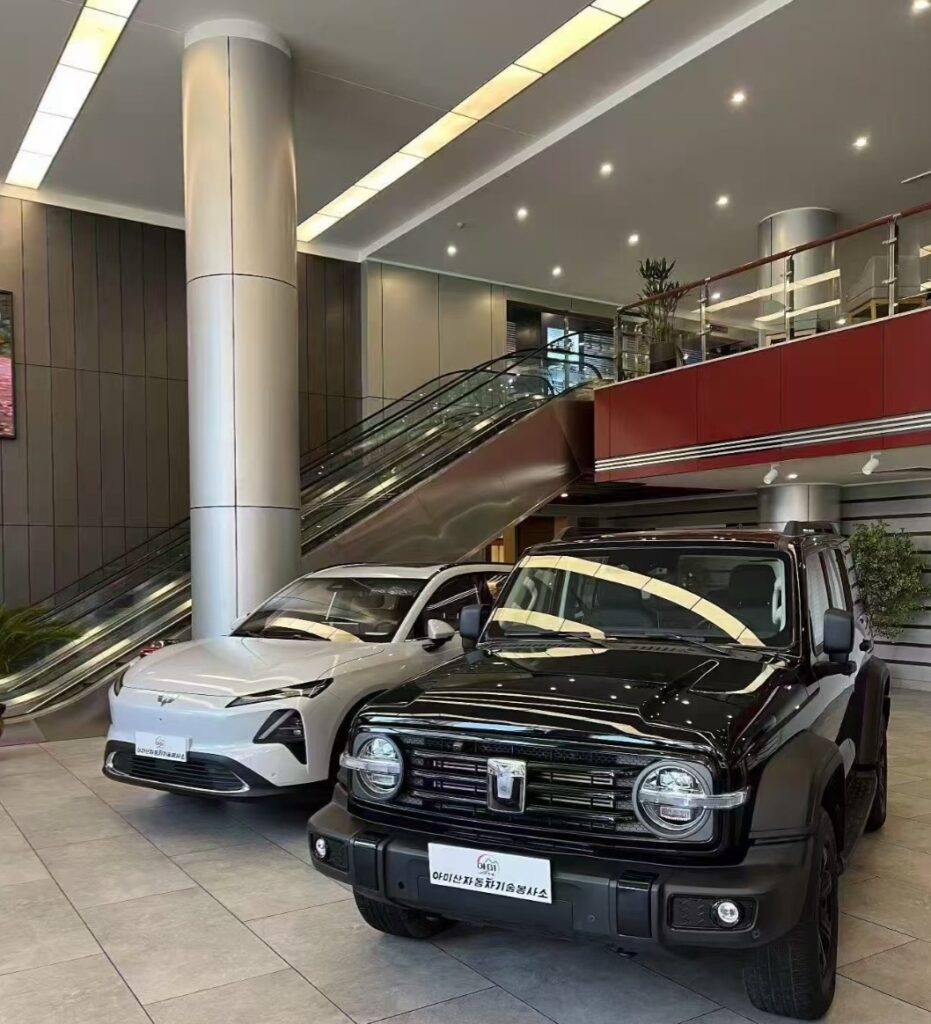
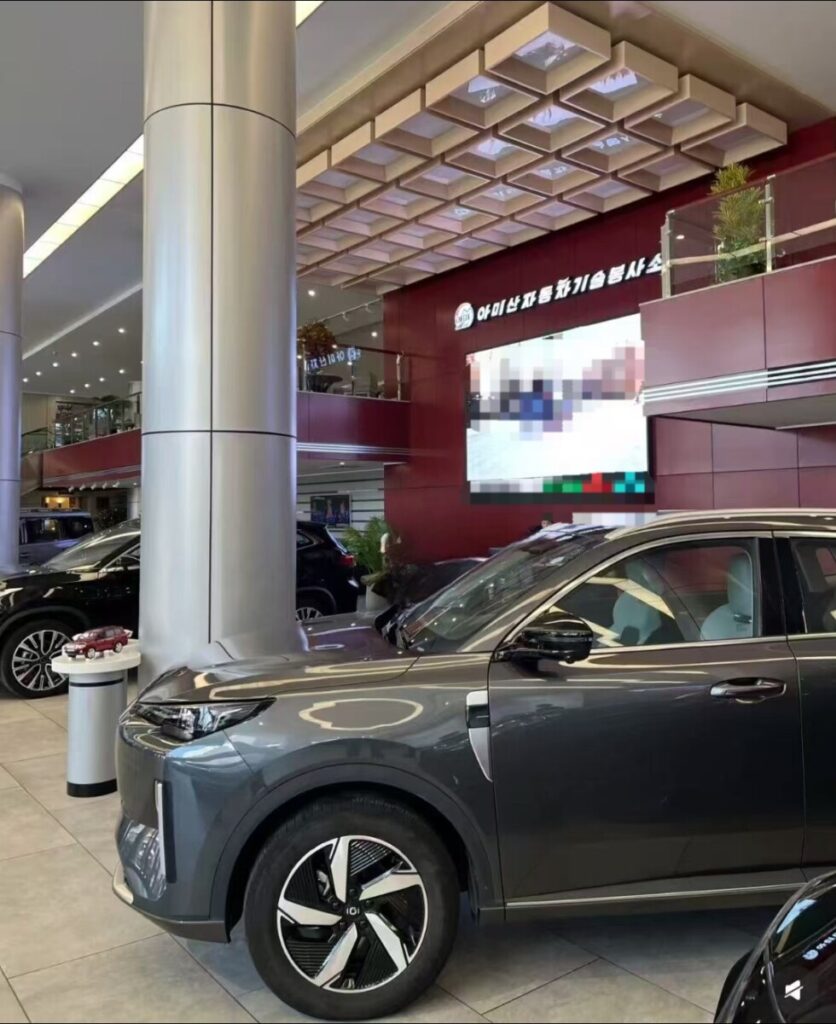
The facility was originally called the Hwasong Vehicle Electrical Service Center and was renamed in April after an on-site visit by Kim Jong-un. While it was once known as a comprehensive service provider offering routine maintenance, sales, rentals, repairs, parts replacement, car washes, and painting, photos reveal that the center now specializes less in repair and more in the rental and sale of expensive vehicles.
The center is operated by the Finance and Accounting Department of the Workers’ Party. Institutions using the Amisan brand are typically affiliated with this department, meaning the center is not a private enterprise but a state-run entity monopolized by the authorities.
Officially, the center was conceived and established jointly by the Cabinet, the Pyongyang People’s Committee, and the Hwasong District People’s Committee, but in reality it likely serves as a channel for generating foreign currency to fund Kim’s personal lifestyle.
When Kim visited he praised the center as a “symbol of specialized, civilized transport culture,” underscoring its political significance.
Historically, Amisan has been associated with Office 8 of the Workers’ Party. This is the unit which produces goods for the exclusive use of the Kim family. Amisan subsidiaries are spread across cities and counties nationwide. With Amisan farms, ranches, and even a central Amisan bureau in existence, no one would mistake the Amisan Automobile Technology Service Center as a place where ordinary citizens can buy autos.
Although North Korea has recently claimed to allow private vehicle registration, this is mere propaganda. Cars traded at the center are said to be for “personal use,” but in reality they belong to cadres in the name of their party, state, or enterprise affiliation. The cash to buy them comes from foreign currency reserves or special funds controlled by the authorities.
The reality of North Korea’s market is that autos cannot legally or politically be bought, even if a person has money. “Even if we could buy one, we wouldn’t,” the ordinary North Korean would cynically say.
The reasons are clear. First, prices are astronomically high. Anyone with the tens or hundreds of thousands of dollars needed would immediately become a target for investigation. That is because state-set wages for cadres are meager to the point of endangering livelihoods. As of December, with rice priced at 20,000–24,000 won per kilogram, an average monthly wage of 200,000 won is insufficient to buy even 10 kilograms. Workers’ wages differ little from those of cadres, and many factories and enterprises are idle due to shortages of power, equipment, and raw materials.
Most citizens are required to do collective labor such as housing construction, road paving, and railway repairs. Buying a car worth hundreds of thousands of dollars is akin to chasing a rainbow.
The Japanese Toyotas and latest EVs displayed at the Amisan Center are explicitly banned under UN Security Council resolutions. Supplying, selling, or transferring finished cars is illegal. Thus the open trade in Pyongyang demonstrates the regime’s systematic evasion of international sanctions.
Because the facility is officially under regime control, this is not a mere case of private smuggling. It represents state-led violation of sanctions. Responsibility inevitably extends to intermediary countries that condone or facilitate the trade.
Through the automobile service center, North Korea flaunts a false prosperity narrative—“Pyongyang is developing despite UN sanctions.”
For elites, the facility is both a reward for loyalty and a covert mechanism for monitoring consumption. It is not a symbol of modernization, but of surveillance. Not a gateway to economic openness, but a new channel for propaganda and control.
The reality of the Amisan Center, where private purchases are nominally allowed but practically impossible, reveals a simple truth: the showroom exists, but the auto market does not.

Era is a North Korean defector and an experienced journalist who offers a unique perspective on one of the world's most secretive nations. Having escaped the oppressive regime, Era has leveraged her keen understanding of North Korean society to become a beacon of truth. Through her extensive network of in-country reporters, she maintains real-time communication with sources inside North Korea, providing unparalleled insights into the ground realities of the closed society.
Latest posts by Era Seo (see all)
- Propaganda refers to the country as “Kim Jong-un’s Korea”… Growing possibility of public backlash - January 10, 2026
- Pyongyang evades sanctions to showcase autos ordinary people can’t buy - December 17, 2025
- 2026 calendars reveal regime priorities: Nuclear weapons, hereditary rule, and tourism - December 15, 2025