

Kim inspects a new station for “tourists” that locals won’t be able to use.
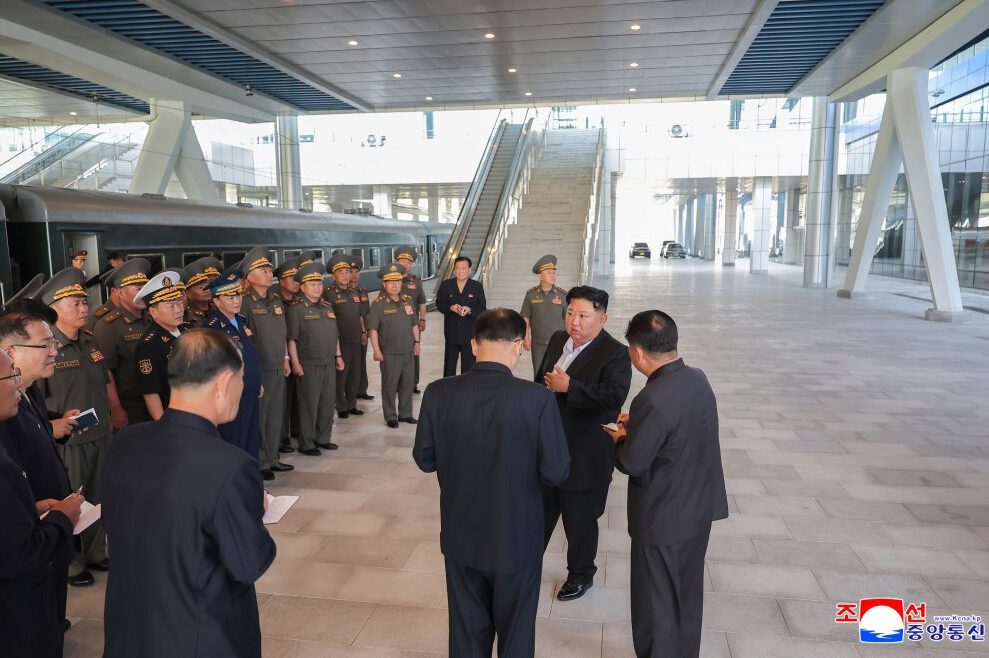
Kim Jong-un visited the Wonsan-Kalma Coastal Tourist Zone on June 24. (Image: KCNA)
When Kim Jong-un inspected a new station on the country’s east coast last month, his visit highlighted a strange feature of North Korea. That is that leisure is not for locals.
Kim was checking on newly built facilities in the Wonsan-Kalma Coastal Tourist Zone and, in particular, the railroad station and an emergency treatment center.
According to state-run media, he gave detailed instructions on tourist transportation, the organization of tourist trains, medical services, and station operations.
“It seems only yesterday that we selected a site near the coastal tourist zone so as to ensure convenience for passengers visiting the tourist area, but in just one year a modern railway station has been built,” he said.
He also expressed satisfaction with the station’s design and layout.
“(It) has been harmoniously composed in line with our Party’s architectural-aesthetic ideas, practical layout principles, and the demands of the times,” he said.
The state’s media packaged this as an achievement of modernization. But the photos revealed a different message, one that is so normal for North Koreans that their media would not have seen anything unusual.
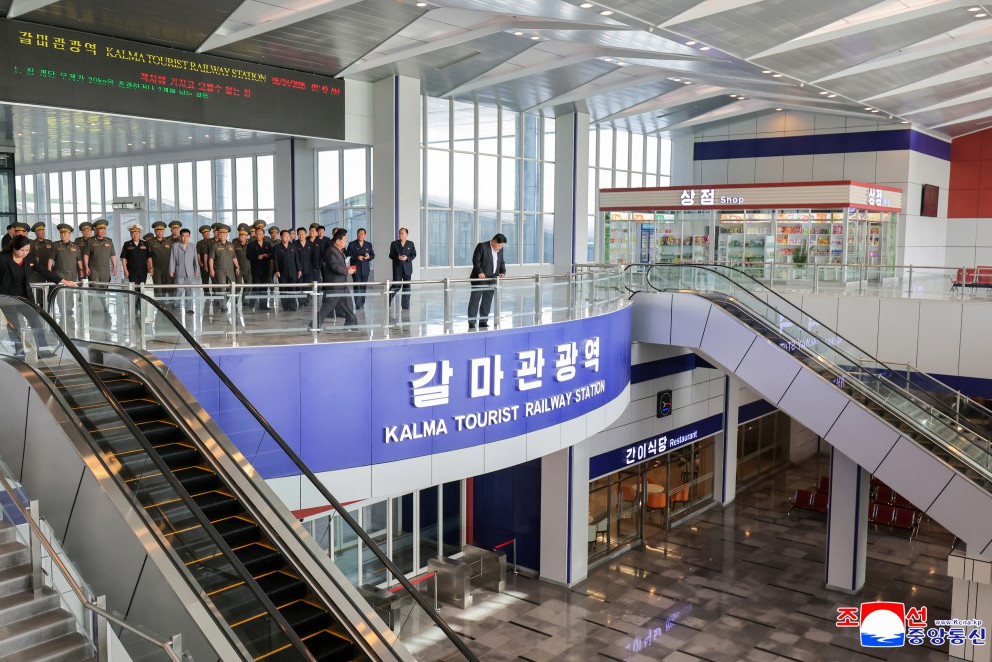
The most striking feature in the photos is the large sign inside the station that spells out the station’s name in English – the Kalma Tourist Railway Station.
I should point out that, while South Koreans use American English and say “railroad station,” the North Koreans use British English. Hence the use of “railway.”
But this is not the strange part. What is distinctly odd is the insertion of the word “tourist” into the station’s name.
What this reveals is that the facility is intended for foreigners, not locals. It exists to earn foreign currency.
Inside the gleaming station, generals and party officials took in the broad platforms and the modern escalators, shops, and restaurants. Rather than the formal opening of a beach resort, their presence gave it the feel of a military-style inspection of a foreign currency earner run by a dictatorship.
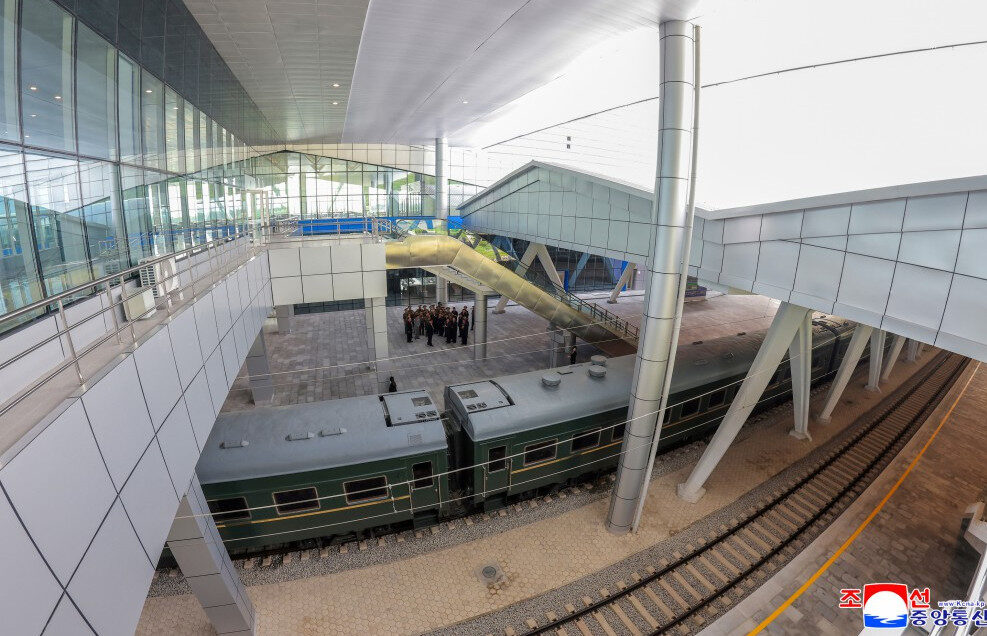
The dark-green passenger car on one side of the photo, which appears to be Kim’s personal armored train, captures the contradiction.
South Korea’s Yonhap News also interpreted the report as showing North Korea’s intent to earn hard currency by attracting foreign tourists.
The Sejong Institute in Seoul assessed the recently completed Wonsan-Kalma Coastal Tourist Zone as a strategically pursued flagship tourist-zone development project from the early years of Kim’s rule, analyzing that North Korea is trying to cultivate the tourism industry in order to secure scarce foreign currency and improve its image.
38 North has also pointed out that developing the tourism industry has been a high priority during Kim’s rule.
Sanctions hinder much of the North’s economy, but tourism is something of a grey area. American tourism is effectively blocked, and potential visitors from other western countries face major safety, sanctions, and reputational risks.
That leaves Russians and Chinese. The recent tightening of North Korea’s ties with Moscow and Beijing makes this calculation even clearer.
Whether Kalma can become a savior for the economy, however, remains to be seen. A few groups of tourists, several Russian package tours, and some Chinese border tourism will not erase North Korea’s low productivity, energy shortages, sanctions risks, or outdated financial and logistics systems.
Moreover, tourism in North Korea is “glass-box,” in that movement, contact, and consumption are tightly controlled.
Even if Kalma succeeds, those most likely to smile are not ordinary residents, but the party, the military, and foreign-currency-earning agencies.
That is why the shiny floor of Kalma Tourist Railway Station reflects North Korea’s reality in an even colder light.

Taesung offers informed perspectives on North Korean society, grounded in years of experience within a key state-run institution. After defecting to South Korea in 2024, he now focuses on providing analysis of the country.
Latest posts by Kim Taesung (see all)
- Kim inspects a new station for “tourists” that locals won’t be able to use. - July 15, 2026
- New destroyer signals North Korea’s push for a nuclear navy - July 9, 2026
- North Korea tests new weaponry for use against South Korea - July 5, 2026