

Faking freedom of religion: “You can pray freely, but just so God alone can hear”
iStock/artplus
Defector and former South Korean lawmaker Ji Seong-ho has related an amusing story about an ROK delegation’s visit to North Korea.
During the trip, the South Koreans met with “monks” at what was presented as a functioning Buddhist temple—more likely a showcase site opened solely to convince visitors that the regime tolerates religious worship. The visitors had brought along a few goats to present as gifts, expecting they would be valued for their milk and wool.
When the delegation later returned and met the same supposed monks, they asked about the goats. To their shock, the monks smilingly replied—without hesitation or a trace of irony or guilt—that the goats had been delicious.
These gentlemen were either members of some rare, heretical, carnivorous Buddhist sect, or else not genuine monks at all.
Ji’s story illustrates a stark fact: there is no real freedom of religion or worship in the North. The elaborate displays staged for visitors are entirely for show.
Prior to the communist takeover of the North—and especially in the decades before World War II—Pyongyang was known as the “Jerusalem of the East,” a major center of Christianity on the peninsula with many believers, churches, religious schools, and American and other foreign missionaries. The North’s founding dictator, Kim Il-sung, came from a Christian family, as did his mentor Stalin, but that did not stop him—once put in power by Stalin—from mercilessly and thoroughly repressing and liquidating believers, eventually eliminating organized religion in the country.
For decades, the only public “worship” permitted was the obligatory worship of Kim himself. The regime’s constitutional guarantees of freedom of religious belief were never upheld. Kim Il-sung’s writings draw a distinction between Christians he labels reactionaries who allegedly worship the United States—thus enemies of the state—and what he calls patriotic or progressive Christians, meaning those loyal to him and his regime. This was united-front propaganda; in practice, organized Christianity was wiped out.
When called upon to explain the absence of the church in the North, Kim even made the absurd claim that it was “U.S. imperialists,” not his own regime, who had destroyed Christianity.
Although official translations of Kim’s works occasionally express sympathy for the “right kind” of Christians—those fully devoted to him and “anti-imperialist”—his private posture was different. In a speech to officers of his secret police, he stated: “We cannot move towards a communist society with religious people. That is why we had to put on trial and punish those who hold positions of deacons or higher in Protestant or Catholic churches. Other undesirables among the religious people were also put on trial. Believers were given the choice to give up religion so they can get away with labor work. Those who did not were sent to prison camps.”
During the Korean War, in areas of the South occupied by North Korean forces, Christians were persecuted, arrested, and murdered along with other “reactionaries” and “counterrevolutionaries.” Just as the onetime seminary student Stalin—whose mother was a devout Georgian Orthodox believer—became a militant atheist, and Mao—whose mother was a devout Buddhist—denounced religious faith, so too Kim’s own Christian family background had little effect on how his regime treated Christians.
Some of Kim’s writings may imply tolerance for officially approved Christians, but his actions demonstrate—as international human rights groups have noted—that his regime has been, and remains, one of the most anti-Christian on earth.
Only in 1988, some 40 years after the founding of the state, were the first three churches since the Korean War—two Protestant, one Catholic—built and operated in the North.
Their purpose, however, was united-front propaganda: to provide a means of denying that religion and worship were banned, and to serve as showcases for the many foreign visitors who came to Pyongyang in 1989 for the World Festival of Youth and Students.
A Russian Orthodox church was also dedicated in Pyongyang in 2006, likely due to growing ties between Putin’s Russia and North Korea, which led to more Russians visiting or being stationed there.
Another reason for the North’s religious charade is its strategy of influencing overseas religious institutions and clergy, hoping they would support the regime’s phony “peace” proposals. Hwang Jang-yop, chief architect of the Juche ideology who defected in 1997, confirmed this: “All the churches in Pyongyang are fake churches built for show. The monks living in the Buddhist temples are of course fake monks.”
Interviews conducted by the Database Center for North Korean Human Rights reveal that over 99% of defectors state that religious freedom does not exist in the North.
From time to time, activists from South Korea, the United States, and elsewhere visited the North and attended services at, or visited, these showcase churches. If the visiting clergy were pro–North Korean—and there are quite a few hardcore pro-North activist clergy in both the U.S. and South Korea—they would typically be asked to speak. Upon returning home, they would then testify that freedom of religion was alive and well in the North, dismissing contrary reports as “imperialist slander.”
One pro–North Korean, Marxist-Leninist Korean-American activist in the United States—a member of Nodutdol, Korea Peace Now, and the Party for Socialism and Liberation—went beyond fantasy into unintentional comedy by claiming in a now-deleted social media post that there are many functioning churches, mosques, and even synagogues in North Korea where Christians, Muslims, and Jews freely practice their faiths. Such an assertion is as ridiculous as claiming that such institutions exist on Mars.
Even some non-communist and anti-communist foreign clergy were deceived by these fundamentally fraudulent displays of supposed religious tolerance.
In Under the Loving Care of the Fatherly Leader (2004), foreign correspondent Bradley K. Martin quotes defector Ahn Hyuk—who escaped to the South in 1992—describing religious life in the North very differently from the staged propaganda shown to foreign visitors. Having been confined in a concentration camp for about three years, Ahn recalled:
“When Billy Graham visited North Korea, he returned and said Christianity is reviving. I’ll tell you the real story of religious life in North Korea. There’s absolutely no religion in North Korea. I saw so many people in camp who came in because of religious belief. Even secretly praying is enough to get you sent to camp. Probably everyone in North Korea who is a religious believer is sent to a camp. I want to write a letter to Billy Graham: ‘If you really want to know religion in North Korea, go to a prison camp.’ When Billy Graham went to a church service, he should have asked people in the congregation to recite Bible verses.”
The showcase churches typically feature “pastors” who are government officials, delivering sermons filled with pro-regime rhetoric rather than authentic Christian teaching. The few people present when foreign visitors attend are either elderly or state security officers. Some foreign Christians and reporters have stated that they witnessed church doors closed on Easter Sunday, and many visitors have remarked that the activities appeared staged.
The only genuine church is the underground church—private home gatherings where believers risk imprisonment or execution for meeting or possessing a Bible.
A 2021 Korea Future report, cited in a U.S. State Department human rights report on North Korea, noted that the regime has “charged individuals with engaging in religious practices, conducting religious activities in China, possessing religious items, having contact with religious persons, and sharing religious beliefs. Individuals were subject to arrest, detention, forced labor, torture, denial of fair trial, deportation, denial of right to life, and sexual violence.” The report further observed that Christians are categorized as a “hostile class” under North Korea’s songbun system and viewed as a “serious threat to loyalty to the state,” with Christians in detention subjected to more severe torture than others.
As a state built on the worship of the hereditary Kim dynasty—whose leaders are portrayed as “heaven-sent” figures with quasi-divine powers—North Korea will not tolerate competing belief systems such as religious faith. While some authoritarian regimes have allowed limited religious practice so long as it does not threaten state authority, the North’s thoroughly totalitarian system persecutes, tortures, or executes those adhering to belief systems deemed foreign. Under such conditions, only secret worship is possible.As Aleksandr Solzhenitsyn wrote in The Gulag Archipelago, quoting a believer arrested in the Soviet Union, Christians in the North find themselves in a situation where “You can pray freely, but just so God alone can hear.”
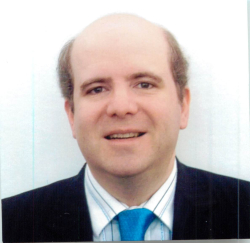
Lawrence Peck is a correspondent for NK Insider based in Seoul and Los Angeles. Having intensively researched and closely monitored the activities of pro-North Korea and other extremist groups and activists in the U.S. for over 25 years, he has been recognized in the U.S. and Korea as one of the leading American authorities on such topics, and has lectured, written extensively and been interviewed on such topics in the U.S. and Korea. He has a Bachelor of Arts degree in Political Science from the University of California, Los Angeles (UCLA) and a Juris Doctor degree from Loyola Law School of Los Angeles. He previously worked in Korea for several of the largest Korean business groups in the fields of intellectual property licensing and international business development. He also serves as an advisor to the North Korea Freedom Coalition of the U.S. Lawrence may be reached at the email address: lawrence.nkinsider@gmail.com
Latest posts by Lawrence Peck (see all)
- Never-ending repression: The continuous purges and ideological campaigns of North Korea and other communist regimes - March 7, 2026
- The threat of America’s isolationist faction and Korea’s autonomy faction to the U.S.-ROK alliance - February 25, 2026
- On Kim Jong-un’s “two hostile enemy states” theory and de-emphasis on unification policy - February 13, 2026