

Kim Jong-un dies again: Reflections on the insatiable appetite for North Korean rumors
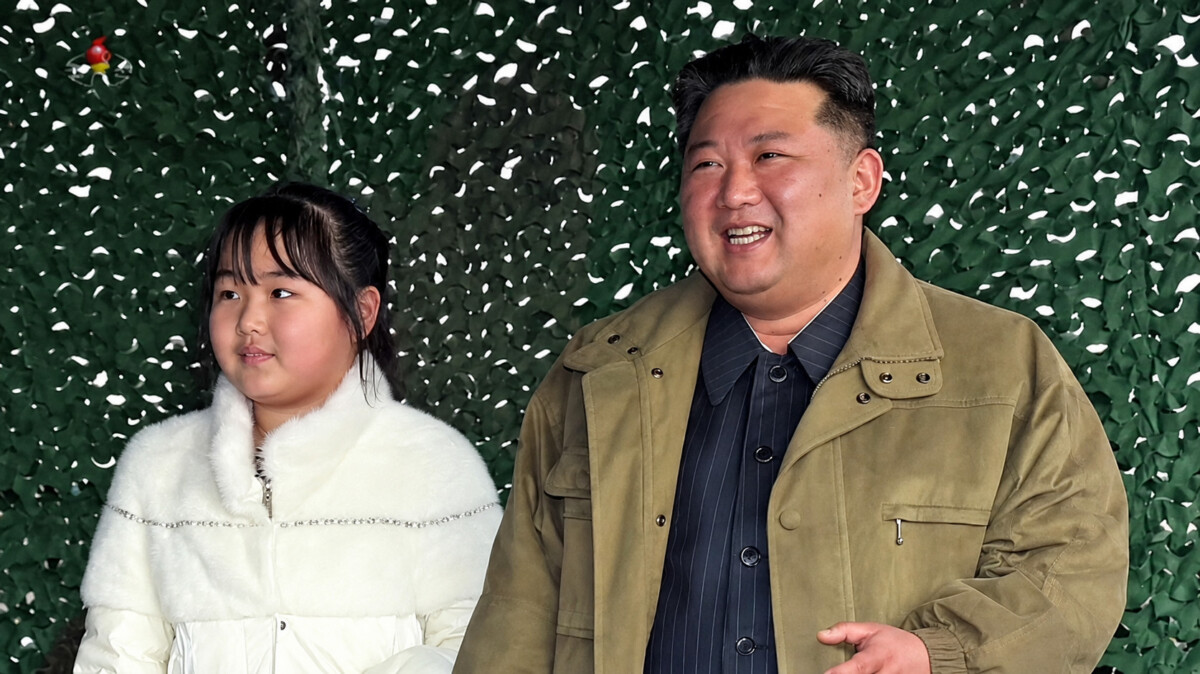
“The question of who would succeed Kim is not merely a matter of palace gossip. It concerns the future of a nuclear-armed state.” Image: KCTV
Every few years, the same extraordinary news breaks: Kim Jong-un is seriously ill, perhaps dying, perhaps already dead. The story runs for several days, with the media interviewing experts, not about whether it is true — because nobody knows — but about what it all means. Then Kim turns up in North Korean media, seemingly oblivious to the whole kerfuffle.
This month’s version had all the ingredients of a sensational story. Kim, North Korea’s 42-year-old leader, was said to have suffered a brain hemorrhage, fallen into a coma and been rushed to a hospital in Beijing, where he had died. His body, according to the account circulating online, was then secretly returned to North Korea.
Then the follow-up stories started: Kim Yo-jong, his sister and a kind of Lady Macbeth figure, had assumed power; China was dispatching 9,000 troops to Pyongyang to support the succession of the dead leader’s daughter, Kim Ju-ae.
The source for all this was Wanjun Xie, a Chinese dissident based in the United States, who made the claims on social media. He offered no evidence, but in the online world that is no barrier to “news.” As a result, governments felt obliged to respond.
South Korean officials said they had no information supporting the story.
Then North Korean state media reported on Kim’s visit to a clothing and footwear exhibition in Pyongyang, accompanied by his wife and daughter. Whether this was simply because the leader’s schedule is always a top story for the North’s media, or whether the reports were a response to the rumors, was unclear.
At this point, netizens had two options: claim it wasn’t Kim strolling around the fashion stalls but his double, or move on. The world opted to move on, and the rumor evaporated almost as quickly as it had appeared.
There was, however, something different about this story compared with earlier versions of the same illness-or-death-of-the-leader theme. Normally, such stories are kept alive by expert analysis and speculation. What might have happened, journalists ask. If it is true, who will succeed Kim? Will the military intervene? What might China do? Are South Korea and the United States about to raise their alert levels? The hypotheticals give the story substance and momentum, even when the original claim remains unverified.
This time, however, the story originated with someone whose word serious news organizations would not ordinarily consider sufficient grounds for reporting the death of a head of state. It was the rumor’s spread across social media that made it newsworthy. The fact that people were talking about it became a reason for the media to feel compelled to talk about it, too.
That also helps explain why the story died so quickly. Kim’s appearance in North Korean media supplied a convenient counterpoint. And because the media had no stake in the story being true, nor any need to justify having gone all in on it, they had the perfect opportunity to drop it immediately.
But why are such stories so persistent? The obvious answer is that North Korea is an information black hole. When something important is believed to have happened, the chances are that the news will come from somewhere other than North Korea itself.
The country’s rulers do not consider themselves accountable to their own people in the way governments in most societies are expected to be. They certainly feel no obligation to explain their private lives, medical conditions or political calculations to the outside world. Information is something the state controls and releases when it serves a purpose, not something citizens have a right to receive.
Nor is there much room for independent reporting. Officials, doctors and other people who might know something cannot simply speak to journalists. Doing so without authorization can have serious consequences. Even mundane economic information can be difficult to obtain. In a country that treats itself as perpetually under siege, wartime logic applies to matters that would be ordinary public information elsewhere. The price of bread can become a state secret.
North Koreans therefore have remarkably little reliable information about their own country. Their principal source of news is state propaganda, which tells them what the leadership wants them to know. Ironically, outsiders often know more about what is happening inside North Korea than the people who live there.
Foreign governments have intelligence agencies; diplomats cultivate contacts; researchers and journalists study the country and build networks of informants. Analysts scrutinize satellite imagery, official photographs, trade figures and the movements of people and goods across borders. Information can be pieced together from fragments.
But this is not the same as having reliable access to the truth. Intelligence agencies have their own agendas, sources can be mistaken or deliberately misleading, and analysts can mistake a plausible interpretation for a fact. Sometimes the evidence is simply insufficient. The absence of information creates a vacuum, and speculation rushes in to fill it.
The fascination with Kim’s health has a further explanation: his death would matter enormously. North Korea is a hereditary dictatorship in which political authority is concentrated in one family and ultimately in one man. A sudden vacancy at the top could affect the country’s military posture, its nuclear weapons, its relations with China and the United States, and the security of the Korean Peninsula. It also holds out the tantalizing prospect of liberation for one of the world’s most oppressed peoples.
The question of who would succeed Kim is not merely a matter of palace gossip. It concerns the future of a nuclear-armed state.
That is why the rumors have a long history.
In 1986, reports spread that Kim Il-sung, North Korea’s leader and Kim Jong-un’s grandfather, had been assassinated. South Korea’s Defense Ministry said North Korean loudspeakers along the Demilitarized Zone had announced that Kim had been shot dead. There were reports of a military takeover and speculation about a struggle over the succession to his son, Kim Jong-il.
The story was serious enough to cause alarm and prompt Seoul to take measures in anticipation of instability. Then, the following day, Kim Il-sung appeared at Sunan Airport to welcome visiting Mongolian President Jambyn Batmönkh. The reports had been false, and the media moved on to the next question: what had happened, and who had made the mistake?
The South Korean government suffered considerable embarrassment because intelligence gathered by monitoring North Korean media had helped spark the rumor and lend it credibility.
Kim Jong-il, who succeeded his father in 1994, was also the subject of repeated speculation about his health. In 2008, his unexplained absence from a major military parade prompted reports that he had suffered a stroke, undergone treatment and might no longer be able to govern. The rumors continued for weeks. A French neurosurgeon who visited him eventually confirmed that he had suffered a stroke, although he had not undergone the surgery some reports had suggested.
His son has generated the same cycle. In 2020, Kim Jong-un disappeared from public view for several weeks, missing the celebrations for his grandfather’s birthday. Reports suggested that he had undergone heart surgery and was gravely ill; some speculated that he was dead. On May 1, he reappeared at a fertilizer factory, smiling and cutting a ribbon. South Korea’s intelligence agency subsequently said there was no indication that he had undergone the reported procedure.
Each episode leaves the same question hanging in the air: what if, one day, the rumor is true? Because, of course, Kim Il-sung and Kim Jong-il did eventually die.
The difficulty is that a leader may genuinely be incapacitated, but the outside world may have no reliable way of knowing. An absence from public view may mean illness, a change in political priorities, security concerns or nothing of consequence. The same evidence can support several competing interpretations.
There is also a temptation to treat every new rumor as a puzzle that must be solved immediately. Yet sometimes the most responsible response is to wait. In the latest episode, the source had provided no evidence, South Korean officials had no corroborating information, and North Korean media soon showed Kim in public. There was little justification for constructing elaborate scenarios around the claim.
The broader lesson concerns not just North Korea, but the way we consume news. Social media can turn an unsupported assertion into an international talking point before anyone has established whether it is credible. The subsequent analysis may be intelligent, informed and entirely hypothetical. But its sophistication should not be confused with evidence for the claim that prompted it.
We should not expect the rumors to stop. Nor should we assume that the next one will be false. But there is a difference between recognizing that a leader’s death would be consequential and treating every claim that he has died as an event demanding immediate analysis.
For now, Kim Jong-un is alive in the only sense that matters for this story: there is no credible evidence that he is dead, and North Korean state media has shown him in public … unless, of course, it was his double after all.

Hae-song is a Seoul-based analyst and writer on North and South Korean affairs. Having grown up overseas, he has lived his working life in South Korea where he consults on South Korean political and economic issues and on North Korea and defector related issues.
Latest posts by Jun Hae-song (see all)
- Kim Jong-un dies again: Reflections on the insatiable appetite for North Korean rumors - October 26, 2026
- Resolute, denuclearization, blah blah…. North Korea has heard this before - September 23, 2026
- Is Trump about to try to solve the Korea question? - August 28, 2026