

Interview: The ordinary defector who fights for human rights in the U.S.
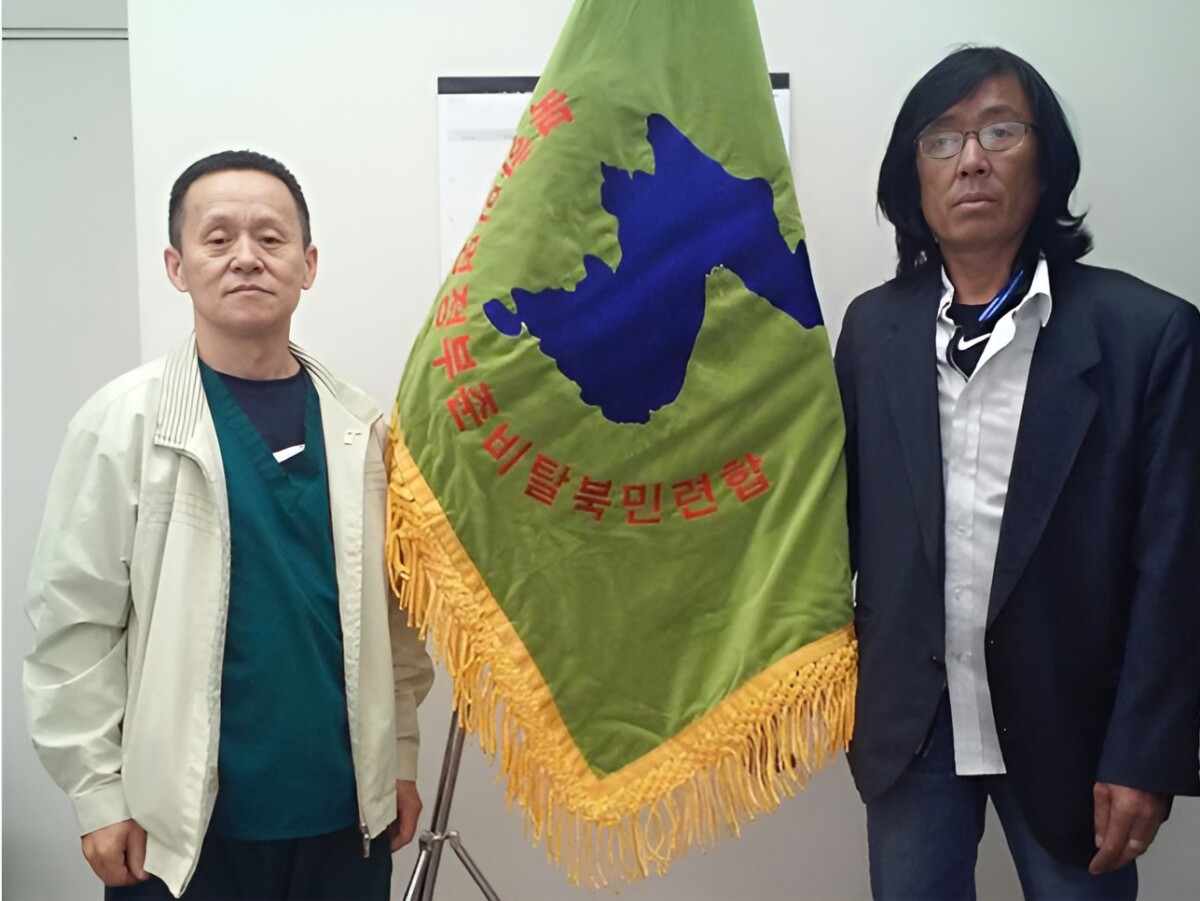
Cho Bo-eol, a North Korean defector and human rights advocate (Image: Lawrence/RFA)
As a defector living in the United States, Cho Bo-eol attended a number of pro-North Korean events – to protest against them. That was when I met him. I remember one time when an activist recognized him and shouted “Scum!” accusing him of betraying his country by defecting.
That same fellow traveler, Kim In-sook, received a warm welcome in South Korea and was even invited to meet with President Lee Jae-myung, who at the time was the mayor of Seongnam city.
Of course, to be fair to him, Lee was not aware of that particular incident in Los Angeles. However, he was aware that the person he welcomed into his office was an extreme leftist and should have known that the group she led was a North Korean front.
I also remember seeing Cho become enraged at a rally when activists proudly waved a North Korean flag. The event that time was staged by Minjok Tongshin, the Korean American National Coordinating Council, Code Pink, the Workers World Party, and the Party for Socialism and Liberation, and similar groups.
When Cho tried to grab the flag, the fanatics physically attacked him and the police came in and rescued him. When the police learned his story, they decided not to detain him.
Through such encounters, Cho has been very active to inform Americans about the crimes of the Kim Jong-un regime and to oppose pro-North forces in the U.S.
His day job, on the other hand, is very different. Cho is a practitioner of traditional Korean medicine and coaches Korean Americans on maintaining healthy lifestyles.
I describe him as an “ordinary” North Korean defector because he is not from the elite and did not enjoy a privileged lifestyle. His story reflects the life experience of the average North Korean.
That said, he was relatively better off than most of his fellow countrymen in that he was born in Pyongyang and thus benefited during his early years from the city’s higher economic and cultural standards. But then his family, like many others, was exiled from the city when he was still a young boy.
His life experience and insights are therefore those of the more typical former resident of the North.
Lawrence: Tell me about your life in the North.
Cho: I was born in Pyongyang in 1969. But, in 1976, my entire family was exiled and sent to live in a border area in North Hamgyeong Province. We were there for the next 23 years, working on a collective farm. In the official parlance of the regime, we were “socialist cooperative farmers.” As a person expelled from Pyongyang, I was classified by the regime as part of the “hostile class” and could neither join the army nor the ruling Workers’ Party. Under the songbun classification system that is applied to everyone, I was assigned to the “38th level” group within the hostile class. This songbun system is more rigid and oppressive than the class structure which prevailed under the yangban-dominated system in ancient Korea or the Indian caste system. It left people with no opportunity or even hope to better their lives. In addition, those of us condemned for life as “hostiles” were constantly monitored and harassed. There was no real life for us. If I had to sum up my time in the North, it would be nothing more and nothing less than slavery. Indeed, the vast majority of North Koreans were basically slaves of Kim Il-sung, Kim Jong-il, and Kim Jong-un. My family and I were among the lowest of such slaves. People would often say, “War or no war, our fate is to die of starvation or malnutrition.” Living in such extreme poverty, war would have almost been a relief to us.
Lawrence: When and how did you escape?
Cho: I escaped in February 2000. I was able to because my village was very close to the border with China. On a clear day, I could even see people in the Chinese villages on the other side of the Tumen River which forms the border. Since it was winter and the river was frozen, I could cross the ice on foot. In the North, defection is a crime. Wandering around Chinese cities such as Yanji, Shenyang, Fushun, Dalian, and Beijing, I met pastors, who were working to rescue defectors, and international human rights activists, who were working to improve human rights in the North. With their help, I got into Mongolia in September that year. In Mongolia, I was caught by border guards. I spent about 13 days in jail and was then allowed to go to South Korea on October 6.
Lawrence: Why did you leave the North?
Cho: I left because I did not want to live as a slave. I wanted to live like a human being, so I fled in search of freedom. I left with the determination to fight to inform the world about North Korea’s horrific human rights abuses, to work for the destruction of the dictatorship, and to try to inform the people in the North about liberal democracy.
Lawrence: What was your life like in South Korea?
Cho: I was very satisfied there. I gained freedom. I was free from the burden of being forced to do things I didn’t want to do. I could do whatever I wanted to do. I was able to eat nutritious and delicious food. North Koreans often ask, “When will we be able to eat as humans?” In South Korea, I was able to eat “human meals” every day, at every meal. I was able to wear decent clothes of a type I had never worn in the North. I was able to experience true freedom. While in the South, I established and operated civic groups, ran as a candidate for the National Assembly, and had the opportunity to travel abroad. These were things that had been unimaginable for me in North Korea.
Lawrence: What made you decide to emigrate to the U.S.?
Cho: I thought that in order to enlarge, broaden, and strengthen the North Korea human rights movement, I should expand my efforts into the international community. Since South Korea is a relatively small country, many people there have a somewhat narrow perspective on international affairs. Also, I found that the left-wing forces in the South were not of the democratic left. They were a pro-North Korean left. Whenever the left came to power in the South, it suppressed the human rights activities of North Korean defectors. Human rights activism in the South was therefore weakened and under serious threat. Upon learning this, I thought that I should expand my activism to the international community. I did not immigrate to the U.S. to live a comfortable life, but to obtain political asylum in order to more effectively advance the struggle for the liberation of North Korea. First, I went to Europe, where I was deeply engaged in North Korea human rights activism. That was from 2012 to 2015. I left Europe and arrived in the U.S. in December 2015. I lived in Los Angeles for six years, and was very engaged in human rights activities there. For the past five years, I have been living in New York, and I am continuing to do my utmost to promote human rights.
Lawrence: How can we promote the cause of human rights for the North Korean people?
Cho: There is only one way. That is to overthrow the hereditary dictatorship of the Kim dynasty in Pyongyang and establish a liberal democratic government. There is no other way. Many righteous activists have fought hard in various ways to improve human rights in the North, and although it can’t be said that their efforts were totally ineffective, the results were insufficient when measured against the time and effort invested. I used various means such as radio broadcasts, leaflets, USBs, and Bibles sent to the North, but to put it metaphorically, it was as ineffective as investing $100 to earn a profit of $1. That is why I say the only way to succeed is to replace the Pyongyang regime and establish a new liberal democracy in the North with a market economy, a multi-party system, and the rule of law.
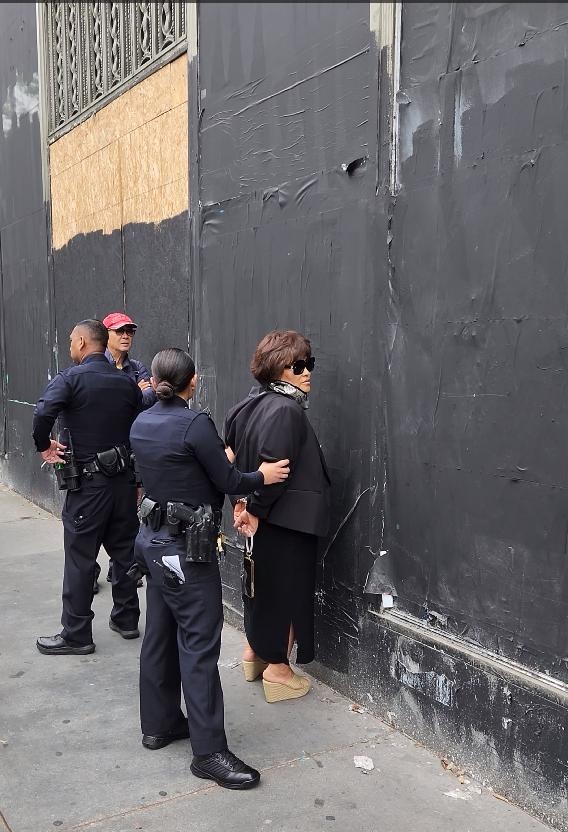
Activist Kim In-sook, who called Cho “scum” for having defected, is detained by U.S. police after assaulting another defector. (Image/Lawrence Peck)
Lawrence: What has your experience been of pro-North Korean forces in the U.S.?
Cho: I was surprised about this when I lived in South Korea, and was even more surprised when I arrived in the U.S.. I encountered many communists and admirers of communism. There are not any real communists in North Korea, China, Vietnam, Laos, or Cuba. There are no real communists in other countries. Is Kim Jong-un a real communist? Is Xi Jinping? Is Raul Castro?Not at all. They are all simply dictators. But in South Korea, I came across many crazy far-left people who longed for the North Korean system and praised the Chinese dictatorship. From what I have seen here in the U.S., there are also people with “Korean faces and bright red hearts” who praise and defend North Korea while engaging in pro-North activities, and who in some cases have even been involved in espionage activities on behalf of the North. In my campaign for human rights here, I have encountered almost every day and at almost every event some Koreans who are pro-North. Most of them don’t really know much about communism. I would say they have been deceived by the lies of the communists, which is why they are acting in support of Pyongyang. In a few cases, they have unforgivably acted as agents. I am actively confronting and struggling against these pro-North forces. In the future, after the liberation of North Korea, such fellow travelers in South Korea and in the U.S. will be rightly disgraced.
Lawrence Peck is a correspondent for NK Insider based in Seoul and Los Angeles. Having intensively researched and closely monitored the activities of pro-North Korea and other extremist groups and activists in the U.S. for over 25 years, he has been recognized in the U.S. and Korea as one of the leading American authorities on such topics, and has lectured, written extensively and been interviewed on such topics in the U.S. and Korea. He has a Bachelor of Arts degree in Political Science from the University of California, Los Angeles (UCLA) and a Juris Doctor degree from Loyola Law School of Los Angeles. He previously worked in Korea for several of the largest Korean business groups in the fields of intellectual property licensing and international business development. He also serves as an advisor to the North Korea Freedom Coalition of the U.S. Lawrence may be reached at the email address: lawrence.nkinsider@gmail.com
Latest posts by Lawrence Peck (see all)
- Interview: The ordinary defector who fights for human rights in the U.S. - June 25, 2026
- Kim Il-sung’s long record of murder, kidnapping, and plunder in the decade before he came to power - May 25, 2026
- Illegal transfer of funds to North Korea and forcible repatriation of defectors: Will justice ever be served at the highest levels? - May 11, 2026