

Man jailed for spying on defectors and soldiers for North Korean agent
iStock/Dragos Condrea
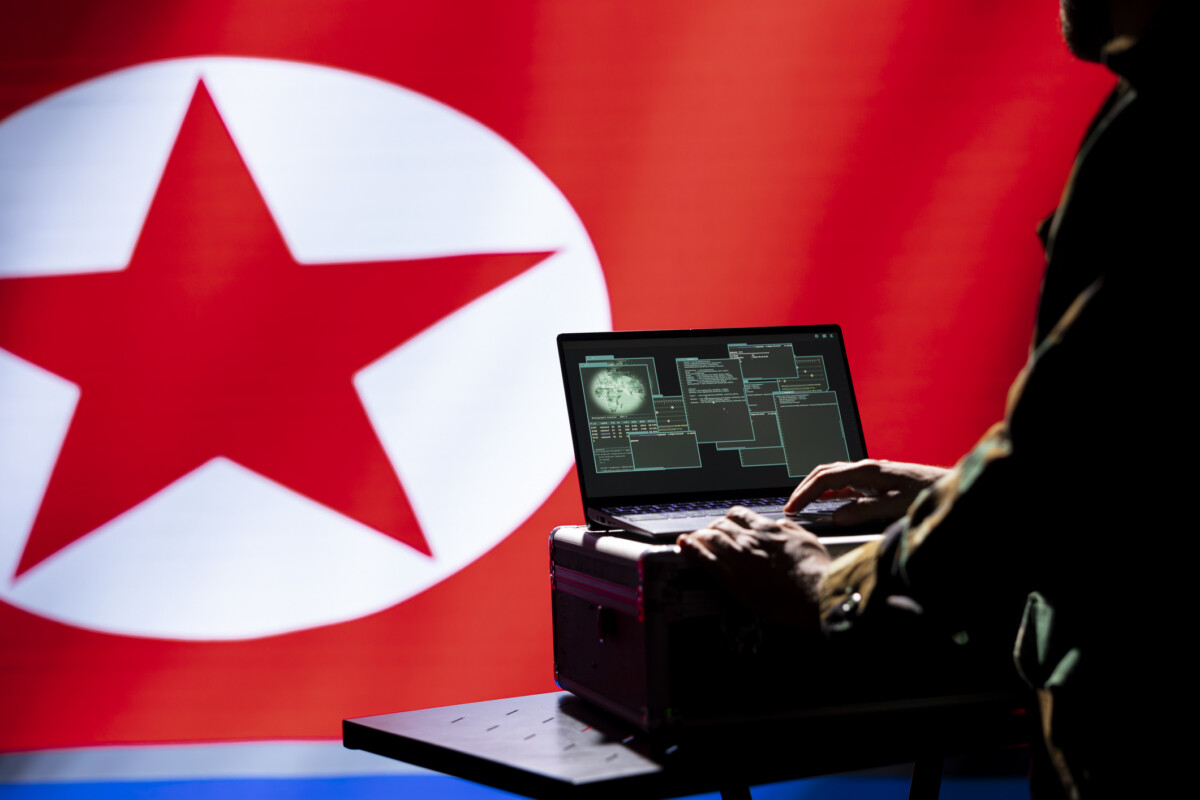
A South Korean cryptocurrency investment company operator has been sentenced to five years in prison for collecting information on North Korean defectors, activists and active-duty military personnel at the direction of a North Korean intelligence operative.
The Seoul Central District Court’s 21st Criminal Division sentenced the man, identified by the surname Lee, 43, on Aug. 28. According to NK News, which spoke with a court spokesperson, Lee was convicted of violating the National Security Act. He was also barred for five years from serving as a corporate director or auditor or as a civil servant.
The case highlights the extent to which North Korean intelligence operations can involve the targeting not only of military information but also of North Korean defectors and activists living in South Korea.
According to court findings reported by Korean and English-language media, Lee first met a person believed to be an operative affiliated with North Korea’s Reconnaissance General Bureau through an online cryptocurrency community in 2016. The two maintained contact through Telegram.
In February 2021, the North Korean operative provided Lee with approximately US$600,000 worth of cryptocurrency — about 660 million won at the time — ostensibly as operating capital for Lee’s cryptocurrency investment business. Later reports said investigators traced the virtual assets to funds controlled or operated by North Korea, raising the possibility that cryptocurrency obtained through hacking was being used to finance espionage operations.
From June 2021 to April 2022, Lee communicated with the operative more than 30 times, according to ChosunBiz. Their discussions included ways to collect information on active-duty military officers and recruit them.
Lee also approached people involved in anti-North Korea and North Korean human rights activities.
He contacted Park Sang-hak, head of Fighters for a Free North Korea, an organization that sends anti-North Korea leaflets across the border. Lee offered financial support and sought photographs and videos of the group’s activities. Investigators said he collected information about North Korean defectors, including contact information and home addresses, as well as details about the organization’s activities and cryptocurrency wallets.
Lee also approached a North Korean defector and YouTuber who had previously worked for North Korea’s state security apparatus. He obtained the person’s contact information, photographs and information about his activities.
The court found that the information collected about North Korean defectors engaged in activities critical of the North Korean regime could not be regarded as ordinary personal information. If passed to North Korean authorities, it could potentially be used to track or harm the individuals or to retaliate against family members still living in North Korea.
Lee’s activities also extended to active-duty military personnel.
In July 2021, the North Korean operative provided Lee with identifying information on seven military officers, including their names, units and resident-registration numbers, and instructed him to obtain additional information and attempt to recruit them.
Lee subsequently approached one of the officers through Telegram and offered between US$500 and US$1 million for information such as a military organizational chart. The officer rejected the offer.
Investigators also found that Lee sought information about military personnel through a private investigation agency, including their residences, units and movements.
The case involved attempts to obtain information relating to the South Korean military’s Korea Joint Command and Control System (KJCCS), as well as the procurement of equipment that could have assisted in obtaining military information. Lee purchased a wristwatch-style hidden camera at the operative’s direction and acquired components for a USB-type hacking device known as Poison Tap. The equipment was intended to assist in gathering information from military computers.
The current five-year sentence is not, however, Lee’s first conviction arising from his relationship with the North Korean operative.
In a separate case, Lee was previously sentenced to four years in prison and four years’ suspension of qualifications for helping the same North Korean-linked operative recruit an active-duty military officer and attempt to obtain military secrets. The Supreme Court finalized that sentence in December 2025.
That earlier case involved particularly serious attempts to obtain military intelligence. Lee helped recruit an active-duty Army captain, supplied him with a wristwatch-style covert camera and helped procure components for a Poison Tap hacking device. The officer obtained access to the KJCCS and provided material including photographs of a KJCCS login screen. The actual attempt to hack the system was unsuccessful. The officer was subsequently sentenced separately to 10 years in prison and fined 50 million won.
The earlier court nevertheless imposed four years on Lee partly because some of the intended espionage activities did not succeed and because the evidence did not establish that Lee had more than an incomplete awareness of the North Korean operative’s identity. The prosecution and Lee both appealed, but the appellate court and Supreme Court upheld the sentence.
Lee’s latest conviction therefore represents a second National Security Act case arising from his relationship with the North Korean operative, rather than his first and only espionage conviction.
At his latest trial, Lee reportedly argued that he had believed the person he was communicating with was an ethnic Korean programmer living in China and did not know that he was a North Korean operative. The court rejected the argument.
The judges described the conduct as “a serious crime that directly threatens the existence and security of the state.” They cited as aggravating circumstances Lee’s repeated compliance with instructions over an extended period, his receipt of more than 600 million won in cryptocurrency, and his continued denial of the charges.
The available news reports, however, do not make clear what sentence prosecutors requested in the latest case. Nor do they clearly explain why Lee received another five-year sentence in the subsequent case after receiving four years for the earlier espionage case involving the same North Korean intelligence network.
The distinction between the two cases is therefore important. The earlier case resulted in a finalized four-year sentence for Lee over his role in attempting to obtain military secrets through an active-duty officer. The latest five-year sentence concerns a separate prosecution involving the collection of information on North Korean defectors, activists and military personnel, as well as further attempts to assist the North Korean operative.
The two cases together reveal a much broader and more sustained relationship between Lee and a North Korean intelligence operative than the latest five-year sentence alone would suggest.

Taesung offers informed perspectives on North Korean society, grounded in years of experience within a key state-run institution. After defecting to South Korea in 2024, he now focuses on providing analysis of the country.
Latest posts by Kim Taesung (see all)
- A DMZ mine tests Lee Jae-myung’s North Korea policy - October 8, 2026
- From test to drill: North Korea signals hypersonic missile readiness - October 7, 2026
- Two North Korean prisoners, one diplomatic dispute: What was agreed between Seoul and Kyiv? - September 28, 2026